The Guy Making Deepfakes of Her Isn't a Monster — He's Someone You Know
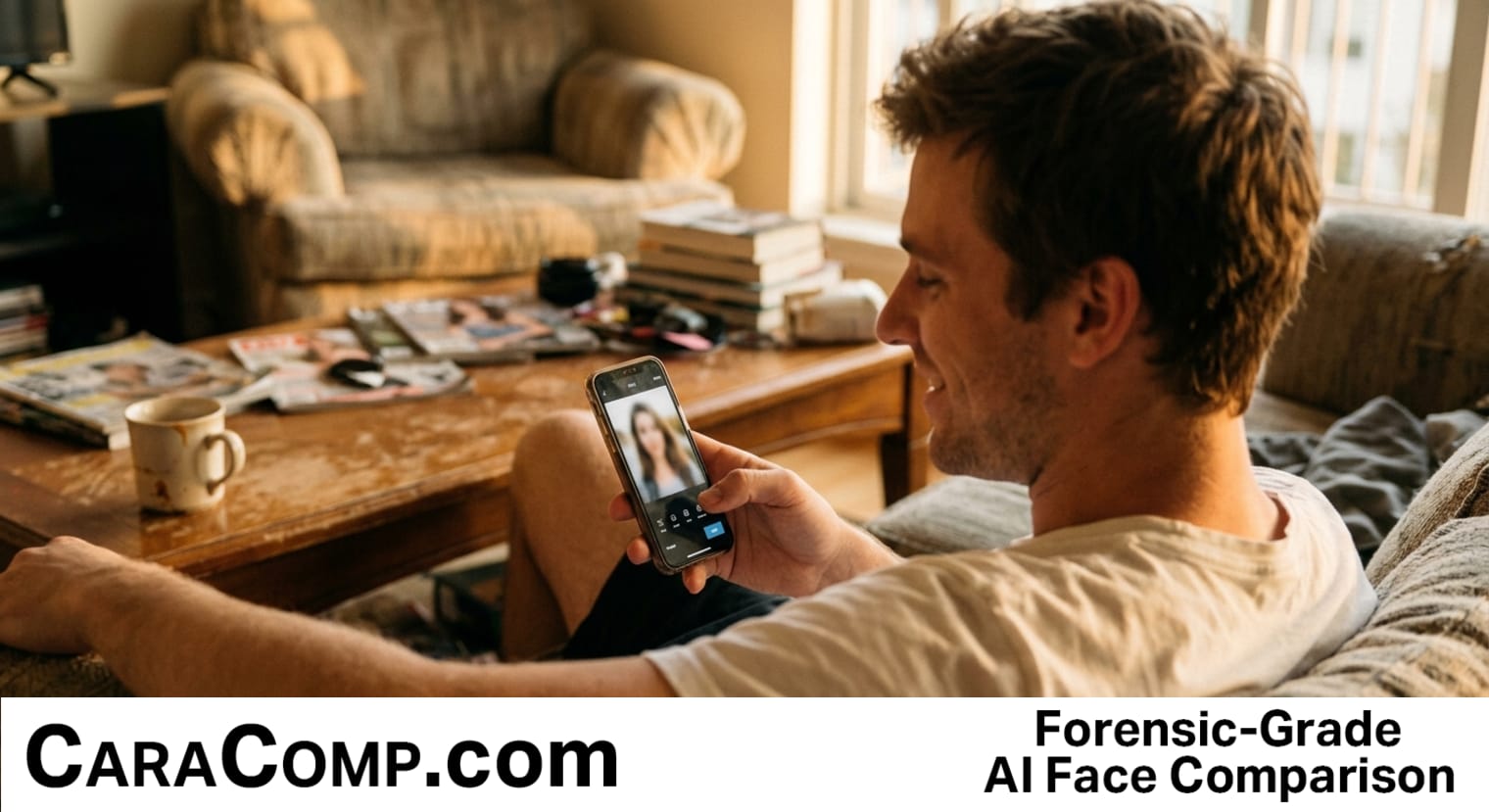
Stop looking for a movie-villain profile. The data is in: the person weaponizing someone’s face through a deepfake isn’t necessarily a narcissist or a sociopath. They are often someone with a "permission structure" that views a human face as raw data rather than a person. Recent research from Edith Cowan University reveals that dark personality traits don't predict who creates deepfake pornography—attitudes do. Specifically, it's the normalization of harm that drives this 464% surge in image-based abuse.
For the private investigator or OSINT professional, this is a massive red flag. It means your "person of interest" isn't a psychological outlier; they are statistically likely to be an ordinary individual who feels entitled to manipulate digital assets. This shift from "personality" to "attitude" means the threat is decentralized and rapidly scaling. As facial comparison experts, we see this as the inevitable dark side of the AI revolution: when the barriers to entry drop, the barriers to ethics often follow suit.
In the investigative world, we distinguish between facial recognition—often used for scanning crowds—and facial comparison, which is the forensic-level analysis of specific images. While bad actors use AI to blur the lines of reality, investigators must use enterprise-grade Euclidean distance analysis to reclaim the truth. We are entering a period where "seeing is believing" is a dead concept. If the person creating the deepfake is an ordinary individual in a group chat, the investigator’s job is no longer just finding a person—it’s validating an identity against a flood of synthetic fraud.
- The "Profile" is Dead: Investigators can no longer rely on looking for "troubled" personalities. High-tech harassment is being driven by ordinary people with normalized toxic attitudes, making the digital trail more important than a psychological one.
- Facial Comparison as a Defense: As deepfakes become a tool for blackmail and insurance fraud, the ability to perform precise facial comparison and generate court-ready reports is no longer optional for solo PIs; it is the new baseline for evidence.
- Verification is the New OSINT: The 464% increase in deepfake content means that verifying the authenticity of an image using objective biometric markers is now the most critical step in any modern case analysis.
The scary truth isn't that monsters are using this tech; it's that the tech has become so accessible that it has removed the "social friction" that used to prevent harassment. At CaraComp, we believe the only way to fight back is to put the same high-caliber analytical tools used by federal agencies into the hands of every solo investigator. When reality is under attack, the sharpest tool in your kit shouldn't be a guess—it should be Euclidean distance analysis.
Read the full article on CaraComp: The Guy Making Deepfakes of Her Isn't a Monster — He's Someone You Know


Comments
Post a Comment