The Doctor on Your Phone Isn't Real — and Your Brain Was Built to Believe Him
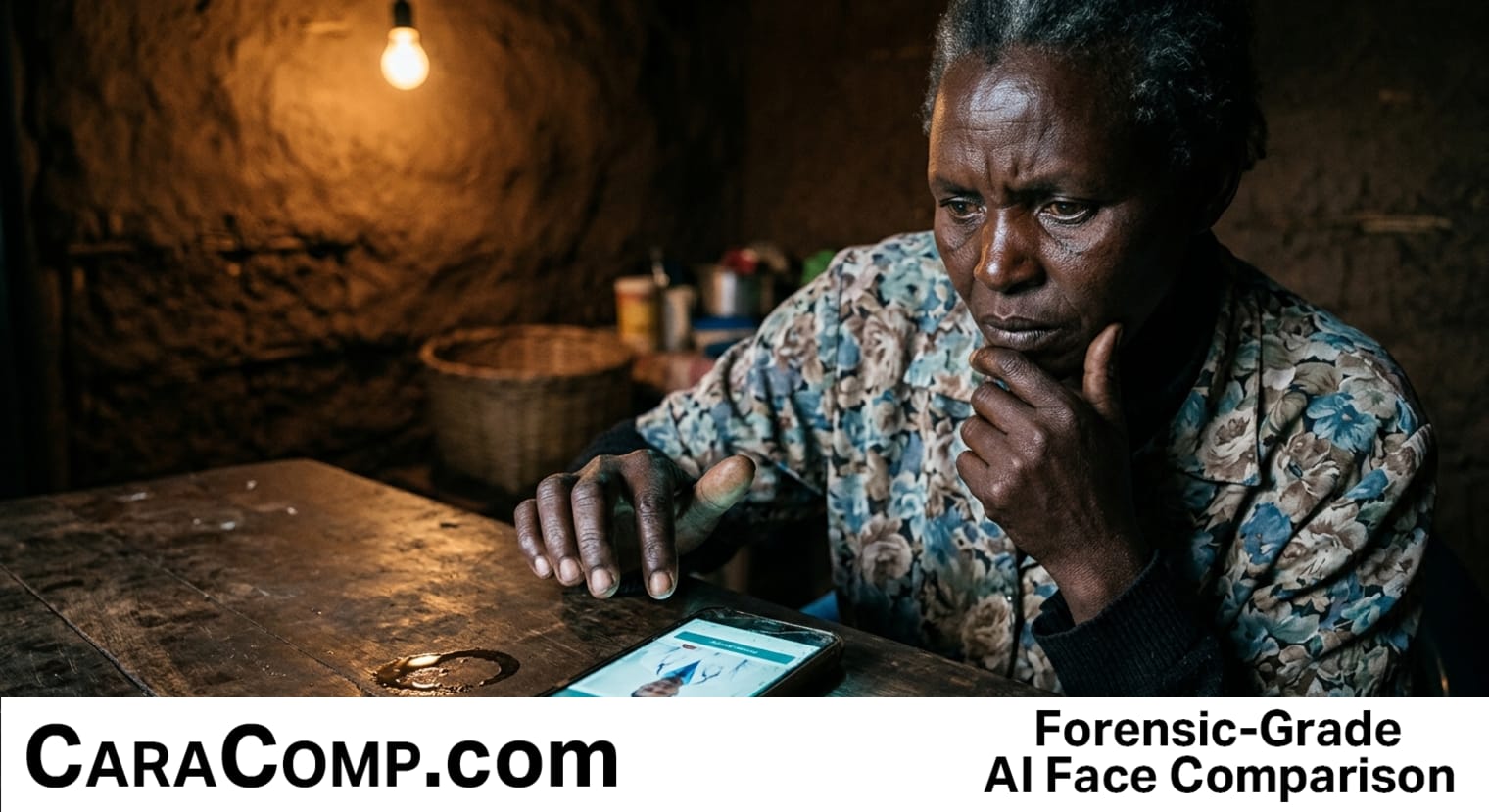
If you think you can spot a fake doctor just by looking at their lab coat or hearing their confident tone, you’ve already lost the battle against synthetic identity. We are moving toward a reality where "authority" is just a filter applied to a scammer's video, and the medical industry is the current testing ground. In Kenya and beyond, AI is being used to hijack the faces of real physicians to sell bunk supplements, proving that your biometric likeness is the new currency for high-level fraud.
For investigators and OSINT professionals, this isn't just a "fake news" problem; it’s a verification crisis. Scammers aren't just generating faces from scratch anymore—they are repurposing real footage of experts from university lectures and conferences, then using AI to make those experts say whatever the scam requires. This is identity laundering at scale. When a face you recognize from a legitimate medical board is suddenly peddling "miracle" cures on TikTok, the traditional investigative "gut check" fails completely.
At CaraComp, we see this as the ultimate argument for professional-grade facial comparison technology. If the human brain is evolutionarily wired to trust a face in a white coat, investigators must stop relying on their eyes and start relying on Euclidean distance analysis. You cannot "sense" a deepfake or an unauthorized likeness use when the source material is a real human being’s hijacked video. You need to compare that face against known, verified datasets to see where else that "doctor" has appeared and whether their identity holds up under mathematical scrutiny.
- The Death of Visual Authority: Likeness is being weaponized to bypass critical thinking. When AI can replicate the paralinguistic cues of expertise—tone, pacing, and vocabulary—the appearance of a face is no longer proof of personhood.
- Identity Laundering as a Service: Scammers are moving away from fully synthetic "ghosts" and toward "zombie" identities—real people’s faces and voices animated to serve a fraudster’s script.
- Verification is the New Baseline: For private investigators and SIU teams, verifying a subject's identity via facial comparison is no longer an "extra" step; it is the only way to ensure your evidence isn't built on a foundation of synthetic lies.
The white coat is now a costume that anyone with a laptop can wear. As these scams move from social media into telemedicine and insurance claims, the only way to protect your clients—and your reputation—is to use tools that see past the "performance" of authority and get to the data.
Read the full article on CaraComp: The Doctor on Your Phone Isn't Real — and Your Brain Was Built to Believe Him


Comments
Post a Comment