The Deepfake Spotted You First: Why Confident Voters Get Fooled the Most
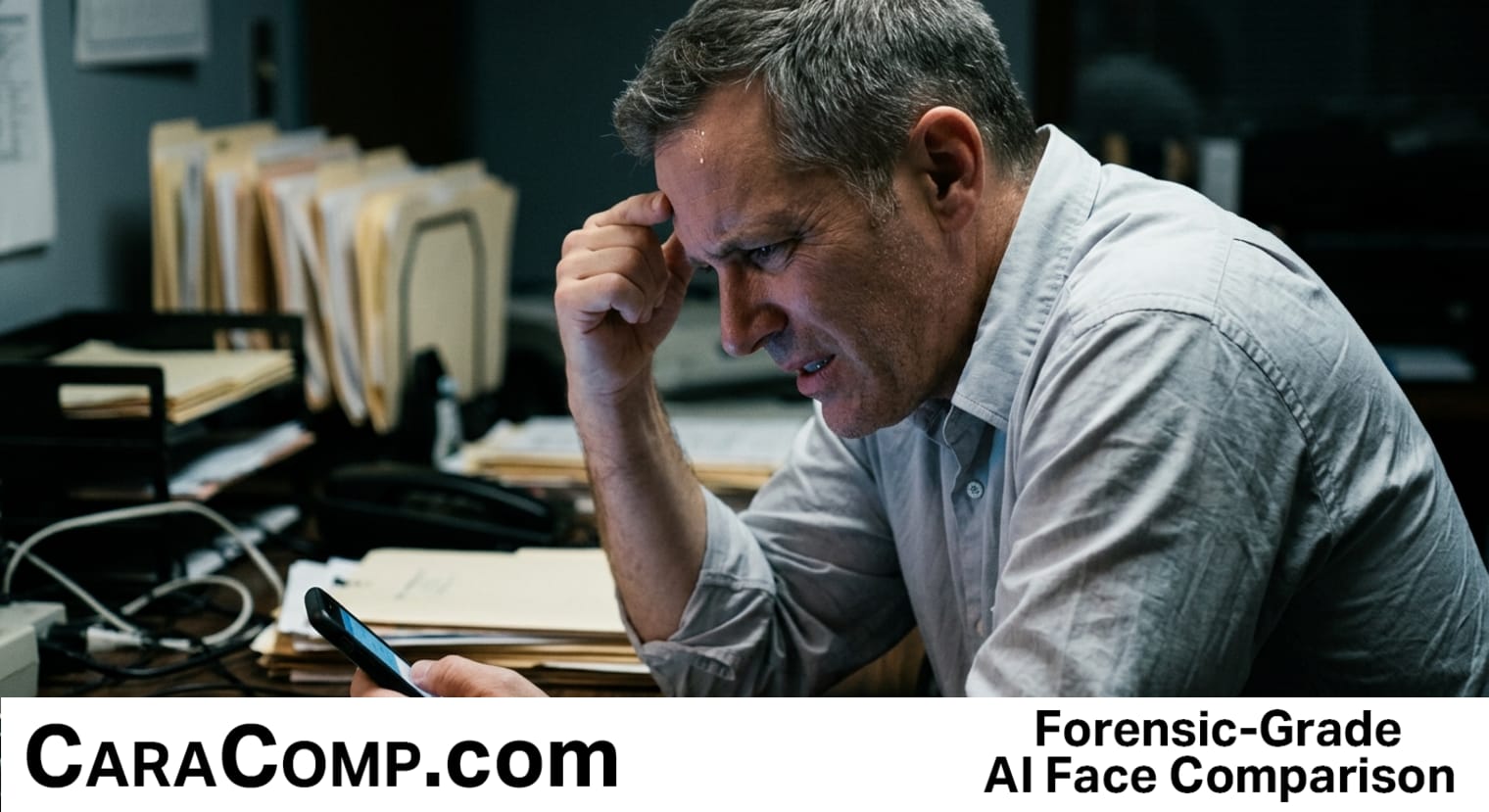
The most dangerous person in a modern investigation isn’t the one who is confused—it’s the one who is certain. Recent research from Utah Valley University has pulled the curtain back on a terrifying reality: deepfakes shift opinion just as effectively as real media, but the individuals most confident in their ability to spot a fake are actually the most likely to be fooled. This "confidence trap" is a nightmare scenario for private investigators and OSINT professionals who still rely on their "gut" to verify subjects.
For years, solo investigators have prided themselves on a "trained eye" to match subjects across grainy CCTV footage or social media profiles. The UVU study proves that the human eye is no longer a reliable benchmark. When a synthetic video can move the needle by nearly 20%—the exact same margin as authentic footage—relying on human intuition is no longer just old-school; it’s a professional liability that can destroy a case's credibility in court.
This isn't just a political problem; it is an evidentiary crisis. If a voter can't distinguish a candidate from a digital puppet, how can a solo PI expect to manually verify a fraud suspect across a thousand social media photos without error? The gap between what we see and what is real has closed. To stay ahead, investigators must shift from subjective "eyeballing" to objective, mathematical facial comparison.
- Visual evidence now requires biometric verification. Manual comparison is a risk no professional can afford. Investigators must adopt Euclidean distance analysis to provide reports that stand up to the sophistication of modern digital deception.
- The "Trained Eye" is an obsolete metric. If confidence is inversely correlated with accuracy, then experience alone is a trap. Verification must be data-driven, utilizing software that processes geometry rather than emotion.
- Affordable tech is the only equalizer. As tools to create deception become cheaper, the tools to verify identity must be accessible to the solo firm, not just federal agencies with six-figure budgets.
At CaraComp, we see this research as a definitive wake-up call for the investigative community. We aren't just comparing photos; we are providing a shield against the era of digital deception. By leveraging enterprise-grade Euclidean analysis at a fraction of the traditional cost, we allow solo PIs to present evidence with 100% confidence—confidence that is finally backed by data, not just a guess.
Read the full article on CaraComp: The Deepfake Spotted You First: Why Confident Voters Get Fooled the Most


Comments
Post a Comment