That "Urgent" Call From Your Boss? It's Costing Companies $35 Million.
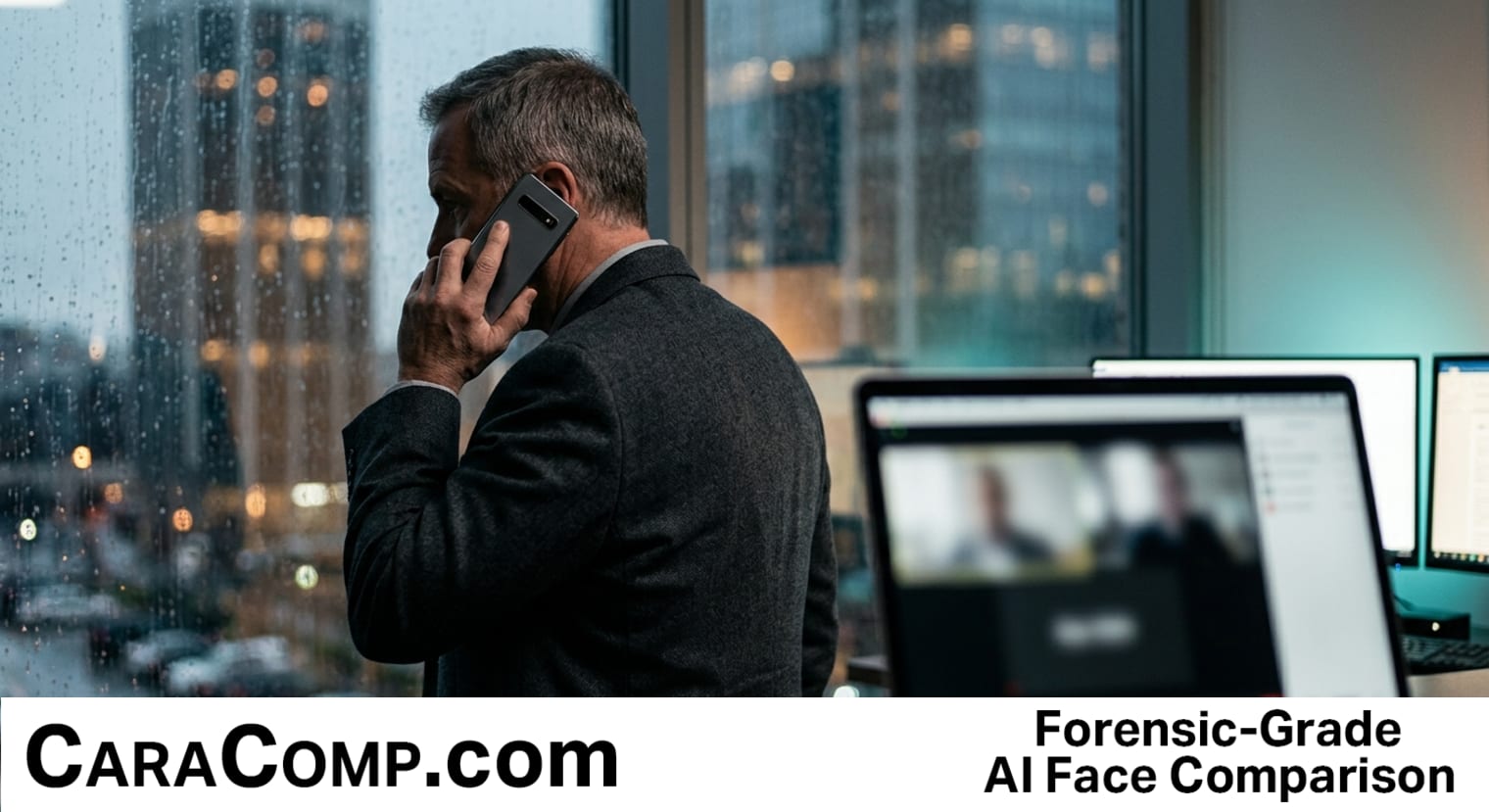
If you still believe your eyes and ears can spot a fraud, you just became a $35 million liability. The recent heist in Hong Kong—where a bank manager handed over a fortune after a video call with a synthetic "CFO"—wasn't a failure of intelligence; it was a failure of the human optical system. When AI can replicate the cadence of a voice and the micro-expressions of a face in real-time, the traditional "gut feeling" of an investigator is officially obsolete.
For private investigators and OSINT professionals, this story is a loud warning. We are operating in an environment where visual evidence can be manufactured in seconds. If you are still relying on manual side-by-side "eye-balling" to verify a subject’s identity across social media profiles or surveillance footage, you are operating with a pre-deepfake mindset. Humans only identify deepfakes correctly about 40% of the time. In professional investigations, those are losing odds that can destroy a reputation or lose a case.
The industry is rapidly shifting from subjective observation to objective facial comparison. While deepfakes are designed to fool the human brain by mimicking "liveness"—blinking, nodding, and reacting—they often fall apart when subjected to rigorous Euclidean distance analysis. This is the mathematical reality that modern investigators must lean on. We can no longer ask "does this look like the person?" We must ask "does the geometry of these two images match?"
Small firms and solo investigators often feel they are at a disadvantage, thinking this level of forensic analysis is reserved for federal agencies with six-figure budgets. However, the tech gap is closing. Staying ahead of the curve means moving away from unreliable consumer search tools and embracing professional-grade comparison math that stands up in court.
- Visual verification is no longer evidence: Human detection has reached a ceiling. Relying on manual facial verification in a professional investigation is now a liability, as synthetic clones easily pass the human perception threshold.
- Liveness is not authenticity: Deepfakes now bypass traditional "blink or nod" tests. True verification requires comparing the underlying geometry and Euclidean distance of a face, not just its movement on a screen.
- The evidentiary bar has shifted: In a world of $35 million deepfakes, "it looks like him" is no longer a professional conclusion. Investigators need reporting based on biometric distance to prove identity with certainty.
This technological arms race isn't just for the global elite. Solo PIs are finding themselves at a crossroads: either embrace the math of facial comparison or risk being discredited when a client asks how you know a subject isn't a synthetic spoof. Court-ready reporting is the only shield left when visual evidence is this easily faked.
Read the full article on CaraComp: That "Urgent" Call From Your Boss? It's Costing Companies $35 Million.


Comments
Post a Comment