That TV Age Prompt? It's Lying About Who's Actually Checking
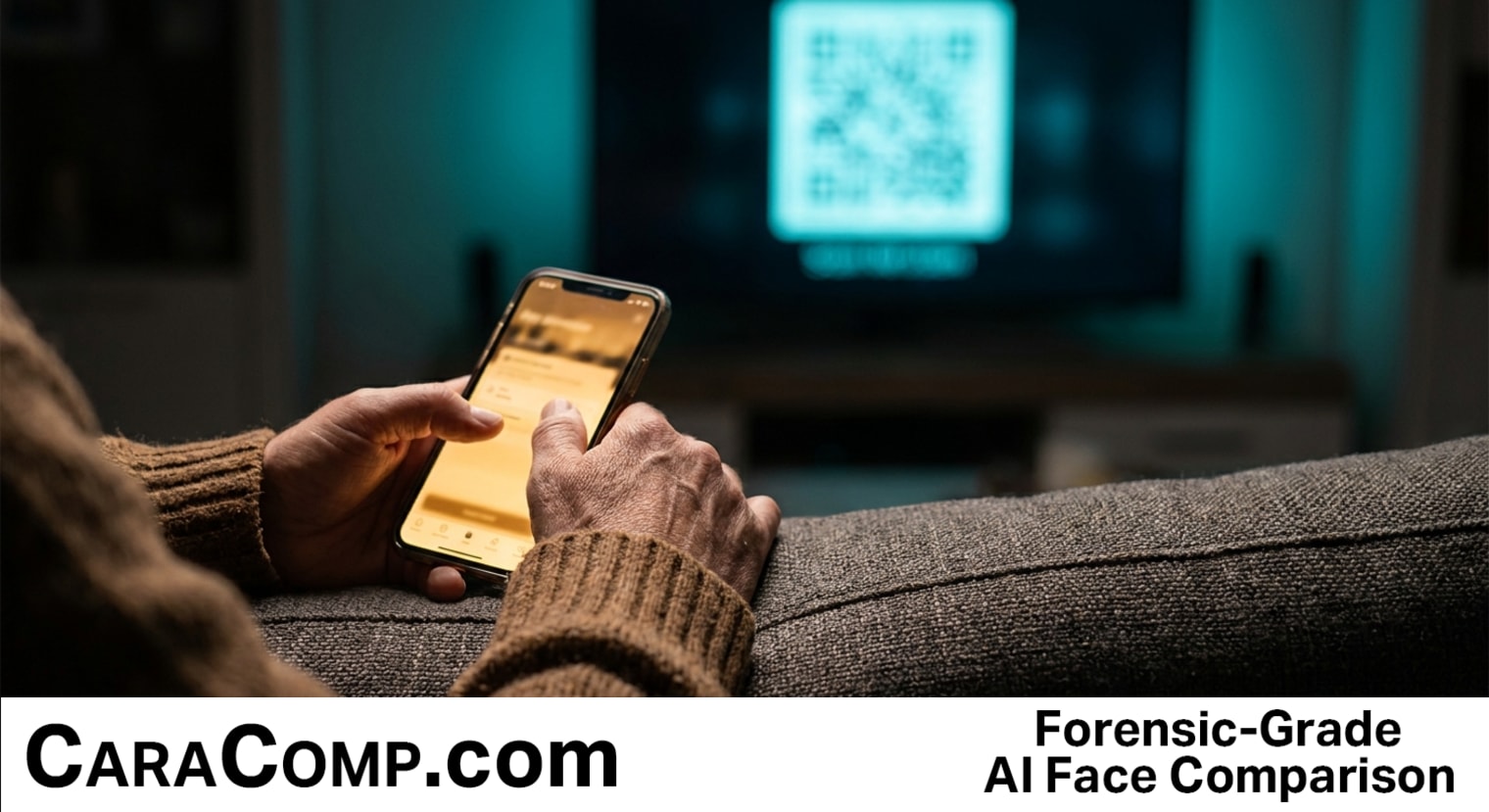
That age-verification prompt staring back at you from your smart TV is a digital lie. It isn’t actually checking your ID, scanning your face, or doing any heavy lifting. It’s merely a mouthpiece for a validation process happening entirely on another device. For investigators and OSINT professionals, this "handshake" architecture reveals a critical truth about modern identity: the screen asking the question is rarely the one grading the answer.
When your TV asks for verification, it’s using a "device authorization grant." It hands you a code, you use your phone to vouch for yourself, and the TV receives a temporary digital permission slip—an access token. As a professional investigator, you need to see through this facade. We live in a world where "identity" is increasingly fragmented into these short-lived tokens. If you’re tracking a subject’s digital footprint, you aren't looking for a person; you're looking for a chain of trust between devices.
At CaraComp, we deal in the currency of hard evidence through facial comparison and Euclidean distance analysis. We know that a "token" or a "session" can be spoofed or handed off. A face, when analyzed mathematically across case photos, provides the kind of definitive link that a temporary TV login never could. This news about TV verification handoffs highlights the growing gap between proxy identity (tokens) and biometric reality (the actual human being).
- The "Chain of Trust" is a Vulnerability: Investigators must realize that because the TV relies on the phone, a compromised secondary device can authorize an entire "clean" hardware profile. Never assume a logged-in device equals the target individual.
- Proxies vs. Biometrics: As tech moves toward "silent" handoffs to reduce friction, the demand for court-ready facial comparison will skyrocket. When the digital trail is just a series of tokens, your visual evidence is what will actually hold up in a report.
The industry is obsessed with making verification invisible to the consumer. But for the sharp investigator, "invisible" usually means "harder to audit." While the rest of the world enjoys the convenience of scanning a QR code to watch a movie, you should be looking at the underlying architecture. Is the person behind the screen the person the token says they are? In an investigation, the only way to be sure is to stop relying on digital handshakes and start relying on side-by-side analysis of the evidence.
Read the full article on CaraComp: That TV Age Prompt? It's Lying About Who's Actually Checking


Comments
Post a Comment