That Shocking Video of Your Boss? 3 Checks Before You Believe Your Own Eyes
If you think your "investigator’s intuition" is enough to spot a deepfake, you are already a liability to your clients. Recent data shows that when people are explicitly warned a video might be forged, only 21.6% actually catch the fake. The rest? They start accusing genuine footage of being fraudulent. In the world of private investigation and OSINT, "gut feeling" is no longer a professional standard—it’s a recipe for a defamation suit.
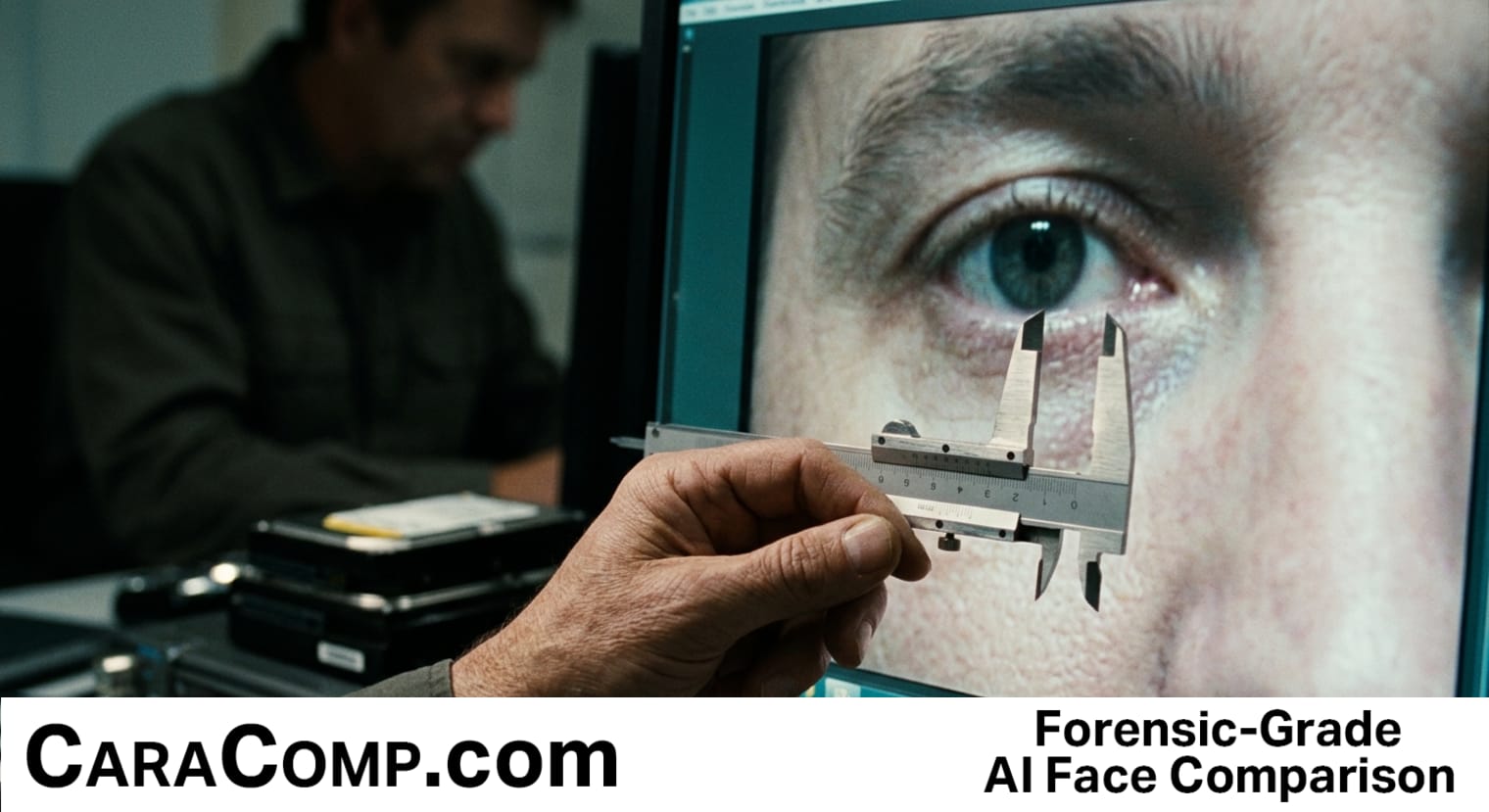
For the solo investigator, the rise of synthetic media means the manual methods we’ve used for decades are officially obsolete. Your eyes were never designed to audit 30 frames per second for geometric consistency. While a video might look realistic, it rarely holds up to rigorous Euclidean distance analysis. This is where the gap between a hobbyist and a tech-savvy professional becomes a canyon. If you aren't using mathematical facial comparison to verify your evidence, you’re just guessing with your reputation on the line.
The hard truth is that deepfake algorithms still struggle with the "seams" of human biology. They can mimic a face, but they can't perfectly replicate the complex skeletal geometry of a head in motion. When an investigator uses professional comparison tools, they aren't just looking at the person; they are analyzing facial landmarks that must remain consistent across every tilt and turn. If those proportions warp even by a few pixels, the evidence is compromised.
As we move further into this high-stakes landscape, the investigators who survive will be those who stop trying to out-think the AI and start using it to verify the truth. We need to move from "seeing is believing" to "analysis is proof."
- Manual verification is a career risk: Relying on visual observation alone leads to a nearly 80% failure rate in identifying synthetic media, making court-ready reporting impossible.
- Geometry doesn't lie: Synthetic faces often fail to maintain consistent facial landmark proportions during head rotations, a flaw that only precise facial comparison software can reliably detect.
- Professionalism requires technical parity: To compete with larger firms, solo PIs must adopt enterprise-grade investigation technology that replaces "guessing" with verifiable Euclidean distance data.
The era of the "analog PI" is over. Whether you are investigating insurance fraud or conducting high-level OSINT, your clients expect you to have the tools that separate fact from synthesized fiction. Don't let a sophisticated forgery be the reason you lose a case—or your credibility.
Read the full article on CaraComp: That Shocking Video of Your Boss? 3 Checks Before You Believe Your Own Eyes


Comments
Post a Comment