That Panicked Call From Your Kid? The Voice Is Fake — One Dinner Question Stops It Cold
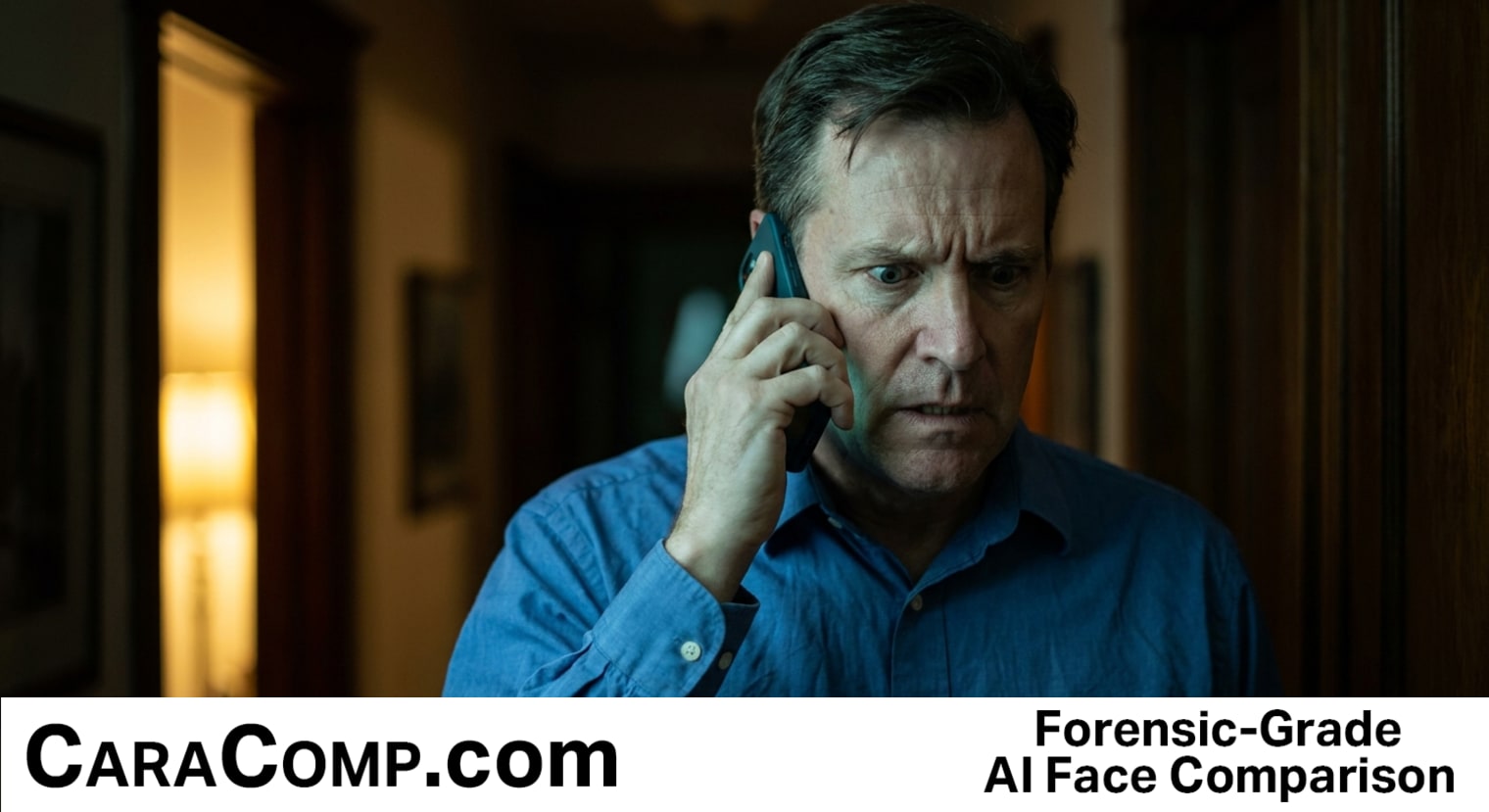
Your family’s voices are no longer private property; they are public assets for any scammer with a WiFi connection and ten seconds of social media audio. While the world reacts with shock to AI voice cloning, seasoned investigators should see the writing on the wall: biological trust is dead. If a ten-second TikTok clip is enough to extract a usable acoustic fingerprint and hijack a parent’s protective instincts, then "trusting your gut" is officially a professional liability.
For private investigators and OSINT professionals, this news is a wake-up call regarding the fragility of all biometrics. We are moving into a landscape where the human ear and eye are no longer sufficient for verification. Just as voice cloning uses MFCC compression to mimic the texture of speech, visual "deepfakes" and low-quality digital artifacts are making manual facial comparison nearly impossible for the naked eye. If you are still relying on a "feeling" that two faces or two voices match, you are gambling with your reputation.
The industry is shifting. We can no longer rely on the biological familiarity that has anchored human interaction for millennia. Whether you are investigating insurance fraud or tracking a person of interest across social media, the threshold for "truth" has moved. Verification now requires a mathematical layer—a way to strip away the emotional noise and the digital mimicry to look at the raw data. In the facial comparison world, this means moving away from "looking" and moving toward Euclidean distance analysis. You need to know the mathematical probability of a match, not just have a hunch.
- Biometric integrity is under siege: The ease of voice cloning proves that any biometric can be spoofed or manipulated if you rely on sensory perception alone. Verification must be data-driven.
- The "Gut Feeling" is a liability: Investigators who refuse to adopt enterprise-grade comparison tools are leaving themselves open to catastrophic errors. In a world of AI mimicry, objective math is the only defense.
- OSINT methodology must evolve: Standard verification protocols are becoming obsolete. Modern case analysis requires tools that can distinguish between a digital clone and a biological reality using precise measurements.
The takeaway for the sharp investigator is simple: the tools that got us here won't get us to the next stage. When the sound of a loved one’s voice can be bought for the price of a cheap subscription, the only thing that remains unhackable is a rigorous, tech-forward investigative process.
Read the full article on CaraComp: That Panicked Call From Your Kid? The Voice Is Fake — One Dinner Question Stops It Cold


Comments
Post a Comment