That Panicked Call From Your Kid? It Might Be a Scammer Wearing Their Voice.
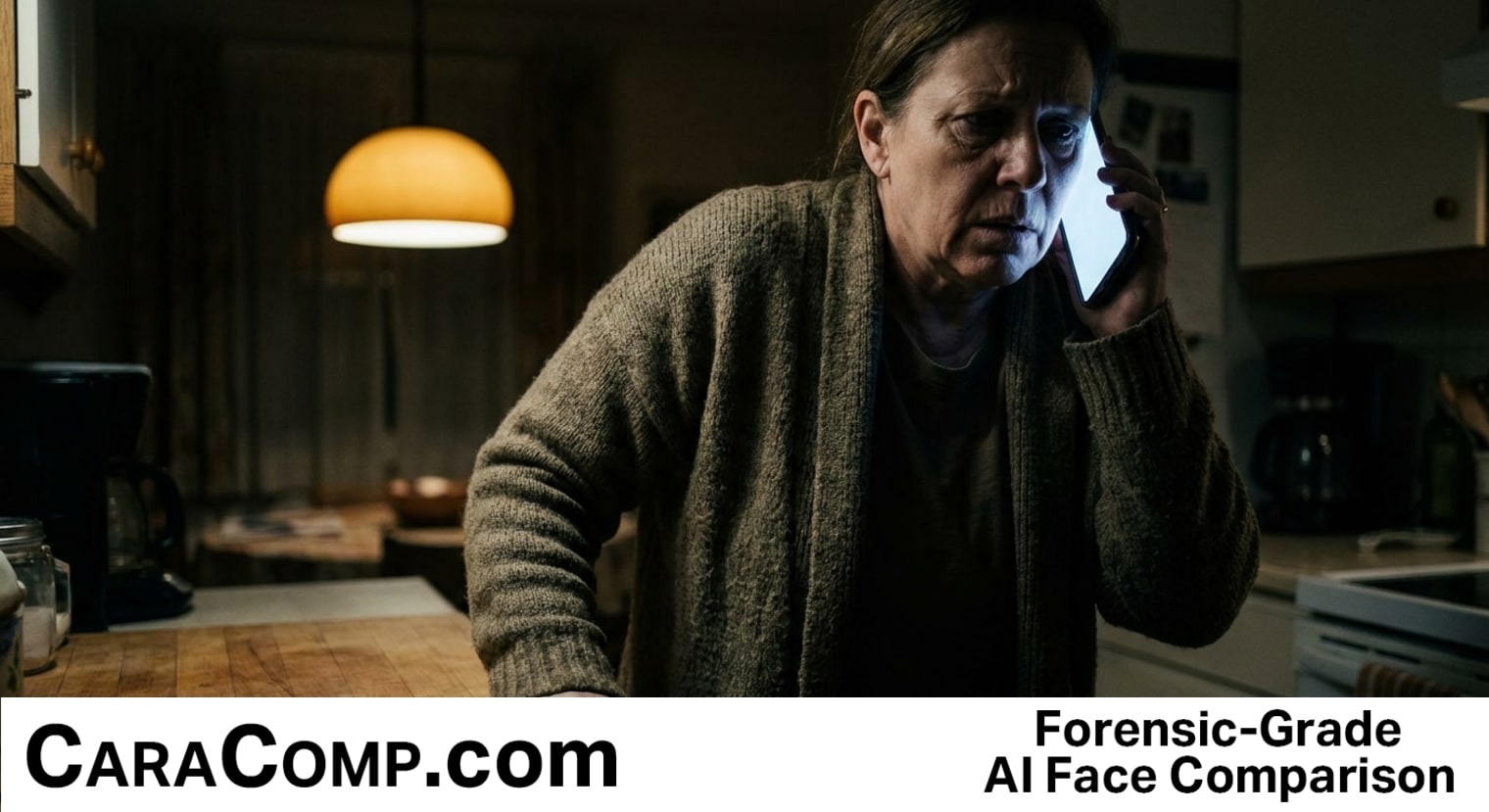
Your biological instincts are officially a liability. For decades, a private investigator or a concerned parent could rely on the "gut check"—that innate ability to recognize a familiar voice or face. But with AI voice cloning scams surging by 1,600%, your ears are now the easiest path for a scammer to breach your defenses. When a "panicked" loved one calls, they aren't just spoofing a number; they are wearing a synthesized identity designed to bypass your rational brain and strike directly at your wallet.
As investigators, we have to look at this through the lens of identity verification. If audio can be cloned from a ten-second Instagram reel, we must assume that every digital signal—voice, video, and static imagery—is under siege. For the modern OSINT professional or PI, the "look and feel" method of investigation is dead. We are moving into a reality where synthetic media is the default, and human verification is the failure point. The only way to counter a mathematical attack is with mathematical certainty.
While the public is being told to use "family code words," professional investigators need more robust tools. This surge in voice fraud is a harbinger of what’s coming for visual evidence. If you are still manually "eyeballing" photos to confirm a subject's identity, you are playing a losing game. You are betting your reputation on the same biological instincts that are currently failing thousands of scam victims every day. Professional-grade investigation requires moving away from subjective "recognition" and toward objective facial comparison.
- The death of biological trust: Traditional sensory recognition is no longer a valid investigative standard; identity must now be verified through cold, hard data like Euclidean distance analysis.
- Synthetic identity as a service: The collapse in the cost of AI cloning tools means that even low-level fraudsters now have capabilities that were once reserved for state actors, putting solo investigators at a massive disadvantage if they don't upgrade their tech stack.
- Evidence reliability in court: As deepfakes become common knowledge, "it looks like him" will no longer hold up in front of a jury; investigators must provide professional, court-ready reporting that proves identity through measurable biometric standards.
The bottom line? The scammers have already upgraded. If you’re still relying on manual methods and your own two eyes, you’re not just behind the curve—you're the target.
Read the full article on CaraComp: That Panicked Call From Your Kid? It Might Be a Scammer Wearing Their Voice.


Comments
Post a Comment