That Panicked Call From Your Kid? 3 Seconds of TikTok Is All a Scammer Needs.
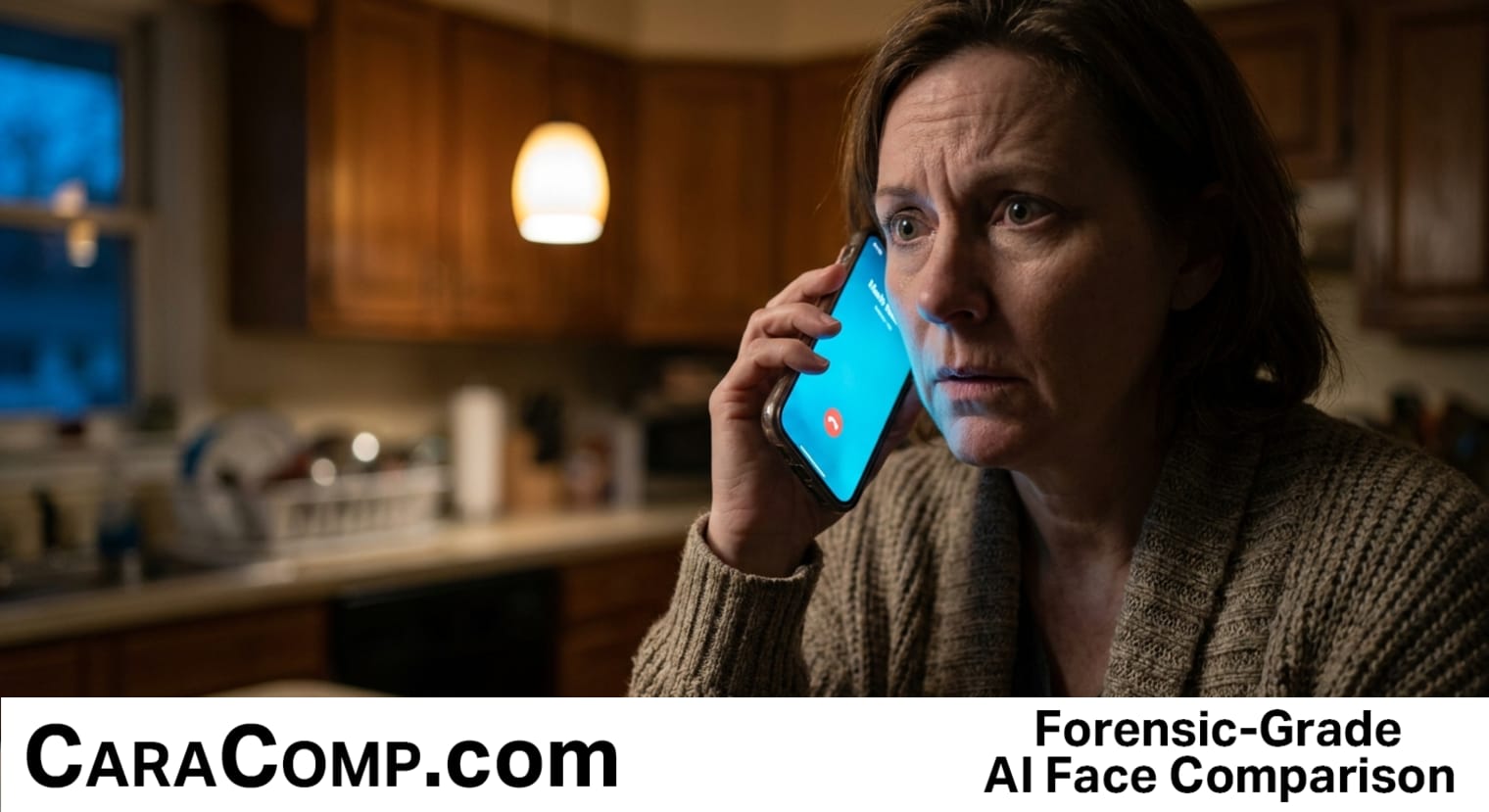
If you still think your ears are a reliable investigative tool, you are already behind the curve. Three seconds of TikTok audio is now enough to clone a human voice with terrifying accuracy, turning a child's social media presence into a weaponized asset for scammers. This isn't just a "family safety" issue; it’s a fundamental shift in how we verify identity in a world where biological signals can be synthesized for less than $50 a month.
The 1,600% surge in AI-powered voice phishing attacks proves that "gut feeling" is no longer an acceptable standard for verification. For the professional investigator—whether you’re in OSINT, insurance fraud, or private practice—this shift underscores a massive vulnerability. If a voice can be cloned this easily, how long before static images and video are manipulated with the same level of sophistication? The era of trusting a "familiar face" or a "familiar voice" is over. We are entering an era where only mathematical verification and side-by-side case analysis can provide certainity.
In our industry, we often talk about the difference between crowd scanning and focused facial comparison. These scams are the ultimate argument for the latter. While the public struggles with voice clones, smart investigators are doubling down on tools that use Euclidean distance analysis to prove identity. We don't just look at a photo and guess; we measure the geometry. That same rigor must now be applied to every piece of digital evidence that crosses your desk.
- The Death of the "Eyeball Test": When AI can replicate human traits from seconds of data, manual comparison becomes a liability. Professional investigators must shift toward software that provides objective, court-ready reporting based on biometric distance rather than subjective opinion.
- Verification is the New Currency: Just as families now need "code words," investigators need enterprise-grade comparison tools to verify that the person in the video or photo is actually the subject. The margin for error has dropped to zero.
The speed of this technology has moved faster than the legal system or the average PI firm can keep up with. If you aren't using professional-grade comparison technology to verify your subjects, you aren't just behind the times—you're a target for the next wave of sophisticated fraud. It’s time to move past the amateur tools and embrace investigative technology that provides quantifiable results.
Read the full article on CaraComp: That Panicked Call From Your Kid? 3 Seconds of TikTok Is All a Scammer Needs.


Comments
Post a Comment