That FaceTime From Your Kid? In 2026, There's a 1-in-3 Chance It's a Scam.
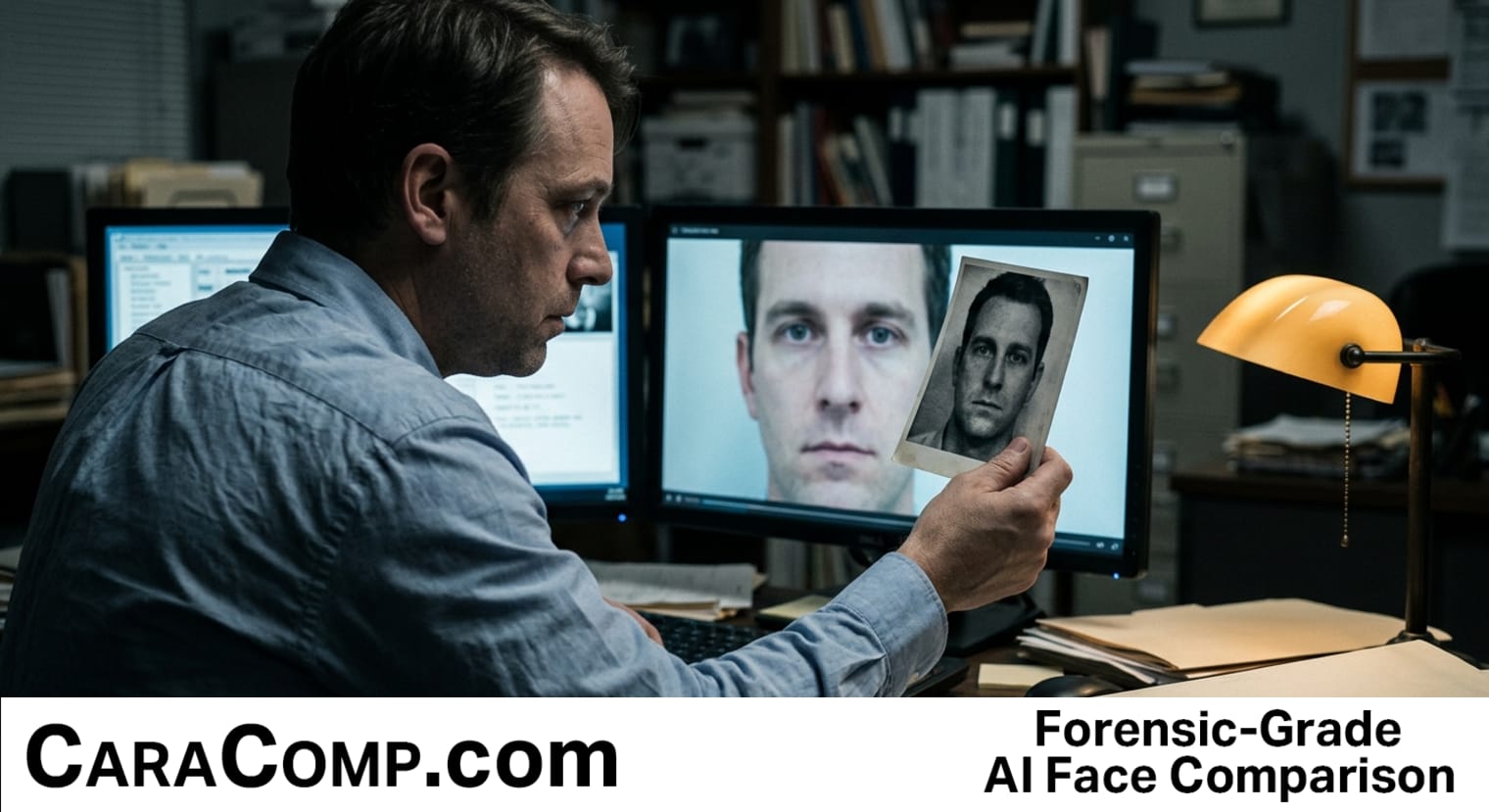
Your eyes are officially becoming your biggest liability in the field. By 2026, deepfake identity fraud is projected to surge by nearly 500%, turning every video call and social media profile into a potential forensic minefield. For the solo private investigator or the OSINT researcher, the "eyeball test" is no longer just outdated—it is professionally dangerous. When humans fail to identify AI-generated voices and faces 40% of the time, relying on a "hunch" to verify a subject’s identity is a fast track to a ruined reputation and a lost case.
The reality is that fraudsters are now using industrial-scale AI to mimic the very people you are tracking. We are moving toward a world where a face on a screen is the easiest thing to fake, not the hardest. For years, enterprise-level agencies have used advanced Euclidean distance analysis to combat this, but they’ve kept that tech behind a $2,000-a-year paywall. While solo PIs are stuck manually squinting at grainy photos or using unreliable consumer apps with high false-positive rates, the bad actors are getting better at blending synthetic identities with real-world data.
As an investigator, your value isn't just in finding a face; it’s in the certainty of the match. If you can’t back up your findings with objective, mathematical data, your evidence won't survive a rigorous case analysis or a courtroom challenge. This surge in deepfakes means we have to stop treating facial comparison as a visual art and start treating it as a data science.
- The "Visual Proof" era is dead: With a 3,892% projected increase in document fraud, every ID, passport, and profile photo must be treated as a potential synthetic fabrication until mathematically verified.
- Context is the new verification: Investigators must shift from "does this look like the subject?" to "does the Euclidean distance analysis of this face match our verified baseline across multiple case photos?"
- Reporting is your armor: As deepfakes become standard, professional, court-ready reporting that explains the methodology of a match will be the only way to separate professional investigators from amateurs.
At CaraComp, we believe solo investigators shouldn't be left behind just because they don't have a federal-sized budget. You need the same caliber of facial comparison technology used by the big firms to protect your cases from the coming wave of AI deception. The industry is changing fast; the only way to stay ahead of the curve is to stop guessing and start measuring.
Read the full article on CaraComp: That FaceTime From Your Kid? In 2026, There's a 1-in-3 Chance It's a Scam.


Comments
Post a Comment