That Beach House Rental Looks Perfect. The Host, The Photos, The Address — All Fake.
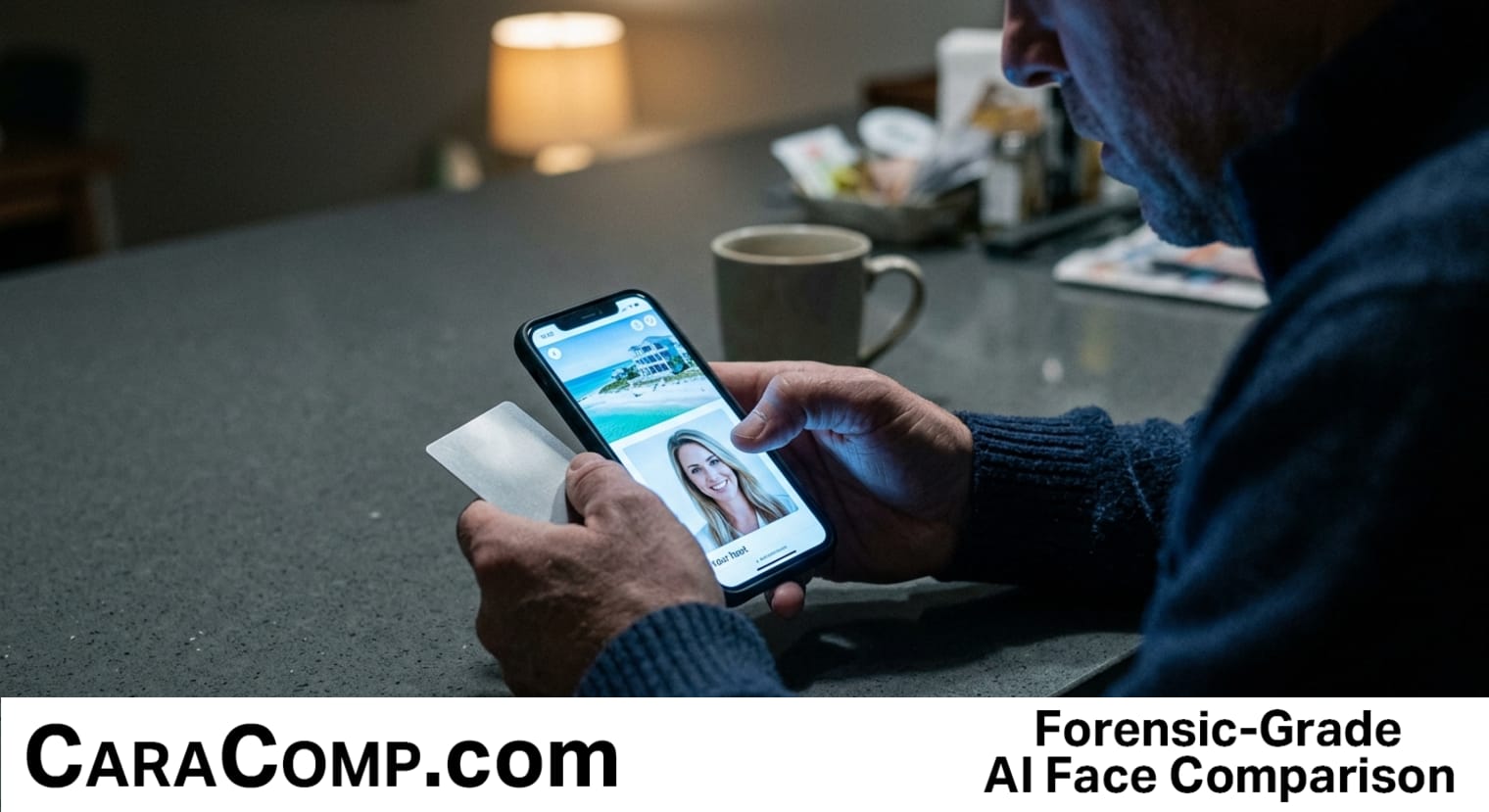
Your eyes are officially lying to you. That "superhost" with the friendly smile and the perfectly staged sun-drenched beach house isn’t a person—it’s a digital ghost. The days of spotting scams by their "rough edges" are dead. AI has smoothed out the typos, the grammar mistakes, and the grainy photos, leaving investigators and travelers with a terrifying reality: the more "human" a host seems, the more likely they are a meticulously generated prompt.
For private investigators and OSINT professionals, this represents a massive shift in the threat landscape. We are no longer looking for "bad" listings; we are looking for "too-perfect" identities. When 5.2 million victims lose billions to "ghost houses," it’s a failure of identity verification at the most basic level. The scam isn't just about a fake house; it's about a fabricated facial identity designed to bypass our natural trust filters. If you are still relying on a "gut feeling" or a quick manual glance at a host's profile photo, you’ve already lost the case.
The industry is currently split between two useless extremes. On one hand, you have "consumer" search tools that are riddled with false positives and unprofessional reports. On the other, you have enterprise-grade forensic tools that cost $2,000 a year, effectively gatekeeping the technology solo PIs need to solve these cases. This is why we advocate for Euclidean distance analysis—it’s the only way to mathematically prove whether that "host" is a real person or a composite. In the world of insurance fraud and rental scams, "looking similar" isn't evidence. Scientific comparison is.
- AI has weaponized "warmth," turning host profiles into psychological traps where polished language and deepfake imagery bypass traditional fraud detection.
- The "Manual Gap" is widening, as investigators spending hours on visual photo comparisons find themselves outpaced by scammers who can deploy dozens of fake identities in minutes.
- Affordable forensics are mandatory, because identifying a "case fantasma" requires the same high-level biometric analysis used by federal agencies, but at a price point that fits a solo firm’s budget.
The bottom line? If you can’t verify the face, you can’t trust the listing. As these scams scale, the investigators who survive will be the ones who replace manual guesswork with high-precision comparison technology. Don't let a $2,000 deposit disappear because you trusted a profile picture that was rendered in a data center.
Read the full article on CaraComp: That Beach House Rental Looks Perfect. The Host, The Photos, The Address — All Fake.


Comments
Post a Comment