That 95% Face Match Could Be a Total Lie — Here's the Trick Fooling the Camera
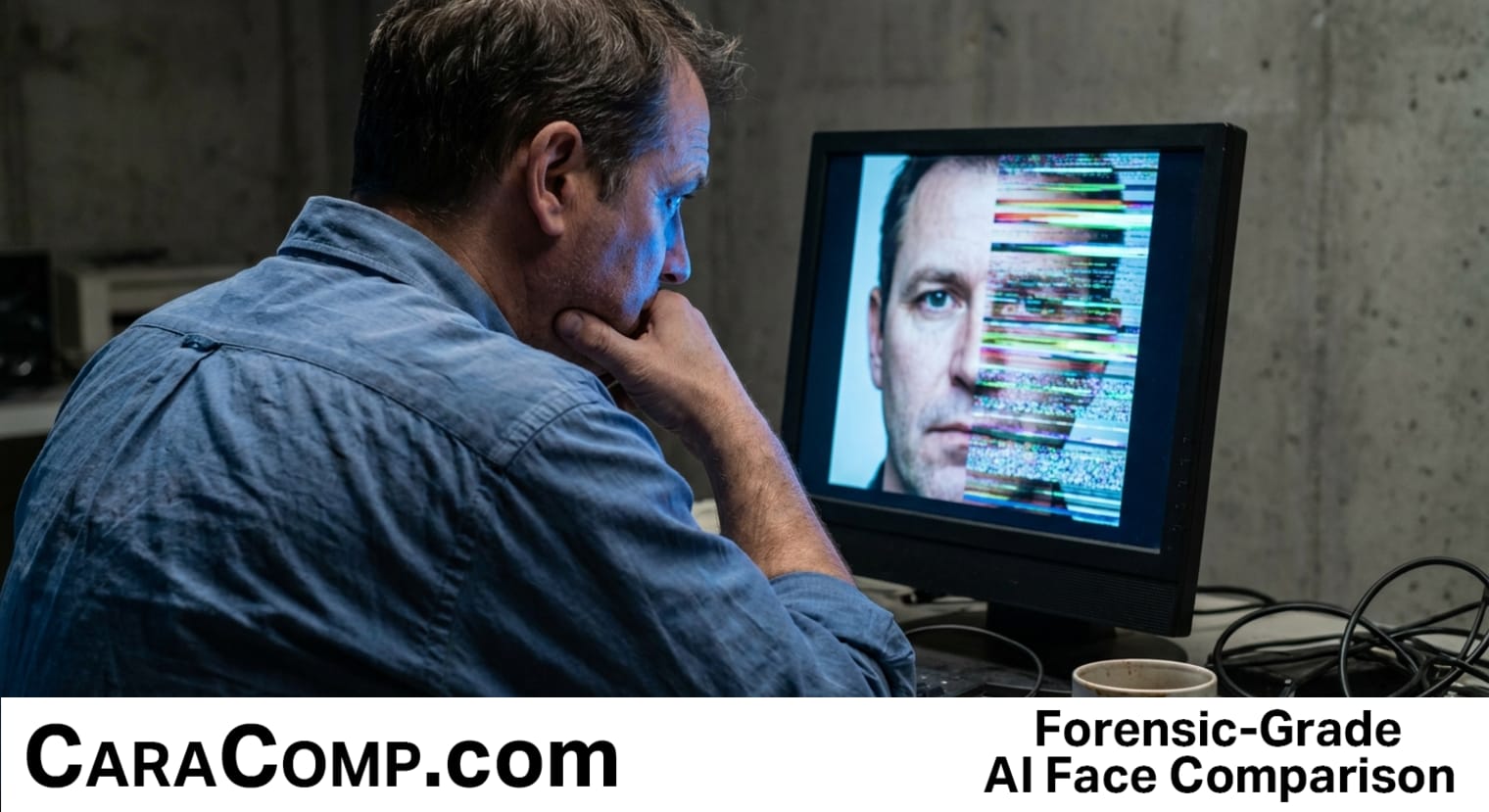
A 95% confidence match in a facial comparison report isn't always evidence of a positive ID—sometimes, it’s just proof of a successful digital heist. While solo investigators are busy worrying about lighting and pixelation, the real threat to investigative integrity is moving upstream. It’s called an injection attack, and it’s turning the most sophisticated algorithms into high-speed liars by bypassing the camera lens entirely.
For the private investigator or OSINT professional, this is a nightmare scenario for evidence chains. Most people assume fraud happens in front of the camera, like someone holding up a printed photo or wearing a mask. But an injection attack hijacks the software pipeline between the capture device and the analysis engine. The attacker inserts a high-resolution, AI-generated image directly into the data stream. The algorithm sees a perfect, "live" face, performs its Euclidean distance analysis, and returns a near-perfect match. The math is flawless, but the foundation is rotten.
In the last year alone, these attacks have exploded by 900%. For those of us in the field, this shifts the burden of proof. It’s no longer enough to have a tool that compares faces; you have to know with absolute certainty where your source images came from. If you are presenting a case to a client or preparing a court-ready report, a high confidence score from an unverified source is a liability, not an asset.
As industry insiders, we have to look past the "magic" of the match and focus on the integrity of the input. In an environment where virtual camera feeds can be faked with a few clicks, the professional-grade investigator must be more than a software user—they must be a digital skeptic.
- The "Confidence Score" is becoming a secondary metric; without verifying that an image was captured from a legitimate, live sensor, the numerical match percentage is essentially meaningless in a high-stakes investigation.
- Chain of custody now starts at the software layer, meaning investigators must prioritize tools that allow for manual batch comparison and transparent reporting over "black box" consumer apps that offer no audit trail.
- The industry is shifting from Presentation Attack Detection (PAD) to Injection Attack Detection (IAD), forcing a new standard for how biometric evidence is authenticated before it ever reaches a courtroom.
The tech is getting faster, but the attackers are getting smarter. If you aren't questioning the "how" behind the image capture, you're leaving your reputation at the mercy of the injection.
Read the full article on CaraComp: That 95% Face Match Could Be a Total Lie — Here's the Trick Fooling the Camera


Comments
Post a Comment