Show Your ID to Download a Bible App? The Supreme Court Will Decide.
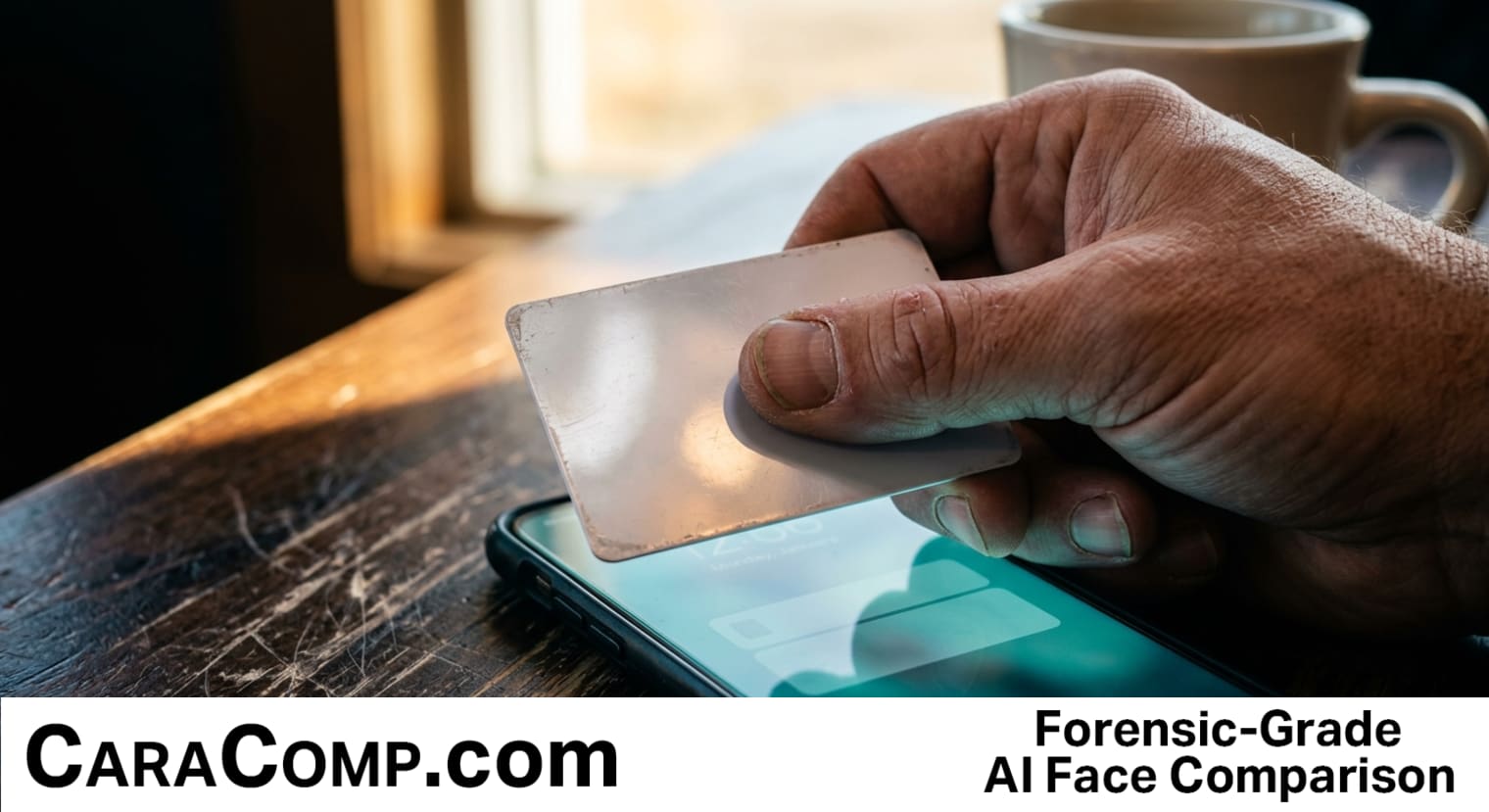
The United States Supreme Court is about to decide if your government-issued ID—and by extension, your face—is the new toll booth for the digital highway. While the headlines focus on protecting minors, the reality is far more clinical and concerning for those of us in the investigation and OSINT community. We are witnessing the largest-scale push for biometric normalization in history, where accessing a prayer app or a news feed could soon require the same identity friction as entering a high-security federal building.
For the professional investigator, this shift is a double-edged sword. On one hand, the mass collection of biometric data through age-verification "gatekeepers" creates a massive repository of identity markers. On the other hand, it blurs the vital line between professional facial comparison and mass surveillance. At CaraComp, we’ve always maintained that facial comparison should be a targeted, forensic tool used to solve specific cases—not a mandatory digital "pat-down" for every citizen trying to download a weather app.
The Texas law, SB 2420, represents a pivot from regulating content to regulating identity. If the Court upholds this, the "Euclidean distance" between a private citizen and a state-monitored biometric profile shrinks to nearly zero. We aren't just talking about adult websites anymore; we are talking about the infrastructure of the internet itself. This will inevitably lead to a surge in unreliable, "good enough" facial estimation tools that plague the consumer market, often providing the false positives that solo investigators and PIs spend half their careers debunking.
- Biometric Normalization is the New Standard: If identity verification becomes a prerequisite for basic app usage, the public's expectation of digital anonymity is officially dead, creating a new landscape for OSINT and background checks.
- Reliability vs. Speed: The rush to implement these "age-check" systems will likely rely on low-grade, high-friction algorithms. Professional investigators will need enterprise-grade comparison tools to verify if these state-mandated scans are even accurate.
- The Rise of Biometric Infrastructure: This isn't a temporary fix; it's the construction of a permanent identity layer over the web, making high-fidelity facial comparison technology more critical than ever for verifying identities in legal and insurance fraud contexts.
As the legal battle moves toward a deadline, investigators must stay ahead of the curve. The tools used by the state to "verify" age are rarely the tools you want to rely on in a court of law. When the stakes are high—whether it’s a million-dollar insurance claim or a sensitive private investigation—you don't need a gatekeeper; you need a professional-grade analysis that provides court-ready results without the enterprise price tag.
Read the full article on CaraComp: Show Your ID to Download a Bible App? The Supreme Court Will Decide.


Comments
Post a Comment