One Stolen Badge Shouldn't Unlock Your Whole Office. Here's What Should Stop It.
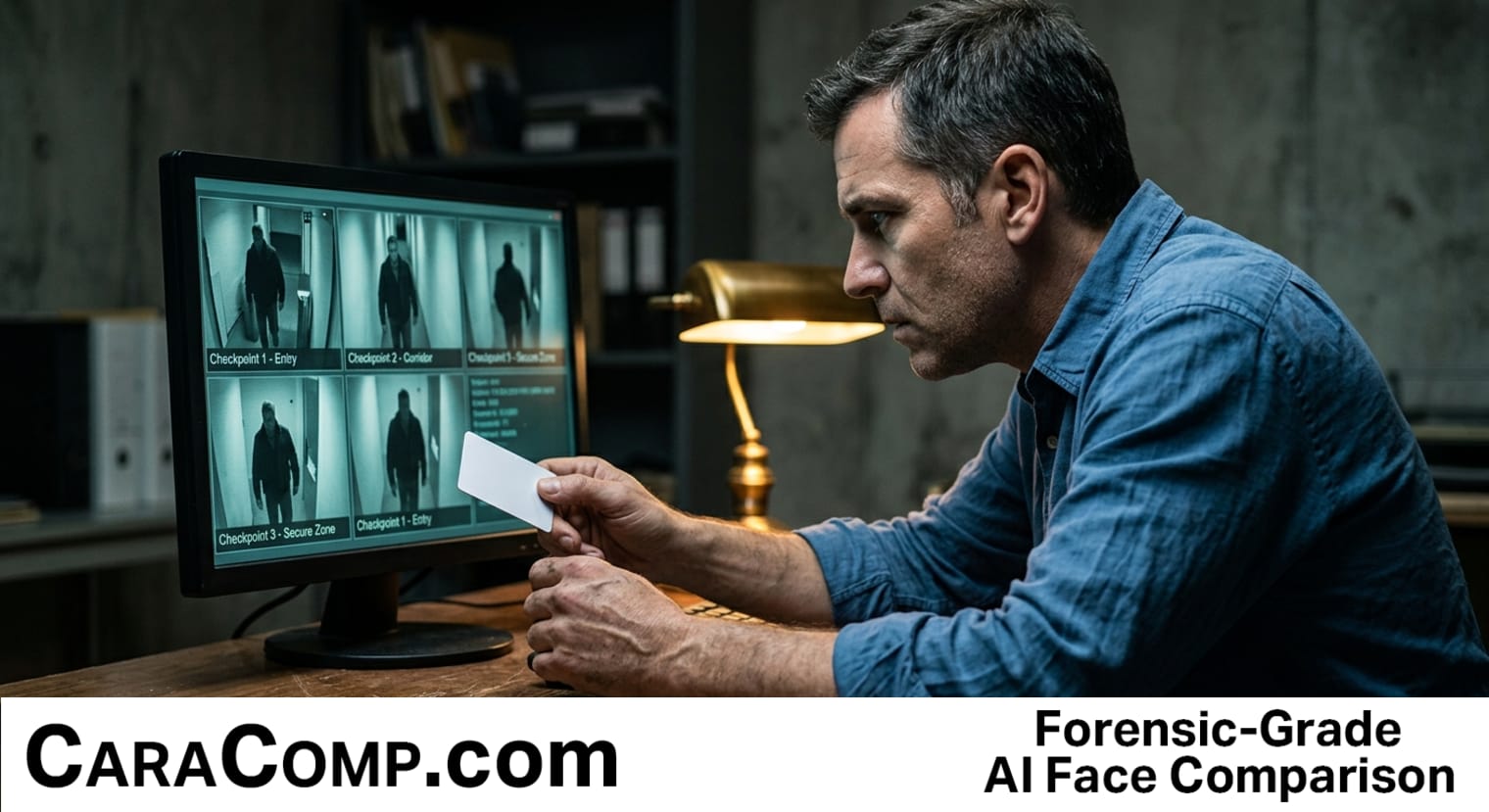
The most dangerous lie in modern security is the belief that 99% accuracy equals proof. In the investigative world, we see it constantly: a "match" is treated as a final verdict rather than the beginning of a lead. But as "zero trust" architecture moves from digital servers to physical office doors, the industry is finally waking up to a reality that OSINT professionals and private investigators have known for years—identity is a moving target, and a single biometric signal is never enough to close a case.
Zero trust isn't just a buzzword; it is a fundamental shift from the "castle and moat" strategy to a model of continuous verification. For the investigator, this means that even a high-confidence facial comparison must be layered with behavioral context and device data. We are moving away from storing galleries of faces and toward encrypted mathematical templates. This is where Euclidean distance analysis becomes the gold standard. By measuring the precise geometric relationships between facial features rather than just looking at a photo, we turn a subjective image into objective, court-ready data.
For the solo investigator or the small PI firm, this shift creates a massive technical gap. While enterprise-level firms have had access to this level of layered verification for years, the average detective has been stuck with manual comparisons or unreliable consumer tools. However, the democratization of Euclidean distance analysis means you no longer need a federal budget to produce results that hold up under scrutiny. The focus is no longer on "scanning crowds"—it is about the precision of comparing specific subjects within your case files to ensure that a stolen credential or a lucky resemblance doesn't lead to a false conclusion.
- Identity is a mathematical equation, not a snapshot: Modern facial comparison relies on Euclidean distance analysis to create encrypted templates, ensuring that results are based on geometry rather than subjective visual interpretation.
- The "99% Accuracy" trap is a liability: Investigators must treat biometric matches as signals that trigger further verification, matching the Zero Trust model of layering "who you are" with "what you are doing."
- Behavioral context is the ultimate closer: While biometrics provide the initial ID, tracking patterns and access history can detect threats or confirm identities in hours, whereas traditional manual methods take months.
As security protocols tighten, the tools we use to analyze identity must become sharper, more affordable, and more professional. The goal is simple: ensure that when you present a match, it isn't just a guess—it's a calculated certainty.
Read the full article on CaraComp: One Stolen Badge Shouldn't Unlock Your Whole Office. Here's What Should Stop It.


Comments
Post a Comment