"Mom, I'm in Trouble" — That Voice on the Phone May Not Be Your Kid
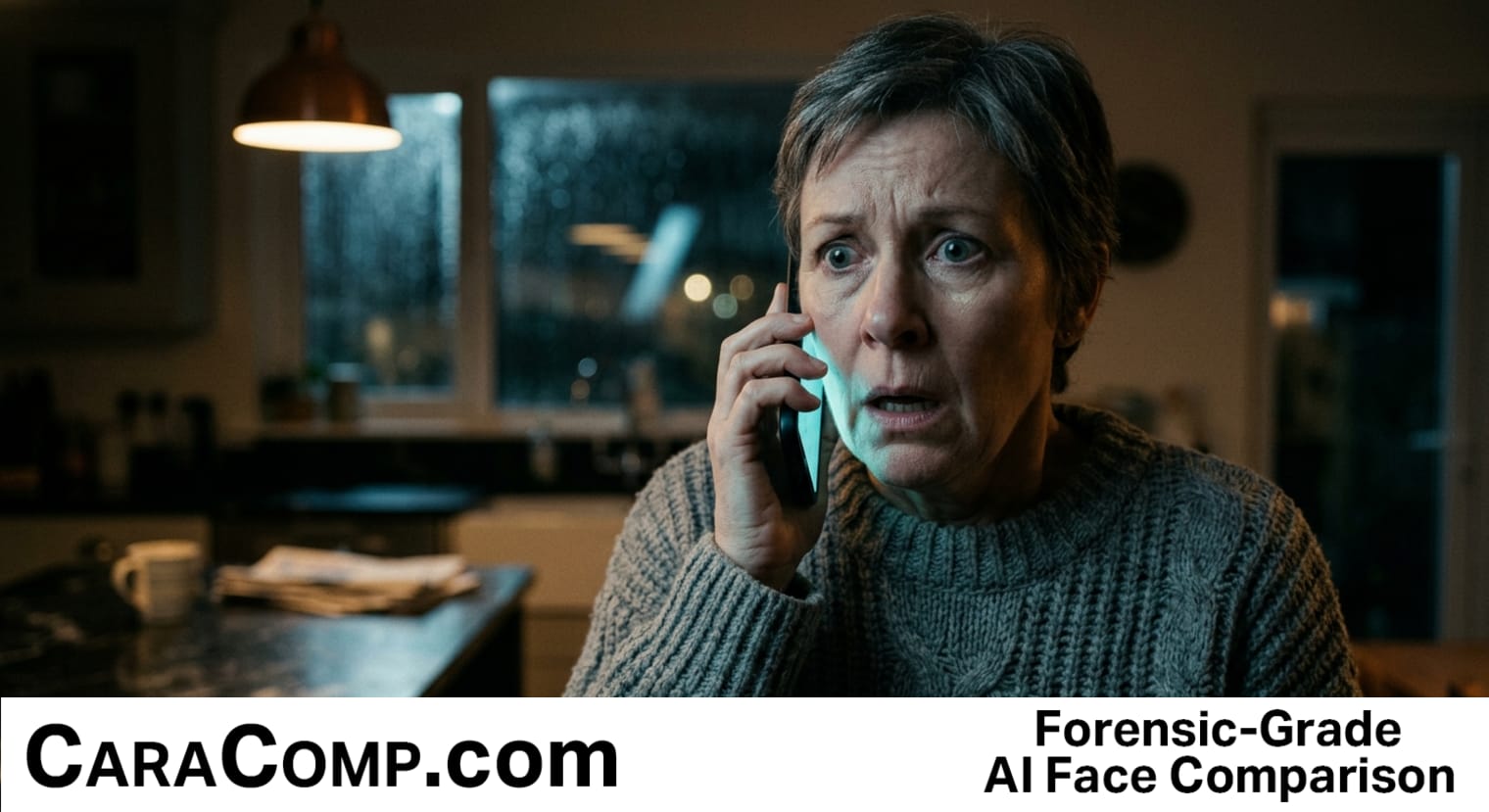
A five-second clip of your child’s voice is currently worth less than a cup of coffee to a digital scammer. For under $10, generative AI can now hijack the most intimate human bond—the sound of a loved one in distress—and turn it into a $635,000 payday. This isn’t just a "tech story"; it represents the total collapse of traditional biometric trust.
As investigators, OSINT researchers, and private detectives, we have to face a hard truth: "hearing is knowing" is officially a dead concept. If you are still relying on your "gut feeling" or manual "eyeballing" to verify identities in case photos or video stills, you are essentially using a flip phone in a 5G world. The same technology that allows a criminal to clone a voice from a birthday video is being used to mask identities and create fraudulent digital footprints.
We see this in insurance fraud and missing persons cases constantly. The human brain is evolutionarily wired to fill in the gaps—to see what it wants to see and hear what it expects to hear. Scammers exploit this "availability heuristic" to bypass our logic. For the professional investigator, the only defense against this level of sophisticated manipulation is objective, Euclidean distance analysis. You cannot stake your reputation on subjective manual comparison when the tools of deception have become this cheap and accessible.
At CaraComp, we believe solo investigators and small firms shouldn't be priced out of the technology required to verify reality. When digital evidence is this easily manufactured, you need more than a side-by-side guess. You need batch processing that can compare faces across hundreds of images with mathematical precision and generate court-ready reports that prove your findings aren't just an opinion—they’re data.
- Biometric trust is shifting from auditory to mathematical verification; human intuition is no longer a reliable investigative tool.
- Manual investigative methods have become a professional liability in the age of $10 voice and image clones.
- Enterprise-grade facial comparison is now a baseline requirement for anyone who needs their evidence to hold up under legal scrutiny.
The gap between the tools available to scammers and the tools used by solo investigators is closing, but only for those willing to upgrade their methodology. Stop guessing and start analyzing.
Read the full article on CaraComp: "Mom, I'm in Trouble" — That Voice on the Phone May Not Be Your Kid


Comments
Post a Comment