Iowa Wants Your Driver's License. Nobody Will Say Where It Goes.
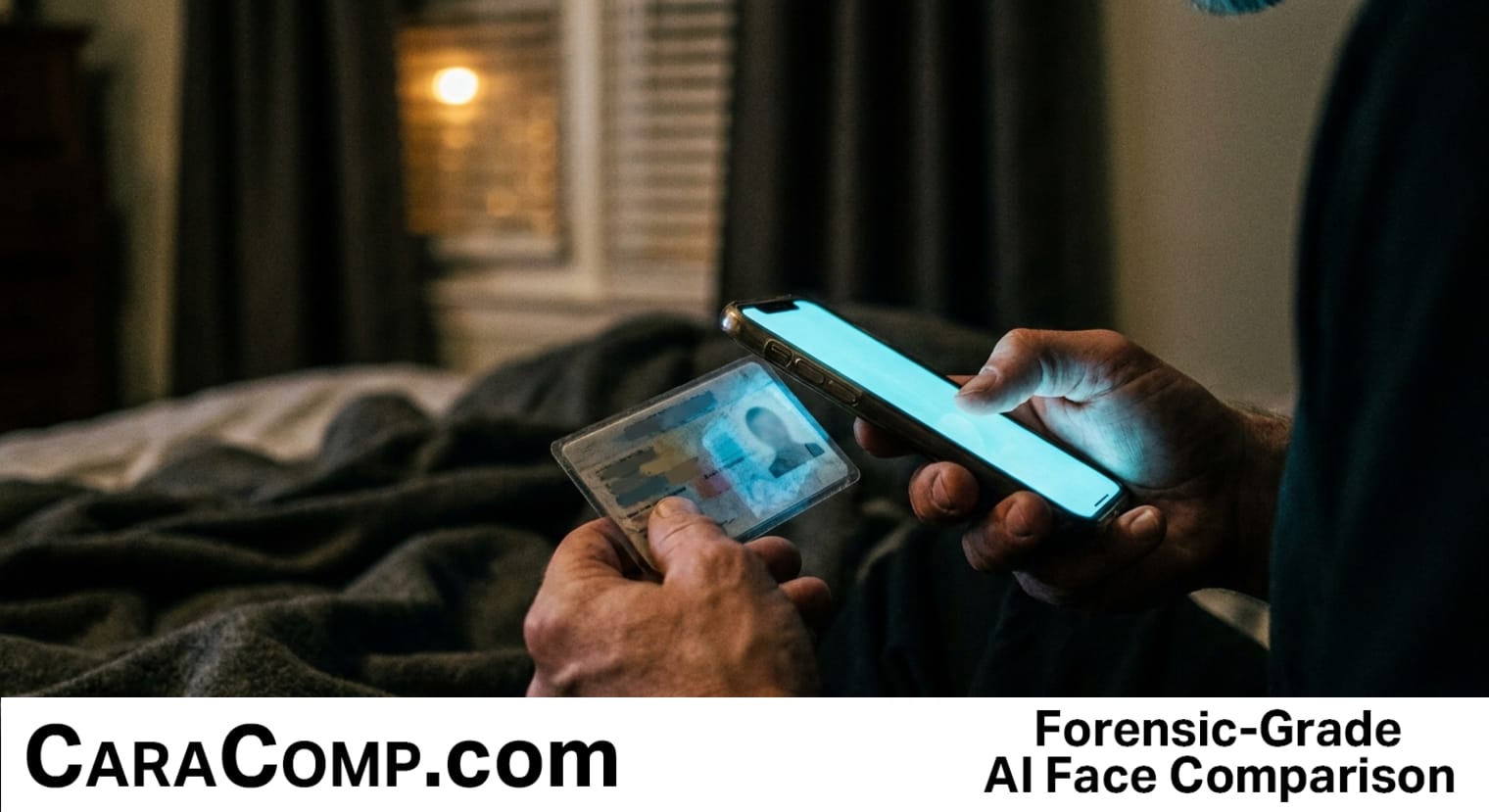
Iowa just legalized a privacy nightmare under the guise of child safety, and the investigative community needs to start paying attention to where this biometric data is actually landing. Handing a stranger your driver’s license is a calculated risk; handing it to a website facing a $10,000-a-day fine is a recipe for a permanent data breach. Under House File 864, adult websites must verify ages or face crippling daily penalties, but the law is dangerously silent on how that biometric data is stored, shared, or deleted.
From the perspective of a professional investigator or OSINT researcher, this is a massive red flag. We deal with facial comparison every day, utilizing sophisticated Euclidean distance analysis to close cases. We know that biometric markers—the very things these websites are now collecting—are the most sensitive assets a person owns. Unlike a password, you cannot change your face once it’s leaked from a poorly secured third-party database. While professional tools like CaraComp are designed for intentional, case-specific comparison to help PIs find the truth, these new mandates are forcing millions of civilians into a giant, unmonitored facial scanning experiment.
The "reasonable age verification" clause in Iowa’s law is a loophole wide enough to drive a server rack through. Platforms have every incentive to hoard ID photos as a "CYA" measure against potential lawsuits. This creates a digital honeypot for bad actors. As investigators, we’ve seen how "secure" databases crumble under basic exploits. If you're a solo PI or a small firm, you understand the importance of court-ready reporting and data integrity—standards that these fly-by-night age-verification startups simply don't meet.
- Biometric Data Honeypots: Because the fines are so high, companies will likely store ID photos indefinitely to prove compliance, creating a massive target for identity thieves and hackers.
- The Credibility Gap: Reliable facial comparison belongs in the hands of professionals using enterprise-grade tools, not as a gatekeeping mechanism for unregulated web platforms.
- Standardization Failure: Without a strict deletion mandate, your face and driver's license could become a permanent part of a shadow database used for things far beyond age gating.
We are entering a period where facial data is being commoditized by legislation. For those of us in the field, it reinforces the need for affordable, professional-grade comparison tools that prioritize investigator control over mass data collection. If you've ever spent hours manually comparing photos only to worry about the reliability of the result, you know that the right tech matters. Iowa is just the beginning; the question is, will you have the tools to navigate this new biometric landscape?
Read the full article on CaraComp: Iowa Wants Your Driver's License. Nobody Will Say Where It Goes.


Comments
Post a Comment