Innocent Man Jailed 50 Days Because a Computer Said His Face "Looked Like" a Criminal's
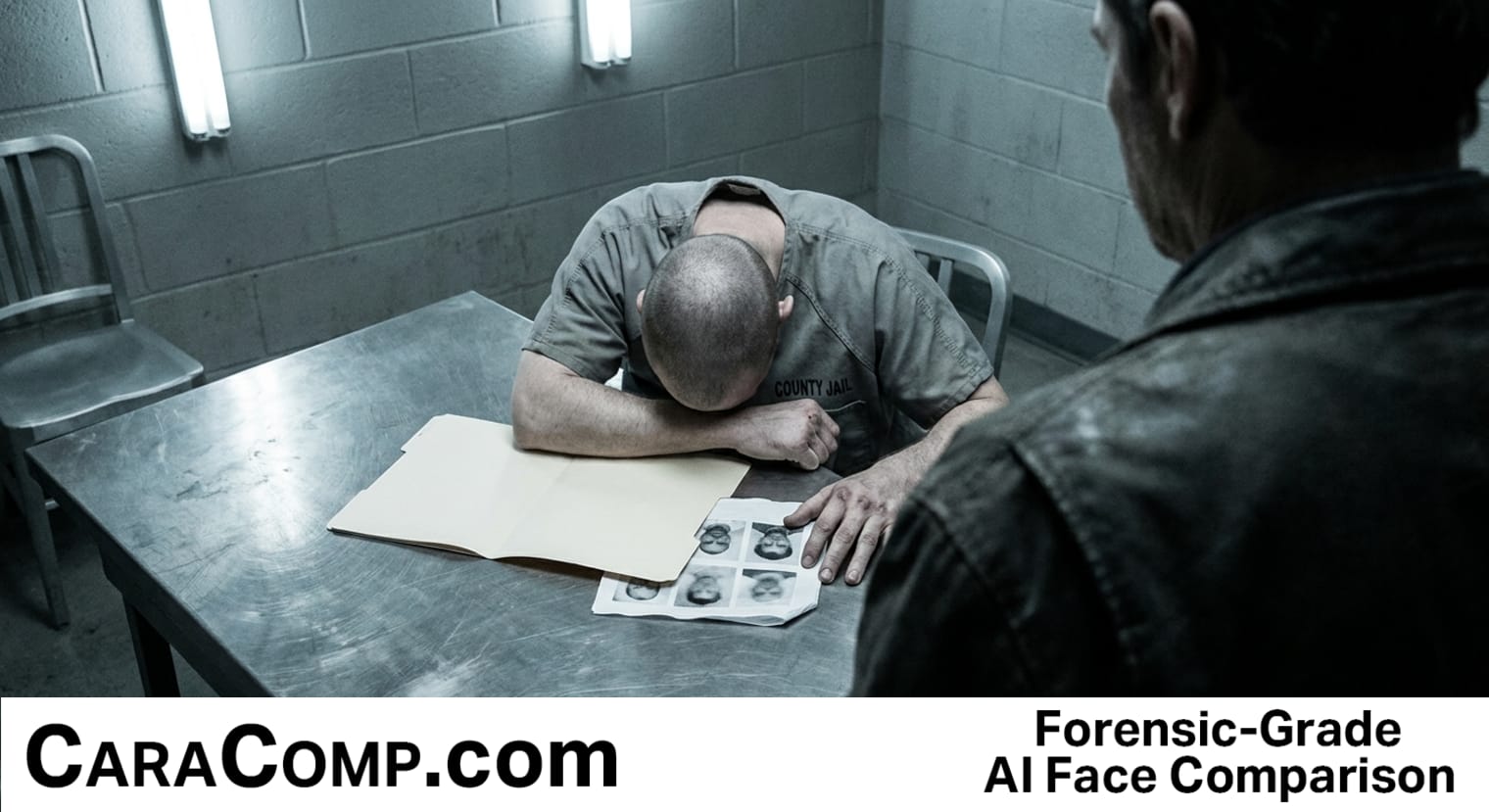
An innocent man spending 50 days in a Florida jail cell because a computer algorithm flagged his face as an "85% match" isn't just a failure of justice—it’s a failure of investigative methodology. The Jacksonville Sheriff’s Office treated a software-generated lead as a definitive conclusion, ignoring the critical gap between a computer’s "maybe" and a human investigator’s "confirmed." For those of us in the OSINT and private investigation world, this case is a loud warning: when you confuse automated search results with professional-grade facial comparison, people lose their freedom and agencies lose their reputations.
The problem isn't the technology; it’s the lazy application of it. High-end enterprise tools often bake in a "black box" certainty that leads detectives to stop looking for corroborating evidence. This is where the distinction between scanning crowds and performing side-by-side analysis becomes vital. Real investigators know that a match is just the beginning of the work, not the end of the case. At CaraComp, we see this constantly—solo investigators are often caught between unreliable, low-rated consumer search engines and overpriced government contracts that prioritize volume over verification.
For solo PIs and OSINT professionals, the stakes are high. Relying on unreliable consumer tools or prohibitively expensive enterprise systems that prioritize "hits" over accuracy is a recipe for disaster. We need tools that provide the mathematical backbone—specifically Euclidean distance analysis—to verify matches without the baggage of mass surveillance. By focusing on side-by-side comparison of the photos you provide, rather than scanning the public, the technology serves the investigator rather than the other way around. This case proves that without a court-ready, verifiable process, even the most advanced tech can become a liability.
- The "Similarity Score" Trap: Investigators must stop treating similarity percentages as proof of identity; an 85% match is an investigative lead, not a warrant for arrest. Professional results require human verification.
- The Verification Gap: Professional-grade analysis requires side-by-side Euclidean distance comparison that investigators can actually explain in a court-ready report, rather than relying on a hidden algorithm's "black box" result.
- Methodology Over Automation: The future of the industry belongs to those who use AI to narrow the field but rely on manual, verifiable comparison to close the case. Accurate methodology is the only way to protect your reputation.
Read the full article on CaraComp: Innocent Man Jailed 50 Days Because a Computer Said His Face "Looked Like" a Criminal's


Comments
Post a Comment