Free Gun Safe From the County? Ask These 2 Questions First.
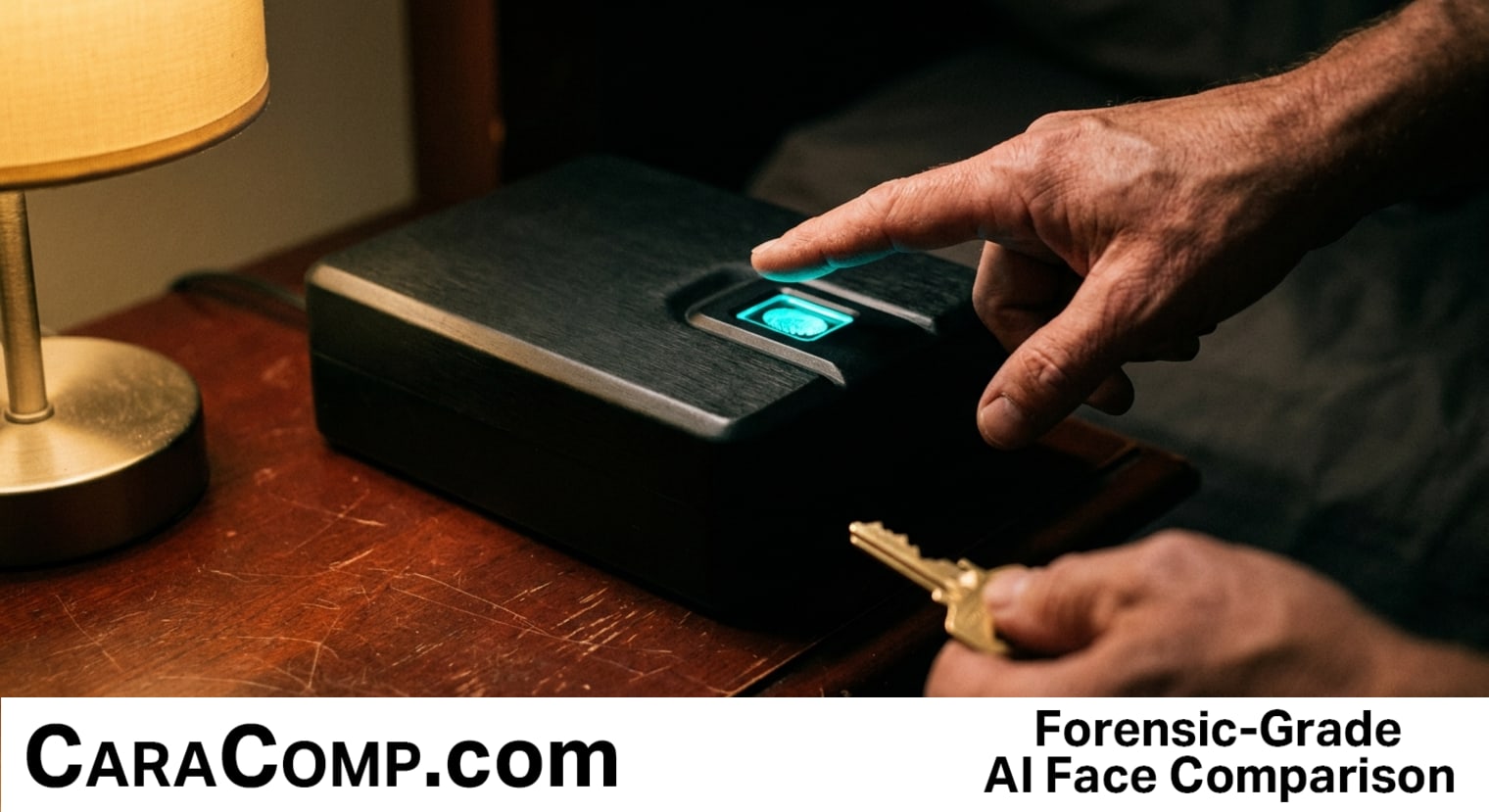
The news about Pierce County handing out 1,500 "free" biometric gun lockboxes sounds like a win for safety until you realize that your "unique" fingerprint might be anything but secure. With five major recall waves hitting the biometric safe market in just the last eighteen months, we are witnessing a dangerous race to the bottom in the commoditization of biometric technology. For the professional investigator, this isn’t just a localized consumer safety story—it’s a glaring warning about the "reliability gap" currently plaguing the entire AI and biometric sector.
When a safe marketed for life-and-death security opens for an unauthorized user because of a faulty sensor or poor programming, it shatters the myth that all biometric tech is created equal. In the investigative world, precision isn't a luxury; it’s the baseline. Whether you are securing a firearm or conducting a facial comparison across hundreds of case photos, the underlying math—specifically the Euclidean distance analysis—must be flawless. Professional-grade biometrics aren't about "scanning crowds"; they are about the mathematical certainty of comparing two specific data points to ensure the person in Photo A is definitively the person in Photo B.
The real issue here is that the market is being flooded with consumer-grade tools that lack professional rigor. Just as a solo PI shouldn’t stake their reputation on a "free" search tool with a 2.4/5 reliability rating, a homeowner shouldn't trust an uncertified sensor to guard a weapon. We are moving into a phase where "affordable" often translates to "unreliable" in the consumer space, leaving professionals to find the middle ground: tools that offer enterprise-grade accuracy without the $2,400-a-year price tag.
As OSINT researchers and private investigators, we have to stay ahead of this trust deficit. We use technology that bridges the gap between high-level accuracy and accessible pricing, ensuring our case reports are court-ready and our analysis is based on methodology, not guesswork.
- The commoditization of biometrics is creating a trust deficit – As consumer-grade sensors fail, investigators must prioritize professional facial comparison tools that provide transparent, mathematical evidence rather than "black box" results.
- Reliability is the only metric that matters – Inconsistent biometric performance in the home highlights why investigators need batch processing and Euclidean analysis to ensure no critical matches are missed.
- The distinction between comparison and surveillance is vital – This news proves that while biometric comparison is the future, the technology is only as good as the professional standards applied to its development.
Read the full article on CaraComp: Free Gun Safe From the County? Ask These 2 Questions First.


Comments
Post a Comment