Flying to Europe This Summer? Plan for a 6-Hour Border Line.
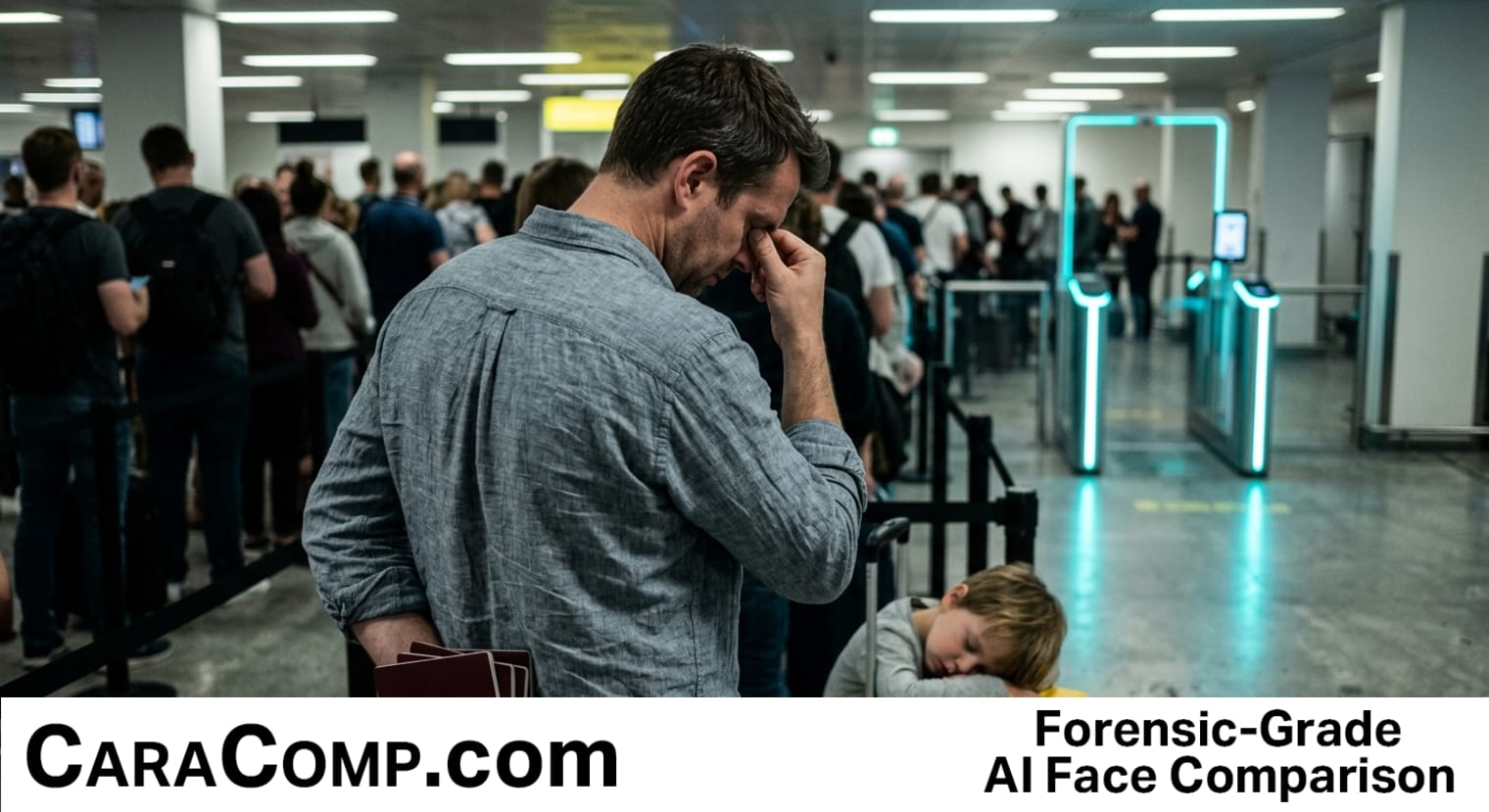
One hundred and twenty-two passengers stood at a gate in Milan this April, clutching valid tickets and watched their easyJet flight disappear into the sky without them. They weren’t late, and they weren’t security risks; they were simply the first victims of a biometric rollout so poorly executed it’s threatening to derail European summer travel entirely. The EU’s new Entry/Exit System (EES) is a textbook example of what happens when powerful technology meets a complete lack of operational agility.
For those of us in the investigation and OSINT fields, this isn't just a travel warning—it’s a masterclass in the growing pains of global biometric adoption. While the EU struggles with six-hour border lines and technical glitches, the underlying reality is clear: facial comparison is no longer a "future" technology. It is the immediate, mandatory standard for verifying identity across the globe. The failure in Rome and Paris isn't a failure of the science—Euclidean distance analysis and biometric mapping are sound—it is a failure of infrastructure. Governments are attempting to run enterprise-level identity checks through 19th-century bottlenecks, and the results are disastrous for the end-user.
As investigators, we should be paying close attention. This chaos proves that while the demand for high-stakes identity verification is skyrocketing, the tools provided by massive agencies are often too bloated and rigid to function under pressure. Small firms and solo investigators can actually move faster than these government giants by adopting the same high-caliber comparison technology without the bureaucratic weight. You don't need a six-figure federal contract to utilize professional-grade analysis; you just need tools that actually work when the volume hits.
- Biometric saturation is the new baseline — If you aren't incorporating facial comparison into your investigative workflow now, you are effectively working with one hand tied behind your back as the rest of the world moves toward a digital-first identity standard.
- The "Enterprise Trap" is real — The EES failure shows that bigger isn't always better. Reliable, efficient technology must be accessible and easy to deploy, or it becomes a liability rather than an asset.
- Accuracy equals reputation — When automated systems fail or lag, human trust erodes. For the modern investigator, having court-ready, reliable results is the only way to maintain professional standing as these technologies become mainstream.
The mess at the European border is a reminder that the world is moving toward total biometric integration. The only question for investigators is whether you’ll be the one waiting in line or the one using the technology to close cases while the giants are still trying to figure out how to scan a passport.
Read the full article on CaraComp: Flying to Europe This Summer? Plan for a 6-Hour Border Line.


Comments
Post a Comment