A Robot Just Rejected You for a Job. In August, It Has to Tell You Why.
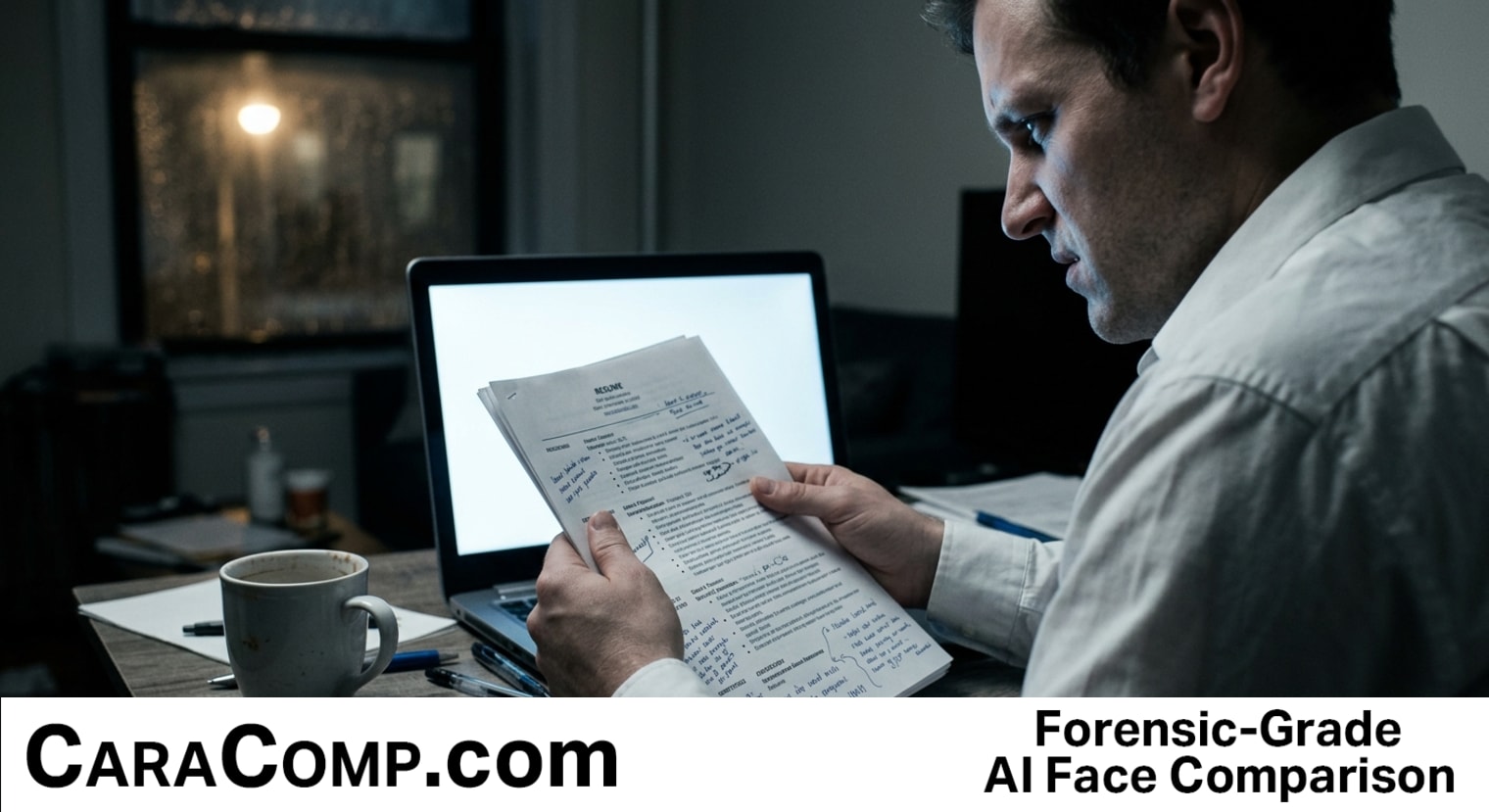
The "black box" era of AI is officially on life support. By August, the EU AI Act will force companies to do something they have avoided for a decade: explain exactly why their algorithms rejected a human being. For years, the phrase "the system scored you low" was a get-out-of-jail-free card for recruiters and agencies alike. Those days are over. If an algorithm makes a consequential decision about a person, there must be a documented, human-auditable trail explaining the "why."
For the professional investigator, this isn’t just a regulatory hurdle—it is a massive validation of the shift toward explainable technology. In our world, we’ve seen the same problem. High-priced enterprise tools often provide a "match" without showing the work, leaving solo PIs and small firms to stake their reputations on a percentage they can’t explain in a deposition. This new legal landscape proves that "AI magic" is no longer enough. Whether you are screening a job candidate or comparing a suspect's face across a thousand case photos, the methodology must be transparent and court-ready.
At CaraComp, we’ve always argued that facial comparison should be built on math, not mystery. This is why we lean into Euclidean distance analysis. It’s a measurable, geometric calculation of the space between facial features. Unlike the opaque "recognition" systems used for mass surveillance, comparison technology is designed for side-by-side analysis of specific photos. It provides a result that a human can actually verify and a court can actually understand.
As this legislation takes hold, several critical shifts will reshape the investigative and biometrics landscape:
- Accountability is the new industry standard. Any tool that cannot produce a professional, human-readable report explaining its findings will become a liability in legal proceedings.
- The "Enterprise" moat is evaporating. High-priced, secretive software is losing its edge to transparent, affordable tools that provide the same Euclidean distance analysis at a fraction of the cost.
- The distinction between comparison and surveillance is vital. Laws are targeting automated "decision-making" and scanning; investigators who use targeted comparison tools to analyze their own case photos stay on the right side of the transparency curve.
The message to investigators is clear: stop using tools that hide their logic. Whether you’re chasing insurance fraud or conducting an OSINT deep dive, you need data you can defend. The future of AI isn't just about being faster; it’s about being able to prove you’re right.
Read the full article on CaraComp: A Robot Just Rejected You for a Job. In August, It Has to Tell You Why.


Comments
Post a Comment