1 in 3 Teens Now Hit by Fake AI Nudes — Here's What to Do Tonight
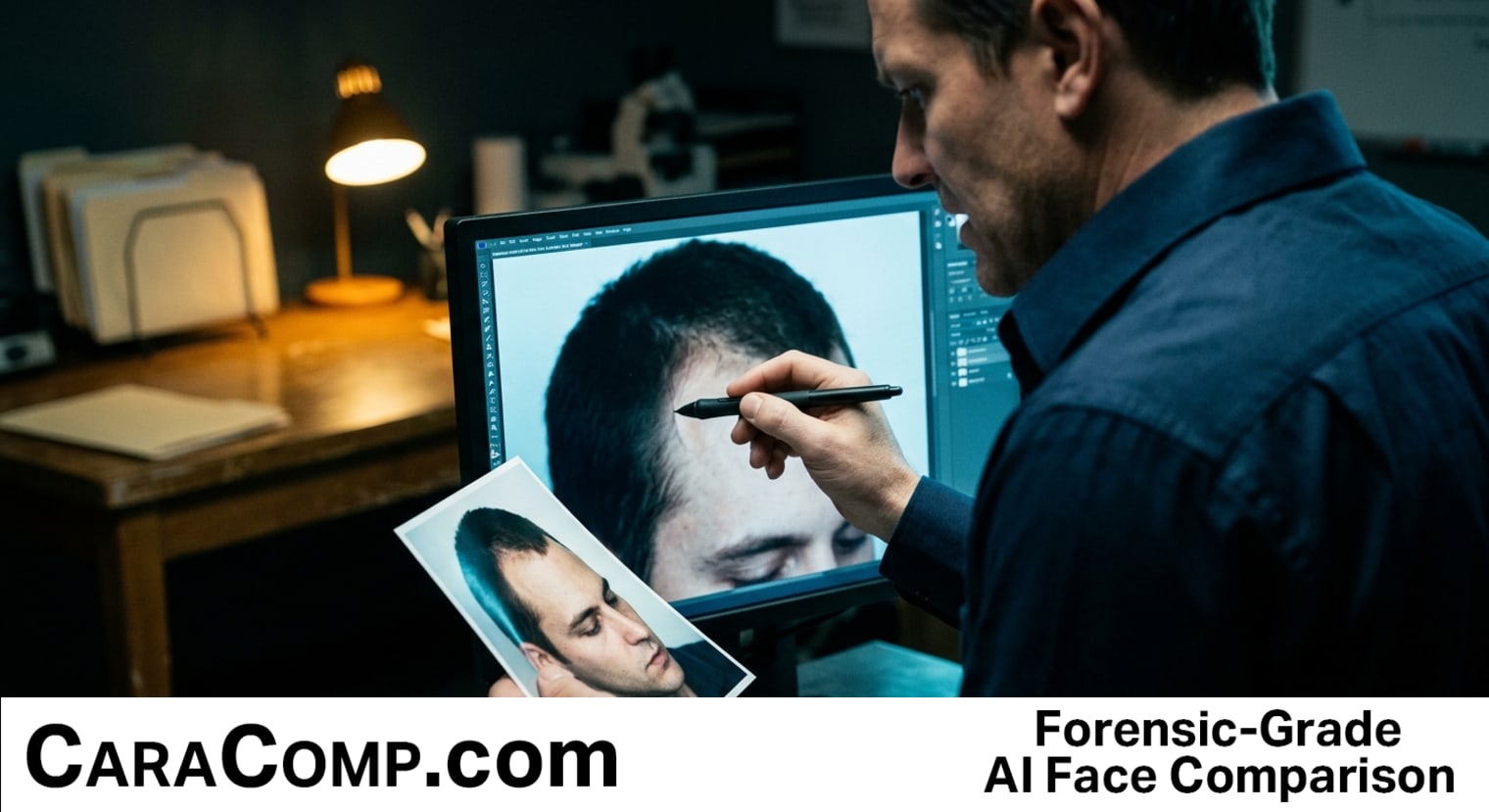
One out of every three teenagers isn't just a statistic; they are a potential case file sitting on an investigator’s desk right now. When George Mason University reveals that 36% of teens have been victimized by AI-generated explicit fakes—and over half admit to creating them—we aren't looking at a "parenting challenge." We are looking at a massive, immediate surge in demand for professional verification and facial comparison services.
For the solo private investigator or OSINT researcher, this news is a klaxon. Families are no longer just calling about missing persons or cheating spouses; they are calling because their child’s reputation is being liquidated in a school group chat by "nudification" apps. The problem? Most investigators are still trying to fight 2026 tech with 2010 manual methods. You cannot "eyeball" a deepfake comparison and expect it to hold weight in a principal’s office, let alone a courtroom. You need Euclidean distance analysis to prove, mathematically, whether a likeness has been misappropriated or manipulated.
The gap between a crime occurring and a law being enforced is where the sharp investigator makes their living. While states slowly pass bans on these apps, the immediate need is for definitive proof. If you are still relying on unreliable consumer search tools or spending three hours manually squinting at pixels, you are failing the client. The modern investigator must be able to take a known photo of a victim, compare it against the malicious content, and generate a professional, court-ready report in minutes, not days.
- The Burden of Proof has Shifted: It is no longer enough to say an image "looks fake." Investigators must provide empirical facial comparison data to clear a victim's name or identify the source material used in a deepfake.
- Verification is the New OSINT Goldmine: As AI tools become more accessible to malicious actors, the ability to provide affordable, enterprise-grade likeness analysis is becoming a core requirement for small firms and solo PIs.
- Manual Comparison is a Liability: Staking your professional reputation on a "gut feeling" or a low-reliability consumer tool is a recipe for disaster in high-stakes deepfake cases.
At CaraComp, we see this as the definitive turning point for the industry. Advanced facial comparison technology is no longer a luxury for federal agencies; it is a required tool for any investigator who wants to close cases and protect clients in an age of automated digital harm. You don't need a six-figure government budget to provide these answers—you just need the right tech to bridge the gap.
Read the full article on CaraComp: 1 in 3 Teens Now Hit by Fake AI Nudes — Here's What to Do Tonight


Comments
Post a Comment