Your Facial Recognition Tool Is Lying to You: Why 50% of Deepfakes Slip Past Investigators
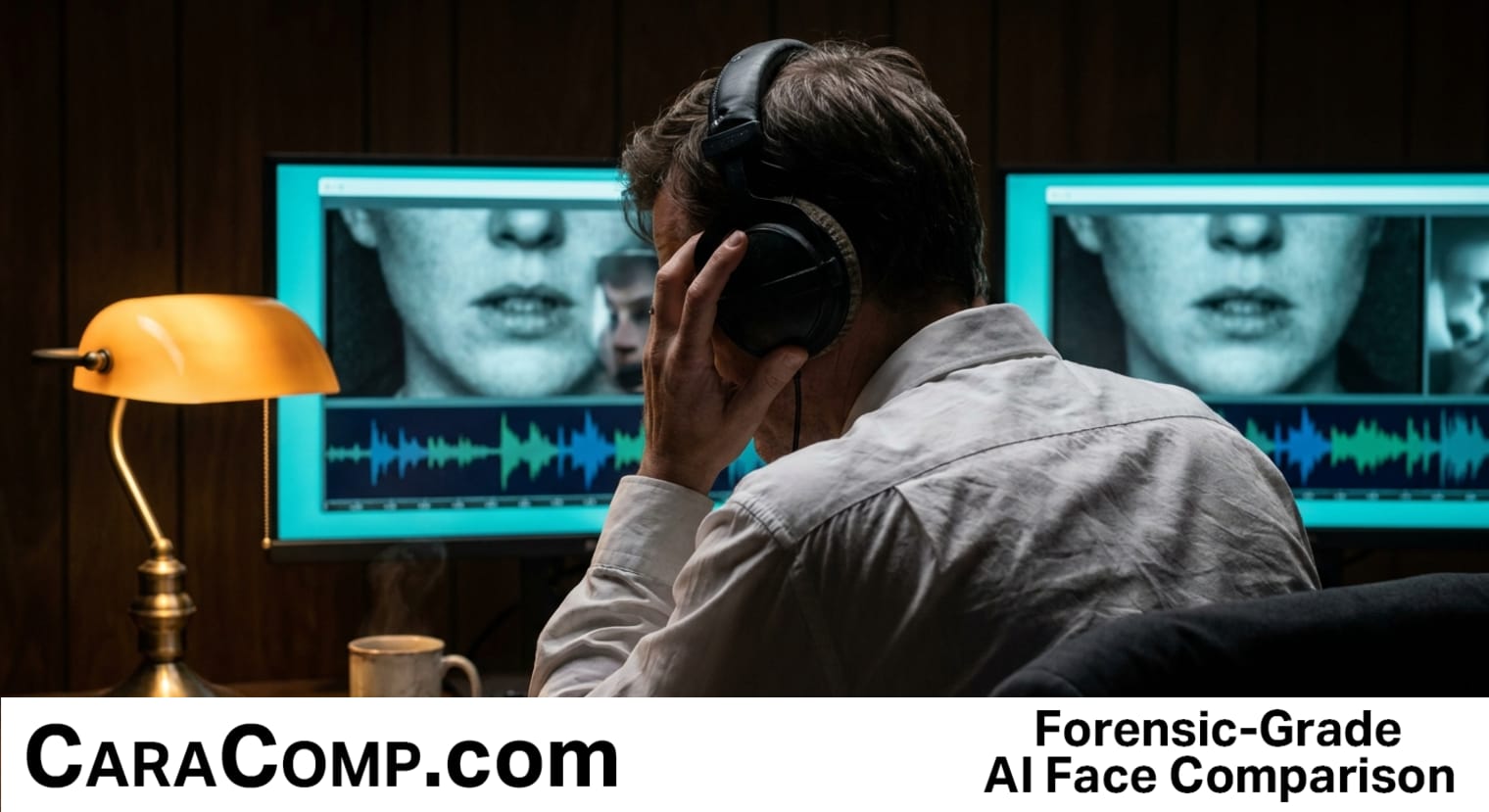
A 95% confidence match on a facial comparison tool isn’t a victory; it’s a potential trap. If you are relying on a single-layer algorithm to confirm identity in a world of synthesized media, you are effectively flipping a coin with your professional reputation. Recent data suggests that up to 50% of people cannot distinguish authentic video from deepfakes, and even seasoned investigators are falling for the "confidence trap" where a high-scoring geometric match blinds them to the broader forensic reality.
At CaraComp, we provide the Euclidean distance analysis necessary for enterprise-grade investigation technology, but we also know that facial comparison is a lead, not a verdict. The industry is hitting a wall where the face in a video might be 100% authentic—it is your subject—but the words they are "speaking" are entirely synthetic. This lip-sync manipulation is the new frontier of fraud, and it bypasses traditional comparison tools because the landmarks of the face remain technically accurate while the context is forged.
For the solo private investigator or the small firm OSINT researcher, this means the workflow must evolve. You cannot simply upload a photo, get a match, and close the case. You need a forensic stack that treats facial comparison as the first filter in a multi-signal analysis. When enterprise tools cost upwards of $1,800 a year, most solo PIs feel forced to use unreliable consumer search engines that lack court-ready reporting. This creates a dangerous gap where the investigator is either priced out of the truth or relies on "good enough" tools that fail to spot a sophisticated deepfake.
Key Implications for Modern Investigators:
- Facial comparison is a single signal, not a conclusion. High-confidence matches only confirm that the face looks like the subject; they do not account for synthesized audio or manipulated lip movements.
- Investigation technology must be accessible. Solo investigators need enterprise-grade Euclidean distance analysis without the $2,000 price tag to ensure they aren't missing critical technical artifacts in their evidence.
- The "Forensic Stack" is the new standard. Professional reports must now account for a multilayered approach, checking faces, audio consistency, and metadata to withstand the scrutiny of modern courtrooms.
The investigators who stay ahead are those who stop looking for a "magic button" and start using powerful, affordable comparison tools as part of a disciplined forensic methodology. Don't let a high confidence score be the reason you miss the fake.
Read the full article on CaraComp: Your Facial Recognition Tool Is Lying to You: Why 50% of Deepfakes Slip Past Investigators


Comments
Post a Comment