Your Facial Recognition Isn't Broken. Your Source Photos Are.
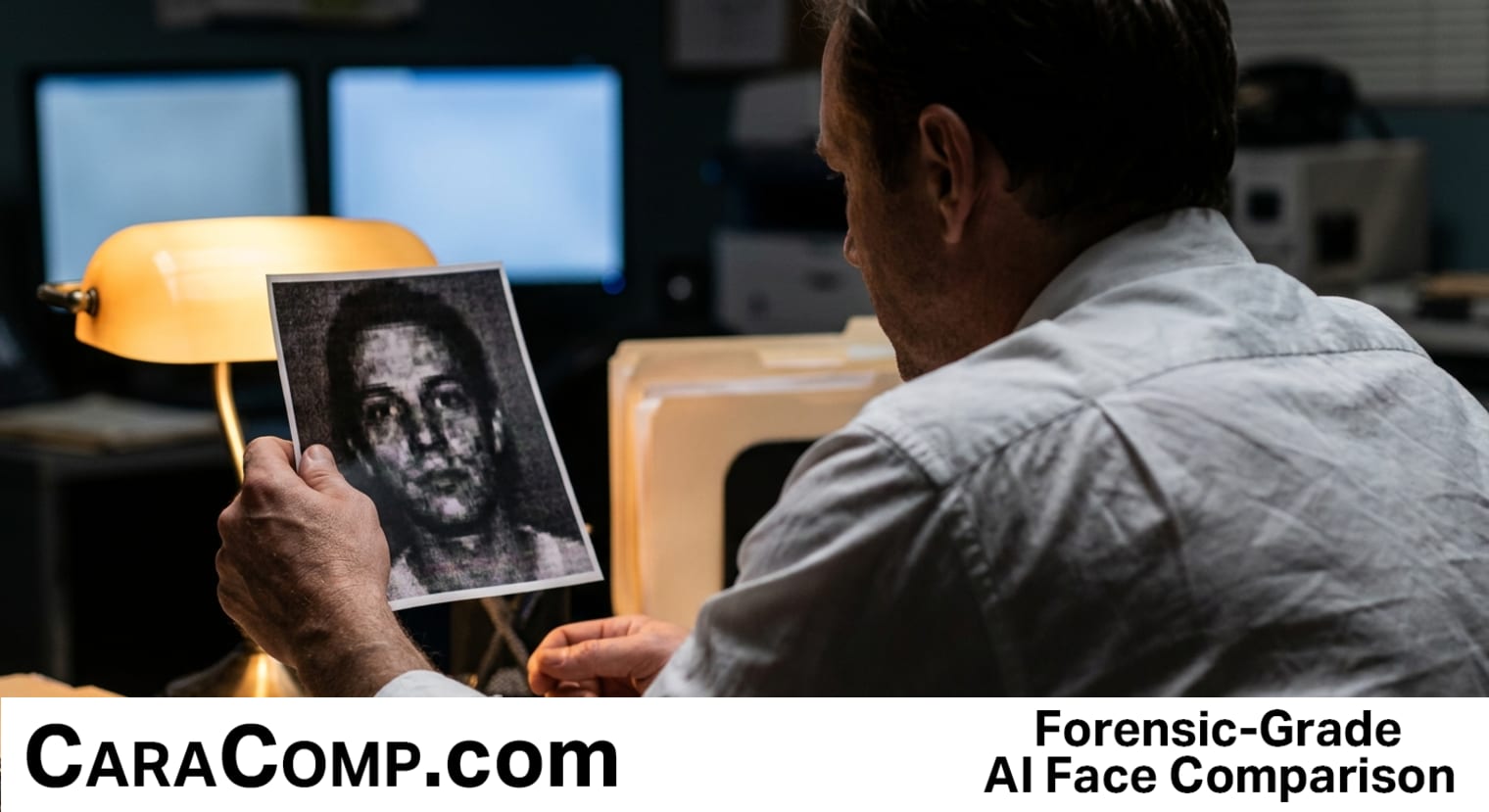
The most expensive facial recognition algorithm in the world is effectively a paperweight if you’re feeding it low-resolution, off-angle source photos. We see it constantly: investigators blame the "tech" when a match fails, but the reality is that biometric accuracy is a mathematical certainty dictated by your inputs. If your enrollment discipline is sloppy, your results will be too.
For the solo private investigator or the small firm detective, this is a wake-up call. We’ve been conditioned to believe that "AI magic" can reconstruct a face from three pixels. It can't. Facial comparison is a science of Euclidean distance—the numerical measurement of relationships between facial features. When you provide a grainy, compressed photo from a social media scrape, you aren't just giving the system a bad picture; you are fundamentally breaking the math it uses to give you a match score.
At CaraComp, we provide the same enterprise-grade Euclidean distance analysis used by federal agencies, but we provide it to the solo investigator at a fraction of the cost. However, the tool is only as sharp as the investigator using it. Success in modern OSINT and fraud investigation requires moving past "eyeballing" and toward a disciplined approach to source data. You don't need a million-dollar contract; you need better enrollment standards and a tool that doesn't lie to you about the quality of your match.
Key Industry Implications:
- The "Garbage In, Garbage Out" rule is the only law of biometrics. No amount of algorithmic sophistication can compensate for a poor source image. Investigators must prioritize high-quality reference photos to maintain their professional reputation.
- Euclidean distance is the objective truth in court. Manual comparison is subjective and prone to bias. Using standardized mathematical distance analysis turns a "gut feeling" into a professional, court-ready report.
- Metadata is the new evidence. Understanding how and where a photo was captured is just as important as the pixels themselves. Reliable comparison requires context, not just a search bar.
Stop chasing more complex software and start mastering the data you already have. The investigators who close cases the fastest aren't the ones with the biggest budgets; they’re the ones who understand that technology is a force multiplier for their own precision. If you're still manually comparing faces across hundreds of photos, you're not just behind the times—you're risking a catastrophic false negative.
Read the full article on CaraComp: Your Facial Recognition Isn't Broken. Your Source Photos Are.


Comments
Post a Comment