Your Face Is Now Your Boarding Pass — And 73% of Flyers Just Said Yes
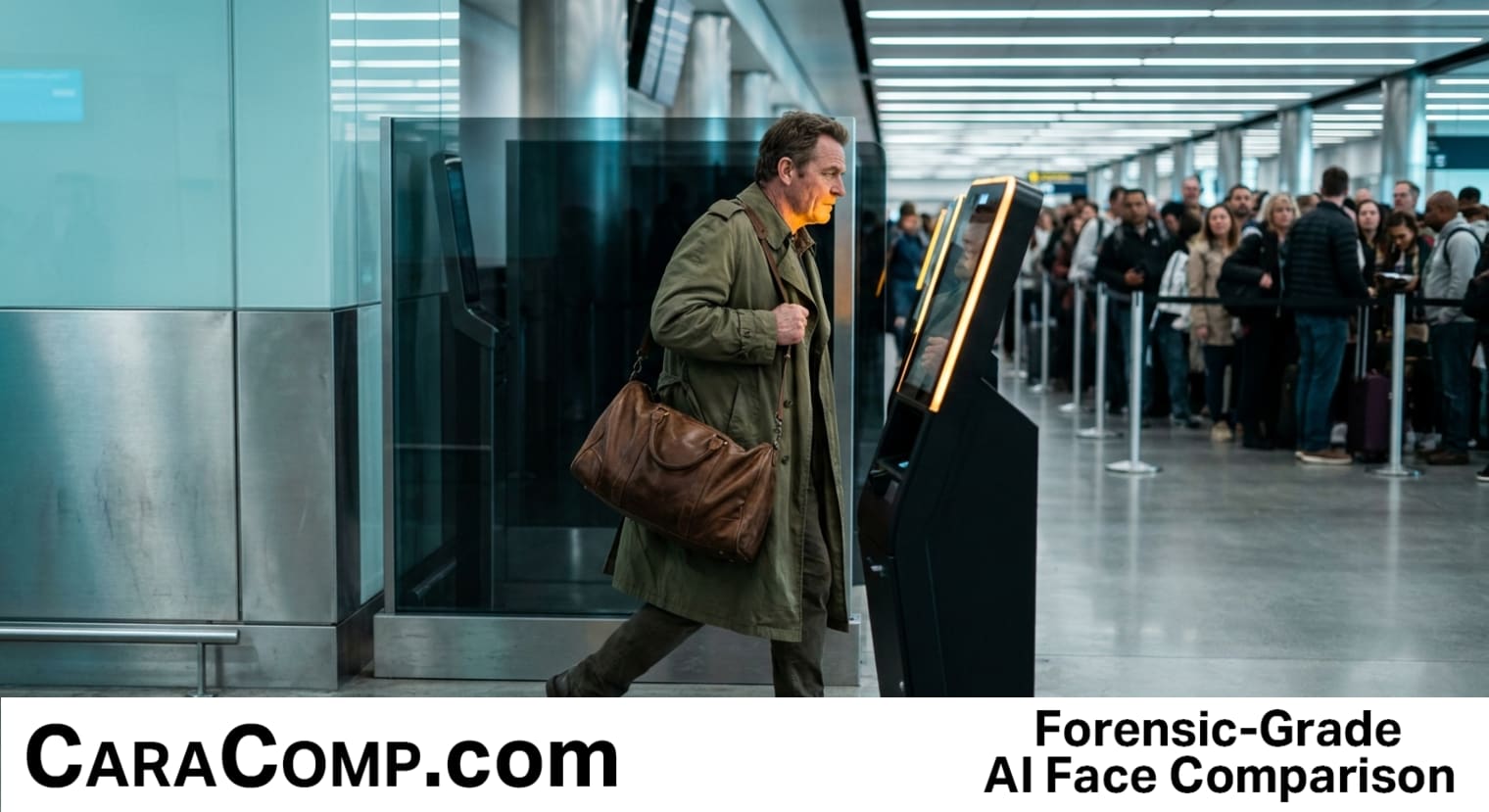
Forget the ethics committees and the privacy manifestos; if you want to know the future of facial technology, look at the boarding gate at Vancouver International Airport. While theorists debate the philosophy of biometrics, 73% of travelers have already voted with their faces, trading their most unique biological identifier for a measly three seconds of convenience. This isn't just an airport update; it is the death of the "creepy" narrative and the birth of facial comparison as a standard, everyday utility.
For the professional investigator, this shift is a massive tactical win. For years, solo PIs and OSINT researchers have operated in a shadow of skepticism, worried that using advanced facial comparison might look like "overreach" to a client or a court. Vancouver’s rollout proves that the public's "social license" for this tech is granted the moment it solves a visceral pain point. In the airport, that pain is the boarding queue. In an investigation, that pain is the three-hour manual slog of comparing a graining doorbell cam shot against a thousand social media profiles.
We are entering an era where manual facial analysis is no longer just slow—it’s professionally negligent. When the average traveler expects an instant biometric match to board a flight to New York, a client will no longer accept a "maybe" from an investigator who spent half a day squinting at ear shapes. They want the speed of an airport gate backed by the precision of Euclidean distance analysis. They want professional, court-ready reports that look as polished as a TSA digital ID log.
- The Normalization Flywheel: As biometrics become the standard for travel and banking, the "tech-forward" investigator who uses automated facial comparison will be seen as the industry standard, while manual-only PIs will look like they are still using a rotary phone.
- Comparison vs. Surveillance: The airport's success hinges on 1:1 or 1:N comparison—matching a person to a document. This validates the specific investigative methodology we use: taking a known photo and comparing it against evidence, rather than broad, unfocused scanning.
- The Death of the "Good Enough" Tool: With 98% of airlines adopting high-tier biometrics, the era of relying on buggy, consumer-grade search tools is over. Professional investigators must use enterprise-grade analysis to maintain credibility in a world that now understands what "good" facial tech looks like.
The "normalization" of this technology at the boarding gate is doing the heavy lifting for our industry. It is stripping away the mystery and leaving behind a powerful, efficient, and increasingly expected tool for closing cases. If a traveler can trust their face to get them across a border, a client can certainly trust a professional report backed by the same mathematical precision.
Read the full article on CaraComp: Your Face Is Now Your Boarding Pass — And 73% of Flyers Just Said Yes


Comments
Post a Comment