Your "Biometric Age Check" Isn't Verifying Identity — And Defense Lawyers Know It
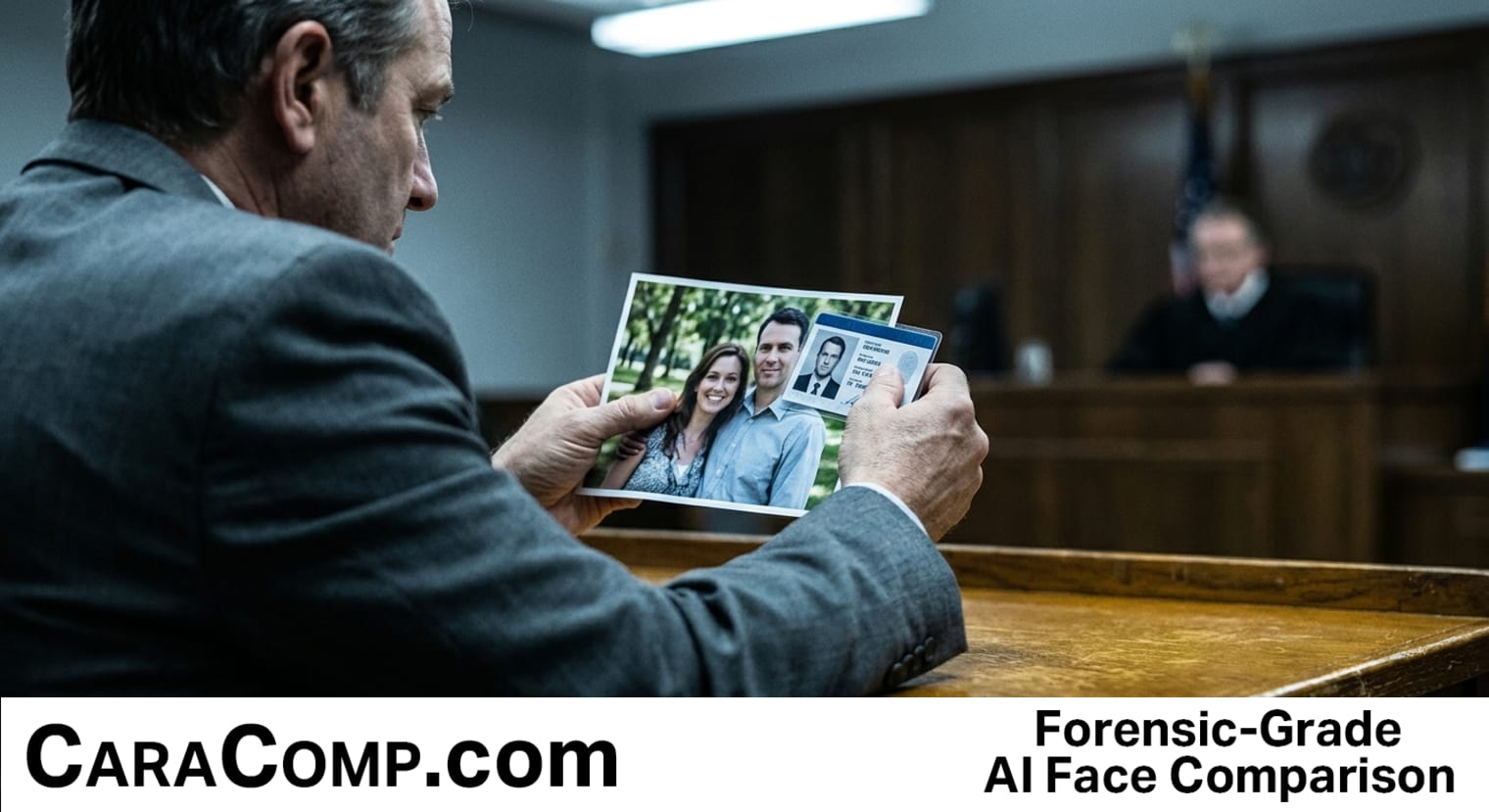
Defense attorneys are licking their chops at the prospect of cross-examining an investigator who doesn't know the difference between an algorithm "guessing" a person's age and an algorithm mathematically verifying an identity. If your case relies on a face-scan that simply flagged a suspect as "over 18," you haven't secured evidence—you’ve secured a liability. The technical gap between age estimation and identity comparison is where forensic testimony collapses and where professional reputations go to die.
For the solo private investigator or OSINT researcher, this distinction is everything. Many automated platforms used for age-gating are built on probabilistic classification. They look at wrinkle depth, skin texture, and muscle volume to provide a "best guess" within a 2.5-year error margin. That is not forensic science; it’s a high-tech hunch. When you're in the field, you cannot afford to confuse a probabilistic guess with a Euclidean distance analysis—the mathematical gold standard for facial comparison.
At CaraComp, we see investigators struggling to keep up with enterprise-level agencies because they think "biometrics" is a monolithic black box. It isn’t. True facial comparison isn't about scanning crowds or guessing if someone is old enough to buy a drink. It’s about taking two specific photos—your case photos—and measuring the exact mathematical distance between facial landmarks to see if they match. If your tool can’t produce a report explaining that math, it doesn't belong in a courtroom.
- The "Vibe Check" Vulnerability: Age estimation tools often fail across different demographics, leading to false positives that defense counsel will easily exploit to prove bias or inaccuracy in your methodology.
- The Credibility Gap: Relying on cheap consumer "search" tools that offer high error rates makes you look like an amateur. Professionals use Euclidean distance analysis to ensure their matches are based on geometry, not probability.
- Forensic Documentation is Mandatory: If your biometric tool doesn't provide a court-ready report that separates liveness, age, and identity matching, you are leaving your client’s case—and your fee—vulnerable to a motion to suppress.
The future of investigation isn't just about having the tech; it’s about having the right tech at a price that doesn't eat your entire margin. Solo investigators can now access the same mathematical comparison engines used by federal agencies without the $2,000 annual price tag. Stop guessing and start measuring.
Read the full article on CaraComp: Your "Biometric Age Check" Isn't Verifying Identity — And Defense Lawyers Know It


Comments
Post a Comment