Why 9 Crore Farmers Can't Get Their ₹2,000 — And What It Reveals About Identity Tech
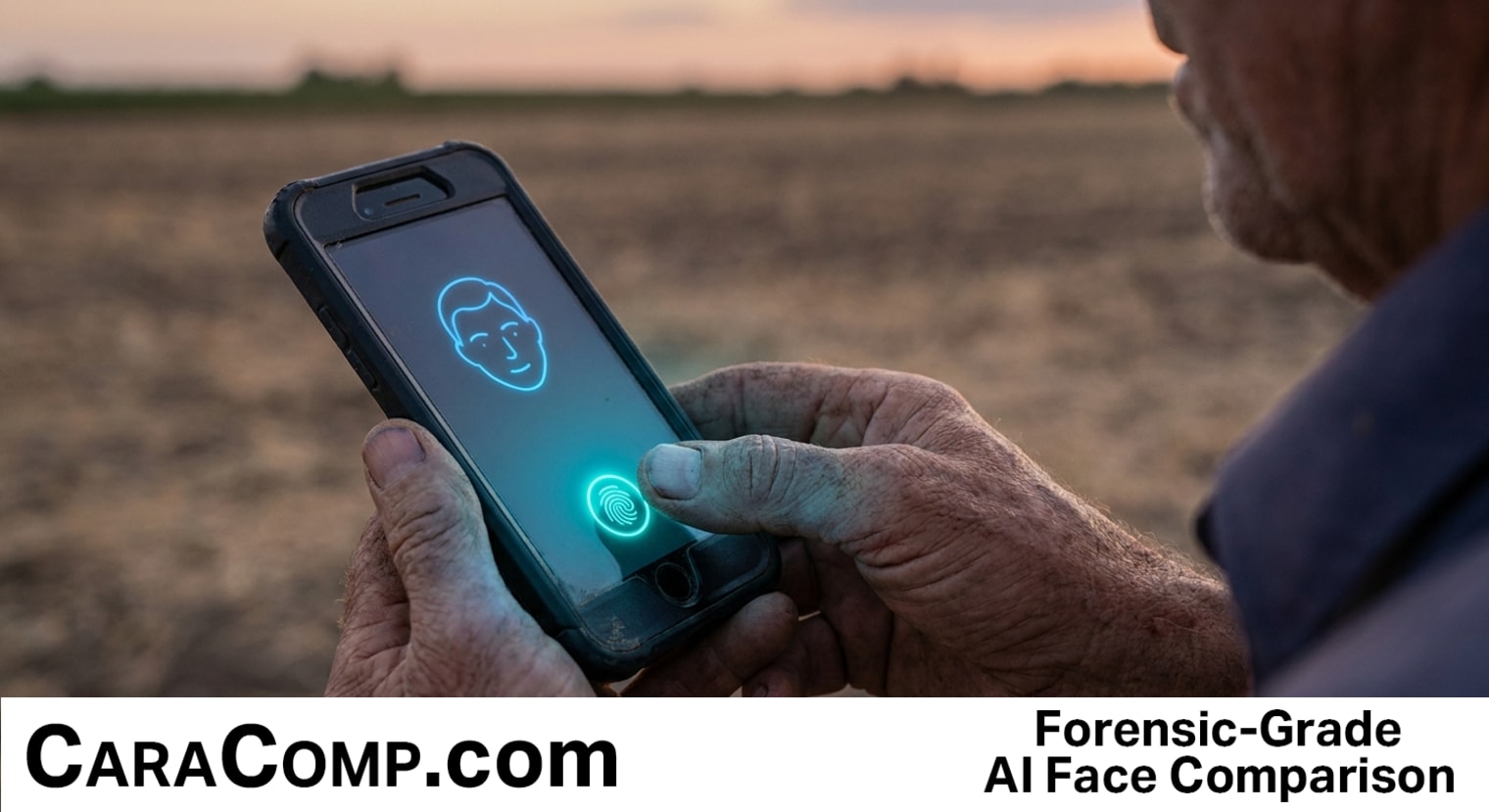
Nine crore farmers are currently staring at a zero-rupee balance for one reason only: the "completion gap" in biometric identity tech. While the identity industry obsesses over match rates and sub-millisecond liveness detection, India’s PM-Kisan scheme is proving that even the most robust infrastructure fails when the workflow creates friction. For the professional investigator or OSINT researcher, this isn't just a global news story—it’s a diagnostic of why traditional investigative tools are failing in the field.
The problem in India isn't that the facial comparison or thumbprint algorithms are broken. It’s that the system is so cumbersome that millions of people simply cannot finish the verification. At CaraComp, we see this exact friction poisoning the investigative industry. Solo private investigators and small firms often spend three or four hours manually comparing faces across case photos because they’ve been told that professional-grade Euclidean distance analysis is an enterprise luxury reserved for six-figure government contracts. When the technology is too expensive or too complex to navigate, the investigator defaults to manual, error-prone methods. That is the "completion gap" in action.
If you are still squinting at two monitors trying to decide if a subject’s ear shape matches a 2018 surveillance still, you are suffering from the same systemic friction as those nine crore farmers. The technology exists to automate this with surgical precision, yet most investigators are priced out or walled off by complex APIs and "big brother" surveillance contracts. We believe that professional case analysis shouldn't require a federal budget or a degree in data science. It should be as simple as an upload and a click, providing court-ready reporting that moves a case from "pending" to "closed."
- Workflow completion is the only metric that matters. High-accuracy algorithms are useless if the investigator abandons the tool because it is too expensive or difficult to use. Efficiency is a requirement, not a luxury.
- Affordability is a tool for justice. When enterprise-grade facial comparison is priced at $2,000 a year, it forces solo PIs to rely on unreliable consumer tools or manual labor, leading to missed matches and damaged reputations.
- Professional reporting closes the gap. A comparison is only as good as the report it generates. For results to hold up in court or before an insurance SIU, the technology must produce a clean, professional output that explains the match through data.
The lesson from PM-Kisan is clear: the most powerful identity tech in the world is a failure if it stays locked behind a wall of friction. Investigators deserve tools that bridge the gap between "I think that's him" and "I can prove that's him."
Read the full article on CaraComp: Why 9 Crore Farmers Can't Get Their ₹2,000 — And What It Reveals About Identity Tech


Comments
Post a Comment