The Hidden Number That Decides if Your Biometric Door Opens
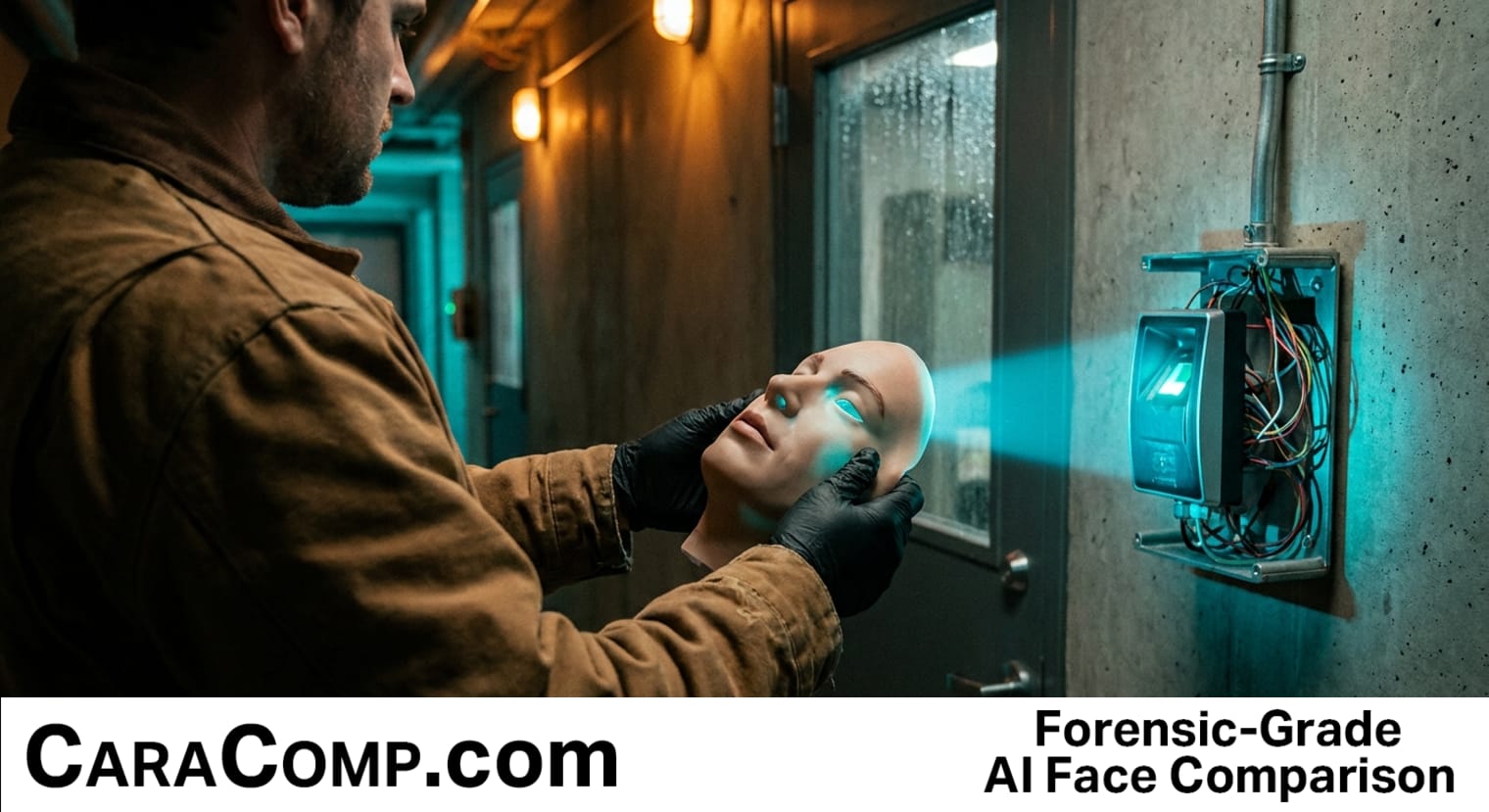
Your evidence isn’t a "match" because the AI is sentient—it’s a match because of a hidden number some developer picked in an office halfway across the country. Most investigators treat facial comparison like a magic trick, but in the world of high-stakes forensics and OSINT, the "magic" is actually a configurable threshold. If you don't understand the Euclidean distance analysis behind your results, you’re not just risking a case; you’re risking your reputation on a coin flip.
The core tension in biometrics is the tradeoff between the False Accept Rate (FAR) and the False Reject Rate (FRR). For a solo private investigator or a police detective, this isn't just academic jargon. It’s the difference between identifying a suspect and getting sued for a false accusation. If you set your matching bar too low, you’ll find matches everywhere, most of which are junk. Set it too high, and you’ll miss the fraudster who simply grew a beard or changed their lighting. The "98% accuracy" claims you see in marketing are meaningless unless you know where that threshold is set.
At CaraComp, we believe investigators shouldn't have to choose between enterprise-grade math and a subscription that costs more than their car payment. Whether you’re analyzing a door-cam clip or batch-processing 500 photos from a social media scrape, you need the same Euclidean distance analysis used by federal agencies. The difference is that you shouldn't need a six-figure government budget to access it. Facial comparison is a tool for professional methodology, not a surveillance net, and it’s time solo PIs had the tech to prove it in court.
- The Threshold is the Verdict: Accuracy isn't a fixed feature of a camera or software; it is a human decision. Investigators must move away from "it looks like him" to "the mathematical distance meets our evidentiary standard."
- Reliability Over Convenience: Consumer-grade search tools often prioritize "hits" over "truth," leading to dangerous false positives. Professional investigation requires tools that allow for batch comparison and generate court-ready reports.
- The End of the Enterprise Monopoly: Sophisticated facial comparison technology is finally decoupling from massive government contracts, allowing small firms to run the same high-level analysis at a fraction of the cost.
Understanding the math behind the match is what separates a hobbyist from a professional. If you aren't looking at the numbers behind the face, you aren't really investigating.
Read the full article on CaraComp: The Hidden Number That Decides if Your Biometric Door Opens


Comments
Post a Comment