The Fake People Fooling Your Fraud Team: Why a Perfect ID Match Is the Red Flag You're Missing
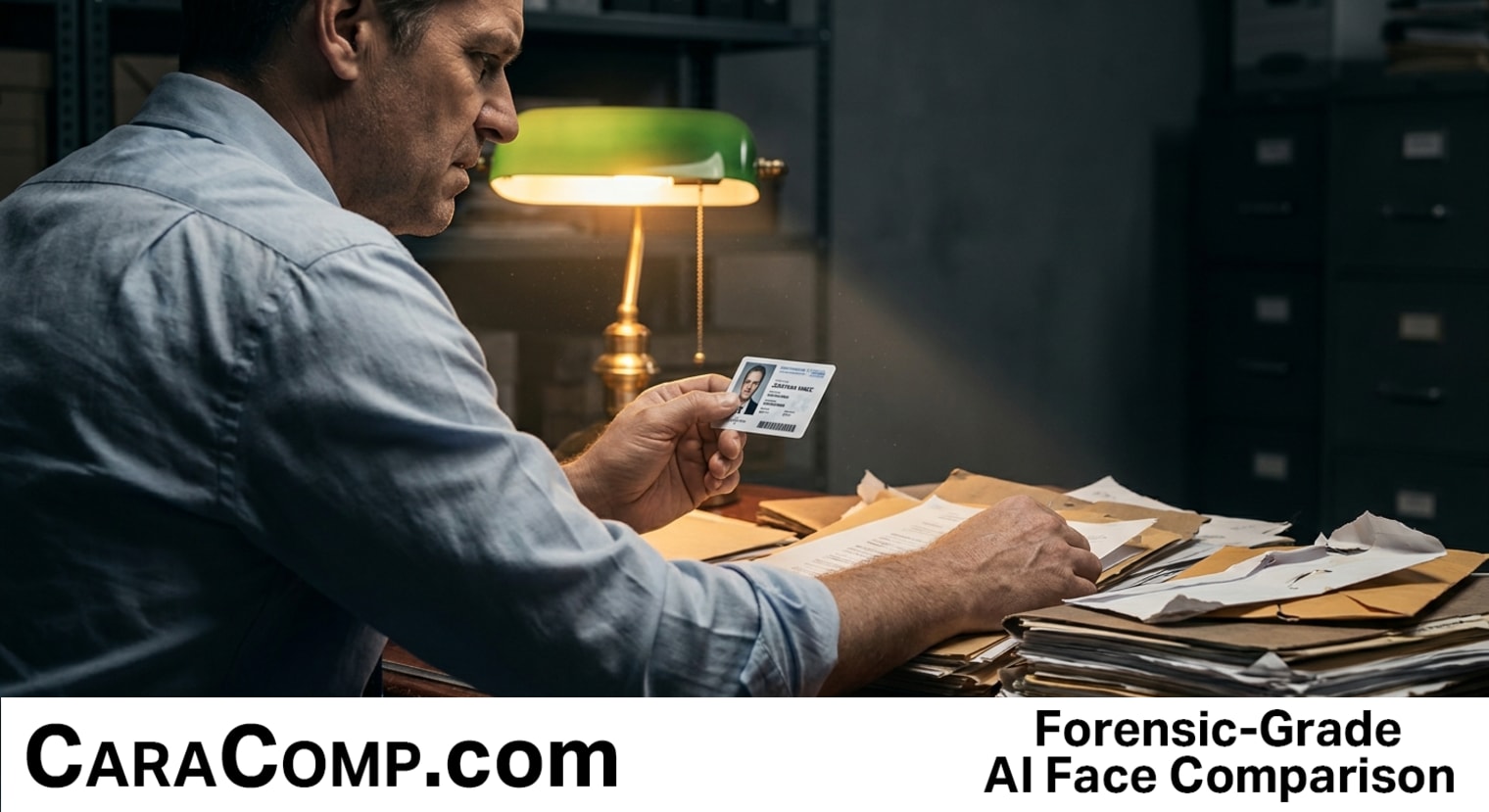
The cleanest identity match in your case file might actually be the biggest red flag you’ve seen all year. While most investigators are still patting themselves on the back for confirming a face matches an ID, high-level fraudsters are laughing all the way to the "bust-out." We have entered a phase where a "perfect" verification isn't a sign of a legitimate client—it's the hallmark of a manufactured person designed specifically to bypass the checks we trust most.
Synthetic identity fraud has evolved from a niche banking headache into a full-blown crisis for private investigators and OSINT professionals. The scary part? There is no victim to call you. When a criminal assembles a "Marcus T. Rivera" using a child's SSN and a deepfaked profile, they aren't just stealing a life; they are building a financial ghost. For a solo PI or a small firm, relying on manual comparison or unreliable consumer search tools is like bringing a magnifying glass to a drone fight. If you aren't using enterprise-grade analysis to spot these anomalies, you aren't just behind—you’re a liability to your clients.
At CaraComp, we see this methodology shift in real-time. Investigators can no longer afford to spend three hours manually squinting at photos only to produce a report that might be based on a fabrication. You need the same Euclidean distance analysis used by federal agencies to prove—with mathematical certainty—whether the face in your case photos is consistent across a batch of evidence or an AI-generated mask. The industry is moving toward batch processing and court-ready reporting because, in today's fraud landscape, a "gut feeling" won't hold up in a deposition.
- The Verification Paradox: A flawless face-to-ID match is no longer the finish line; it is often the first sign of an AI-augmented synthetic identity designed to pass liveness detection.
- Batch Analysis is Mandatory: Catching "clean fraud" requires clustering data across multiple photos and documents simultaneously to find the behavioral cracks that a single-point check misses.
- Technology Democratization: As fraud becomes industrial-scale, solo investigators must adopt enterprise-level biometric tools to maintain their reputation and keep pace with high-tech criminal syndicates.
If you are still staking your professional reputation on manual methods or "good enough" consumer tools, you are leaving the door wide open for synthetic fraud to walk right past you. It’s time to close the gap between your case results and the tech the big firms are using.
Read the full article on CaraComp: The Fake People Fooling Your Fraud Team: Why a Perfect ID Match Is the Red Flag You're Missing


Comments
Post a Comment