That 95% Face Match? Scammers Built the Other 3 Layers to Fool You Too
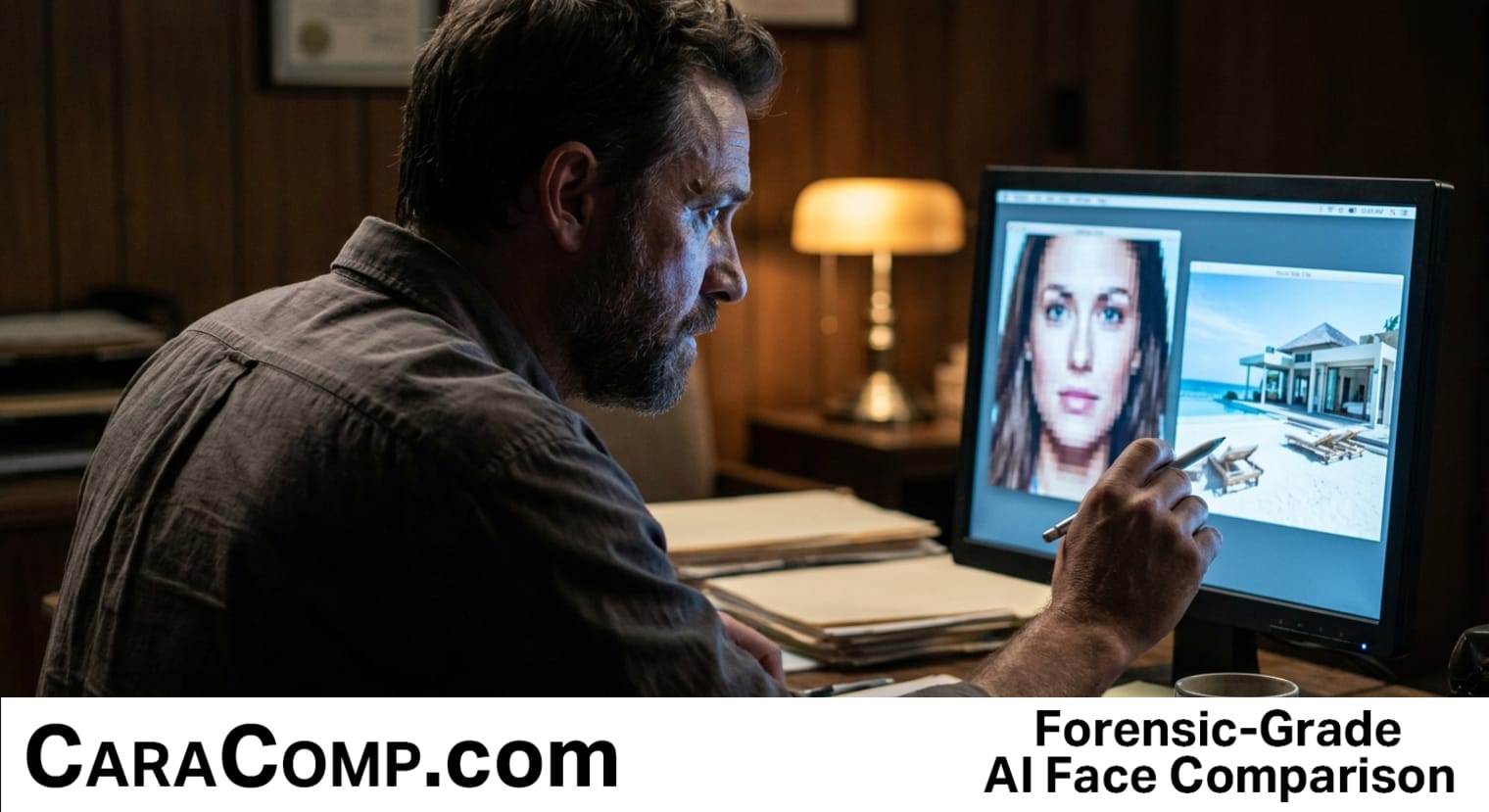
A 95% confidence score isn't a victory; it’s a psychological trap designed to make you stop asking questions. In the high-stakes world of fraud investigation and OSINT, that number is frequently the shiny lure that blinds professionals to the three other layers of synthetic deception stacked right behind it. If you’re staking your reputation on a "trust me" percentage from a black-box algorithm, you aren’t just behind the curve—you’re an active participant in the scammer's architecture.
The reality of modern travel and identity fraud is modular. Scammers are now independently synthesizing websites, property imagery, and deepfake personas. Each layer is engineered to pass a standalone check. When you run a facial comparison and see a high match rate, you’re seeing exactly what the fraudster intended. For the solo investigator or small PI firm, the danger isn’t just the AI—it’s the assumption that a single data point constitutes a closed case. You cannot afford to let a probabilistic score replace investigative methodology.
At CaraComp, we see this "identity gap" every day. While enterprise tools charge thousands for a score that might drop ten points the moment the lighting changes, the real investigative work happens in the side-by-side analysis. Facial comparison is not about surveillance or scanning crowds; it's about the technical rigors of Euclidean distance analysis between your known images and your suspect. It’s the difference between a probabilistic guess and court-ready evidence that actually holds weight.
- Confidence scores are threshold-dependent puppets. A 95% match can mask a massive miss rate depending on how the software is tuned behind the scenes. Never treat a percentage as a final conclusion without seeing the side-by-side analysis yourself.
- Modular fraud requires multi-modal verification. Facial comparison is one critical data stream, but it must be paired with metadata checks and infrastructure audits. Scammers count on you being satisfied with the first "match" you find.
- Environmental variables kill "black box" accuracy. A shift in hotel lobby lighting can degrade algorithm performance by 10%, turning a "definite match" into a professional liability if you rely on automated recognition alone.
Stop chasing expensive enterprise contracts for "black box" percentages. The sharpest investigators are moving toward affordable, high-caliber facial comparison that puts the analysis back in their hands, allowing them to close cases faster without the enterprise price tag.
Read the full article on CaraComp: That 95% Face Match? Scammers Built the Other 3 Layers to Fool You Too


Comments
Post a Comment