ICE to Flood Streets With 1,570 Iris Scanners — Here's What It Means for You
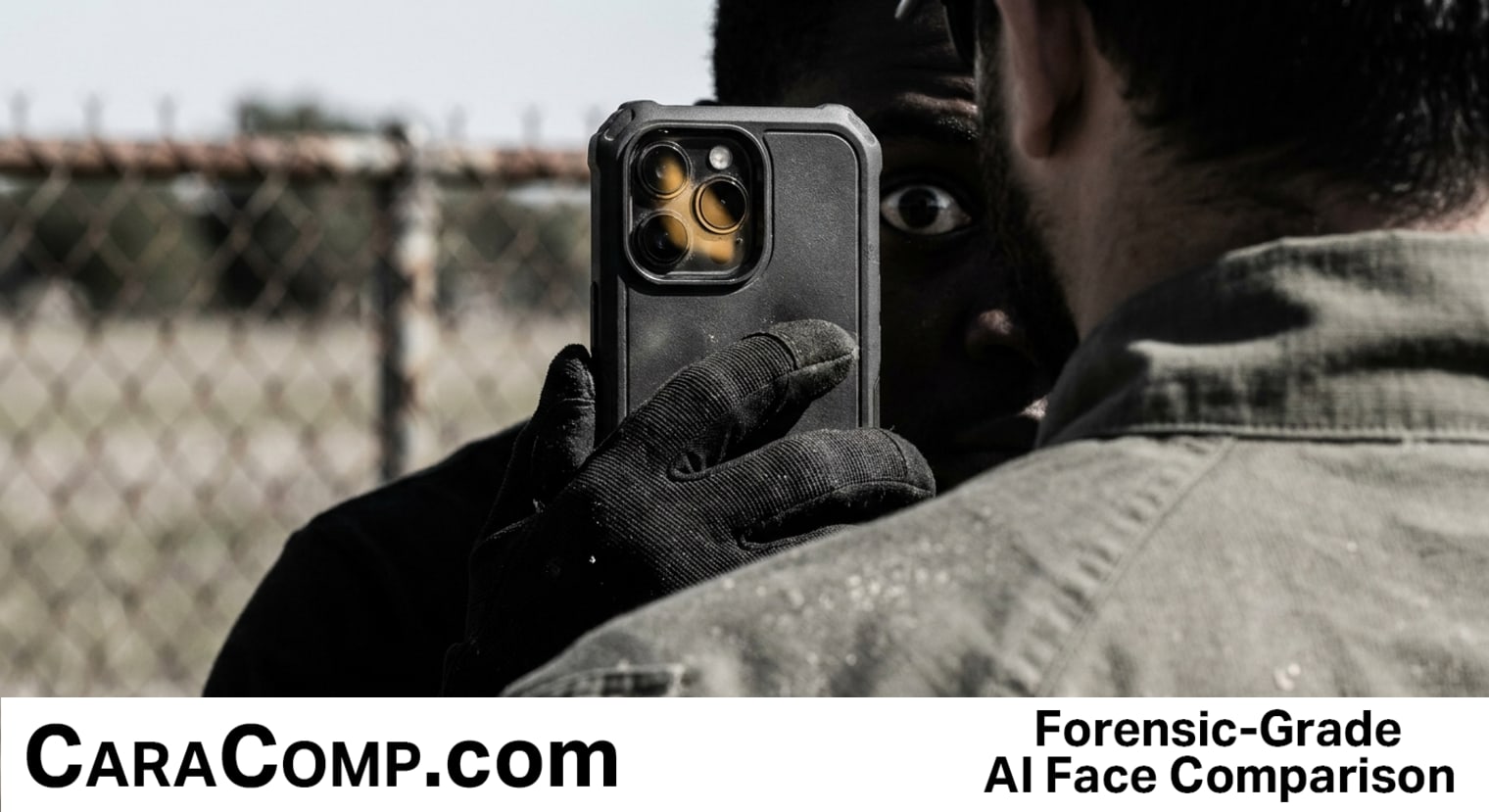
The deployment of 1,570 iris scanners by ICE isn’t just a procurement headline—it’s a final warning to every private investigator still relying on manual methods. When a federal agency transitions from a 200-unit pilot to a massive nationwide rollout, they aren't just "testing" tech; they are establishing a new operational baseline for what identity verification actually looks like in the field. If your identification workflow still involves three hours of manual photo squinting while agents are getting matches in seconds, you aren't just behind—you're becoming a liability to your own reputation.
This shift toward mobile biometrics signals a permanent change in investigative expectations. We are entering a phase where "I think it’s a match" is no longer a professional conclusion. Your clients, whether they are insurance SIU departments or law firms, are watching federal agencies operationalize speed and accuracy. They will soon demand that same level of mathematical certainty from you. For the solo investigator, the challenge isn't a lack of iris scanners; it's the lack of access to the same Euclidean distance analysis that powers these enterprise-grade tools.
The federal government has spent millions to make biometrics a routine part of the workflow. Meanwhile, many solo PIs are still stuck in a tech gap, caught between $2,000-a-year enterprise contracts they can't justify and "free" consumer tools that offer the reliability of a coin flip. To remain relevant, investigators must adopt professional facial comparison technology that produces court-ready results without needing a federal-level budget. If you are still spending half a day manually comparing facial features across grainy surveillance photos, you are wasting the one resource you can't bill for: your time.
- Speed is now the baseline for professional credibility: As biometric checks become instantaneous in the public sector, clients will no longer tolerate multi-day turnaround times for identity verification.
- Manual comparison is an unacceptable reputation risk: Relying on the human eye for facial comparison is prone to fatigue and bias; Euclidean distance analysis provides the objective proof required for modern case files.
- Professional reporting is no longer optional: As federal agencies standardize biometric data, your results must look just as professional and data-driven to hold weight in a legal environment.
The federal rollout proves that biometric analysis is no longer "future tech"—it is current standard protocol. To compete, you don't need a government-sized budget, but you do need the same mathematical rigor. If your current workflow doesn't include batch processing and professional comparison metrics, you're bringing a knife to a drone fight. The gap between the "high-tech" feds and the "manual" PI is closing, and those who don't bridge it with affordable facial comparison tools will be left out of the case file entirely.
Read the full article on CaraComp: ICE to Flood Streets With 1,570 Iris Scanners — Here's What It Means for You


Comments
Post a Comment