Flagged by a Face: Innocent Shoppers Banned With No Way to Fight Back
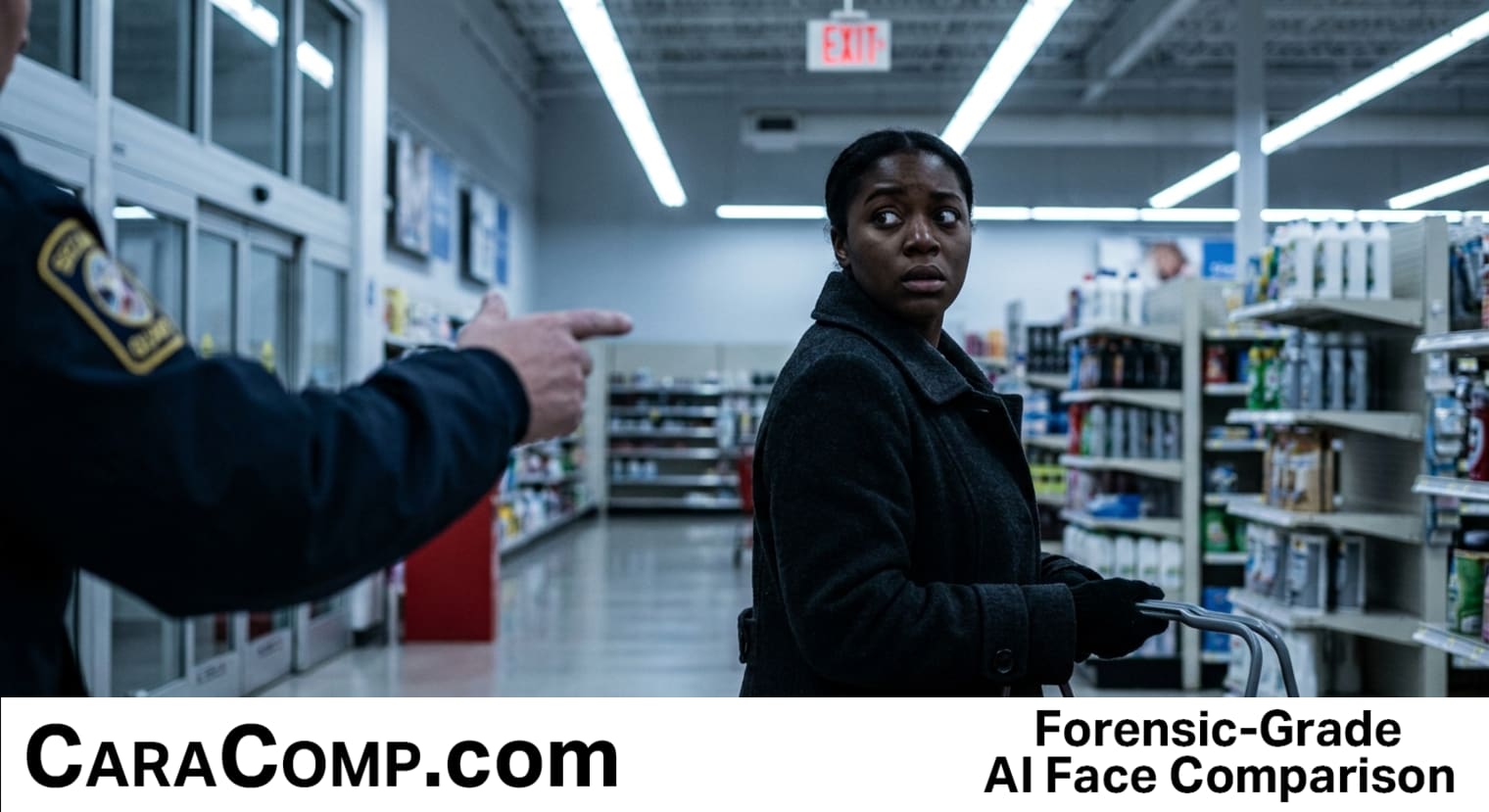
Imagine being banned from your local grocery store because a computer—running a black-box algorithm with zero human oversight—decided you looked like a shoplifter from three towns over. This isn't a hypothetical glitch; it’s the current, broken reality of retail facial recognition where shoppers are being "algorithmically evicted" with no right to an appeal.
For those of us in the investigative trenches—private eyes, OSINT researchers, and fraud investigators—this news is a loud warning. The problem isn't the technology itself; it's the reckless application of automated surveillance without a human-in-the-loop. Retailers are deploying enterprise-grade scanning tools to flag faces, but they are failing to provide the one thing a professional investigation requires: a verifiable, court-ready paper trail. When a system can accuse you but can't be questioned, it isn't security—it's a liability.
At CaraComp, we’ve always maintained that there is a massive chasm between facial *recognition* (scanning crowds for a "match") and facial *comparison* (a controlled, side-by-side analysis of specific images for a case). The retail industry's current failure highlights why solo investigators must stay ahead of this curve. If you’re still manually comparing faces across photos for hours, you’re not just being inefficient; you’re missing the precision and professional reporting that prevents these exact kinds of misidentification disasters. Professionals use Euclidean distance analysis to back up their findings with data, not just "gut feeling" or a flickering monitor in a security room.
- The "Black Box" Era is creating a trust deficit — Every time a retailer wrongly bans a shopper based on a false positive, it makes the public more skeptical of legitimate biometric tools. Professional investigators must distance themselves from "automated surveillance" by using tools that focus on high-fidelity facial comparison and human-led verification.
- Affordable tech is no longer the bottleneck; accountability is — Solo PIs can now access the same Euclidean distance analysis used by federal agencies for a fraction of the cost. The differentiator isn't having the tool, but having the professional report and the batch-processing data to prove the match holds up under scrutiny.
If you’re still relying on manual comparisons or shaky consumer-grade search engines with poor reliability scores, you’re risking your reputation. The future of investigation belongs to those who can provide professional-grade analysis without the enterprise price tag, ensuring every match is a definitive piece of evidence, not an algorithmic guess.
Read the full article on CaraComp: Flagged by a Face: Innocent Shoppers Banned With No Way to Fight Back


Comments
Post a Comment