Facial Recognition's Three-Front War: Why This Week Broke the Industry
UK police recently scanned 1.7 million faces under a legal framework regulators call "incoherent," while certain trials showed a staggering 81% error rate. This isn’t just a policy failure; it’s a warning shot for every private investigator and OSINT professional who relies on biometric data to close cases. When mass surveillance tools fail this publicly, it threatens the legitimacy of the precise, case-specific facial comparison technology that professional investigators actually need.
The industry is currently fighting a three-front war: fragmented government policy, the push for wearable face-scanning, and "compliance theater" like age-verification systems that can be defeated by a child with an eyebrow pencil. For the solo investigator, this chaos creates a massive identity gap. While enterprise-level tools are being used for broad, unreliable crowd scanning, the boots-on-the-ground professional is left looking for reliable, court-ready results without the $2,000-a-year price tag or the reputational risk of "big brother" optics.
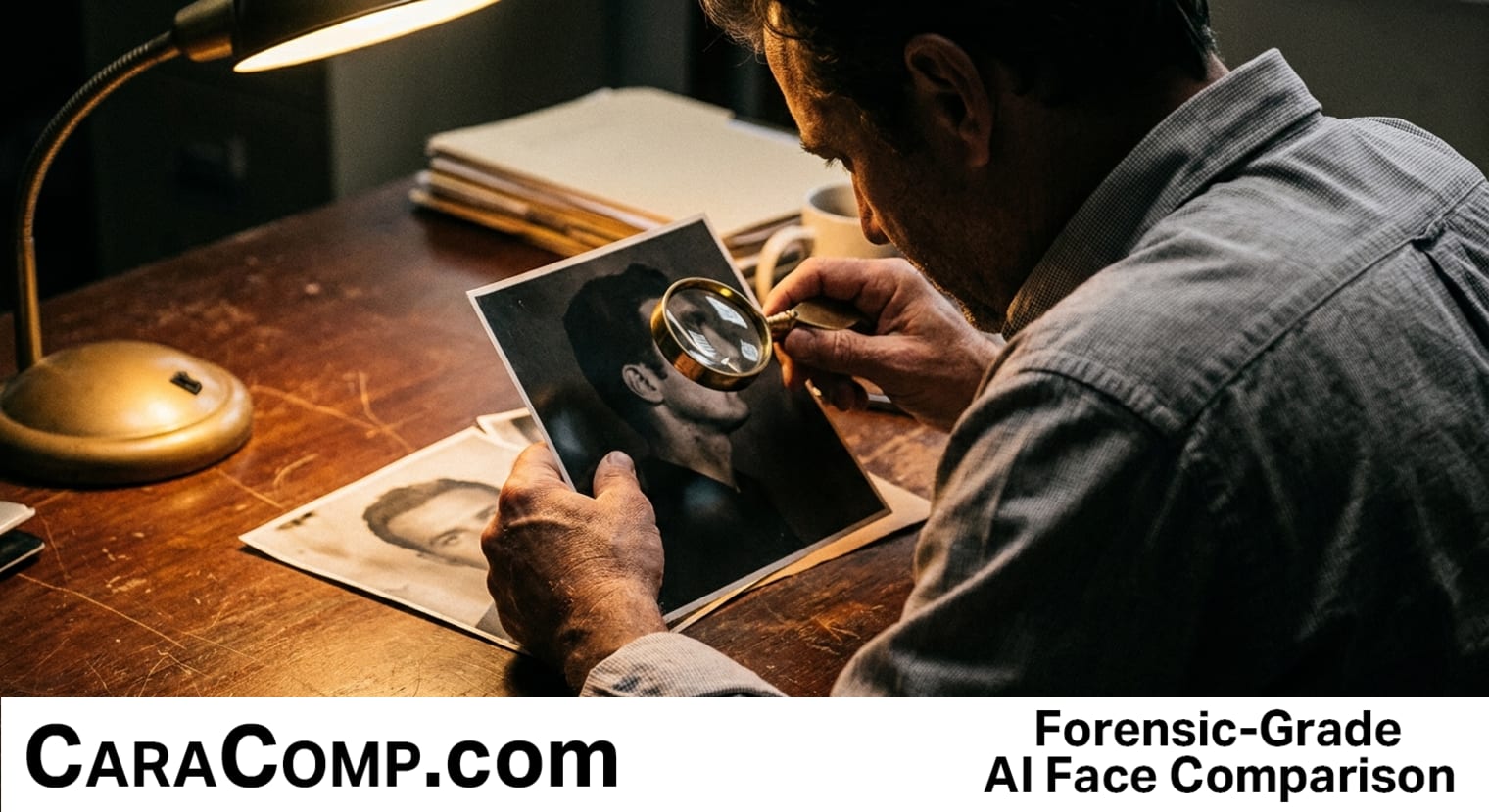
At CaraComp, we see this mess as a call for specificity. The "patchwork" policy mentioned by UK regulators exists because governments are trying to use facial comparison as a surveillance dragnet rather than a surgical investigative tool. For a PI or an insurance fraud specialist, the goal isn't to monitor 1.7 million strangers; it’s to confirm if the person in "Photo A" is the same person in "Photo B" using reliable Euclidean distance analysis. The news this week proves that when technology loses its focus, it loses its accuracy.
- Mass-scanning failures create a "trust tax" for investigators. When police trials report 81% error rates, PIs must work twice as hard to prove their digital evidence is professional, reliable, and scientifically sound.
- Regulatory crackdowns will target the "dragnets," not the analysts. The industry is shifting toward specific, case-bound comparison. Professionals who use batch processing and court-ready reporting will survive the legislative "patchwork" that is currently swallowing enterprise surveillance firms.
- Accuracy is the only shield against skepticism. If consumer-grade tools can be fooled by makeup, investigators must rely on professional-grade algorithms that provide objective distance scores rather than simple "matches."
The future of this field doesn't belong to the companies scanning every face on the high street. It belongs to the tech-savvy investigator who uses enterprise-grade analysis to close individual cases with surgical precision and professional accountability.
Read the full article on CaraComp: Facial Recognition's Three-Front War: Why This Week Broke the Industry


Comments
Post a Comment