Face Swap Goes Mainstream: Why "Too Clean" Video Is Now Your Biggest Red Flag
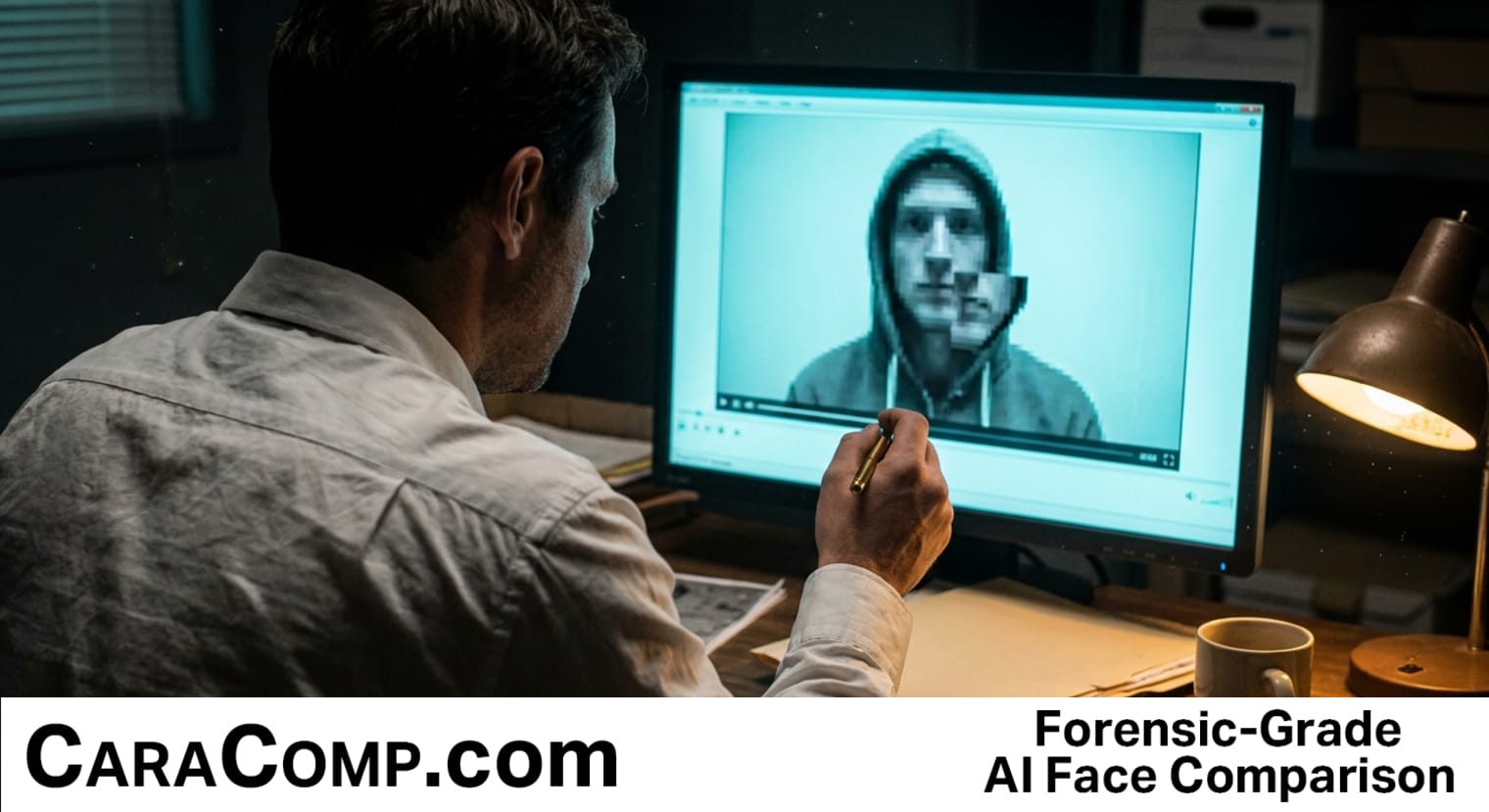
The cleanest, most well-lit video on your desk might be the most dangerous piece of evidence you own. We have officially reached the point where "too clean" is the ultimate red flag for digital forensics. While the amateur investigator looks for glitches or "uncanny valley" stutters, the industry-insider knows that the real threat is the high-fidelity face swap running on a standard consumer laptop. High-quality footage used to be the gold standard; now, it is often a signal of synthetic optimization.
The barrier to entry for synthetic media has collapsed. What once required a server farm now runs locally on a basic Mac with no technical skill required. For the solo PI or OSINT researcher, this changes the fundamental hierarchy of evidence. If the lighting is perfect and the subject is perfectly front-facing, you aren’t necessarily looking at high-quality footage—you’re looking at the optimal environment for an AI model to map facial landmarks with zero friction. Real-world case analysis is usually messy, grainy, and plagued by overhead shadows. Synthetic video, by contrast, is often "too stable" because it is generated frame-by-frame through mathematical optimization.
This is why the industry must shift from passive observation to rigorous facial comparison workflows. When we use Euclidean distance analysis to measure the geometry between features, we have to be certain the media itself isn't a fabrication. The professional investigator’s job is no longer just finding the subject; it’s verifying the technical integrity of the pixels before the analysis even begins. Relying on gut feeling or low-reliability consumer search tools is a recipe for a reputational disaster in court. You need enterprise-grade tools that can handle batch processing and provide professional reports that stand up to scrutiny.
- Temporal consistency is the new digital fingerprint. While a single frame might look perfect, the way a face "drifts" over several seconds of movement reveals the mathematical shortcuts of a swap tool. If the face doesn't degrade naturally during a fast head turn, it’s likely a fabrication.
- The "Perfect Scene" is a professional liability. Authentic evidence is usually captured at awkward angles. If a video looks like a studio production, the provenance must be investigated with extreme skepticism before any comparison work begins.
Investigators who fail to adopt professional-grade technology will find themselves outpaced by those who can distinguish between a real subject and a rendered one. At CaraComp, we provide the caliber of analysis needed to maintain that edge without the enterprise price tag.
Read the full article on CaraComp: Face Swap Goes Mainstream: Why "Too Clean" Video Is Now Your Biggest Red Flag


Comments
Post a Comment