Deepfakes Hit 38 Countries. Newsrooms Still Don't Have a Workflow.
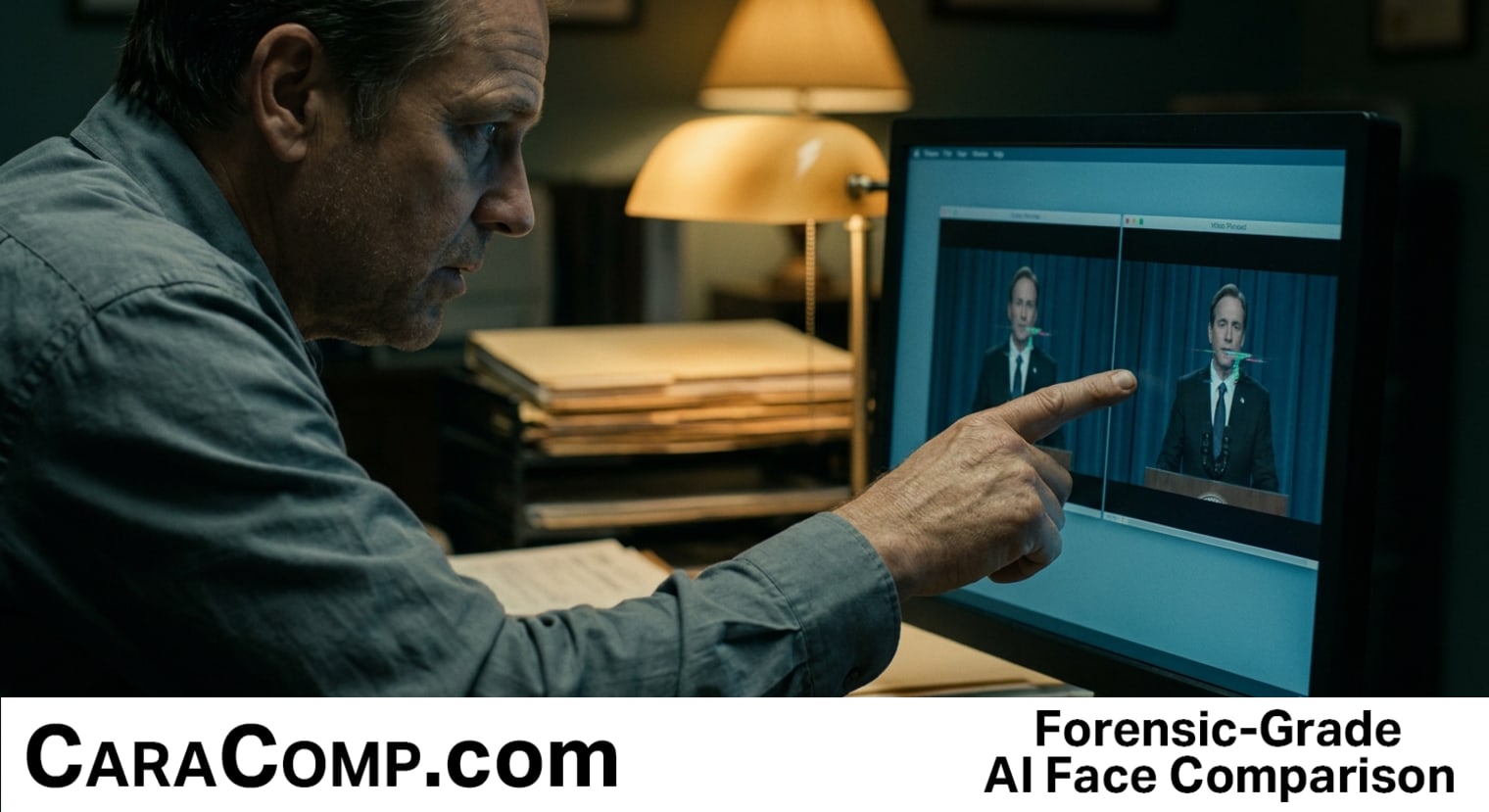
A 98.4% confidence score from an AI detection tool is essentially a digital confession, yet it still took thousands of viral views before anyone bothered to verify a high-profile political deepfake in India. This isn't just a failure of technology; it’s a catastrophic failure of process. When deepfakes have already infiltrated election cycles in 38 different countries, treating synthetic media as a "surprise" is no longer an option for professional investigators or newsrooms.
For those of us in the investigative field, this news highlights a massive procedural gap. While enterprise-level tools and newsroom fact-checkers struggle to build a consistent workflow, the threat is scaling faster than their bureaucracy. We are seeing a shift where "vibe checks" are being replaced by necessity with actual Euclidean distance analysis and biometric consistency checks. If you are still relying on a manual side-by-side visual comparison to verify a subject’s identity in a suspicious video or photo, you are already behind the curve.
The reality is that detection tools exist, but they are often locked behind massive enterprise paywalls or buried in complex APIs that solo private investigators and small firms can’t justify. This creates a dangerous environment where the "spread window" of a fake always beats the correction. To close cases and maintain a reputation for accuracy, investigators must adopt professional-grade facial comparison technology that doesn't require a federal budget or a specialized forensics degree.
The implications for the investigative industry are clear:
- The "vibe check" is now a professional liability – Relying on manual sight to verify identity in the age of 98% accurate deepfakes is grounds for losing a client's trust or failing a court-admissibility test.
- Standardized verification is the new competitive edge – Investigators who implement repeatable, tech-driven facial comparison workflows will win the clients that newsrooms and slow-moving agencies are currently failing.
- Affordable access to high-caliber analysis is the only equalizer – As synthetic media becomes an "installed feature" of public life, solo investigators need enterprise-grade Euclidean analysis to stay relevant without the $2,000/year overhead.
We are entering a phase where being "tech-savvy" isn't a bonus; it’s the baseline. Whether you’re handling insurance fraud or OSINT research, the ability to rapidly compare faces across case files with mathematical precision is the only way to outpace the tide of synthetic misinformation.
Read the full article on CaraComp: Deepfakes Hit 38 Countries. Newsrooms Still Don't Have a Workflow.


Comments
Post a Comment