Deepfakes Fooled Your Eyes. They Can't Fool Geometry.
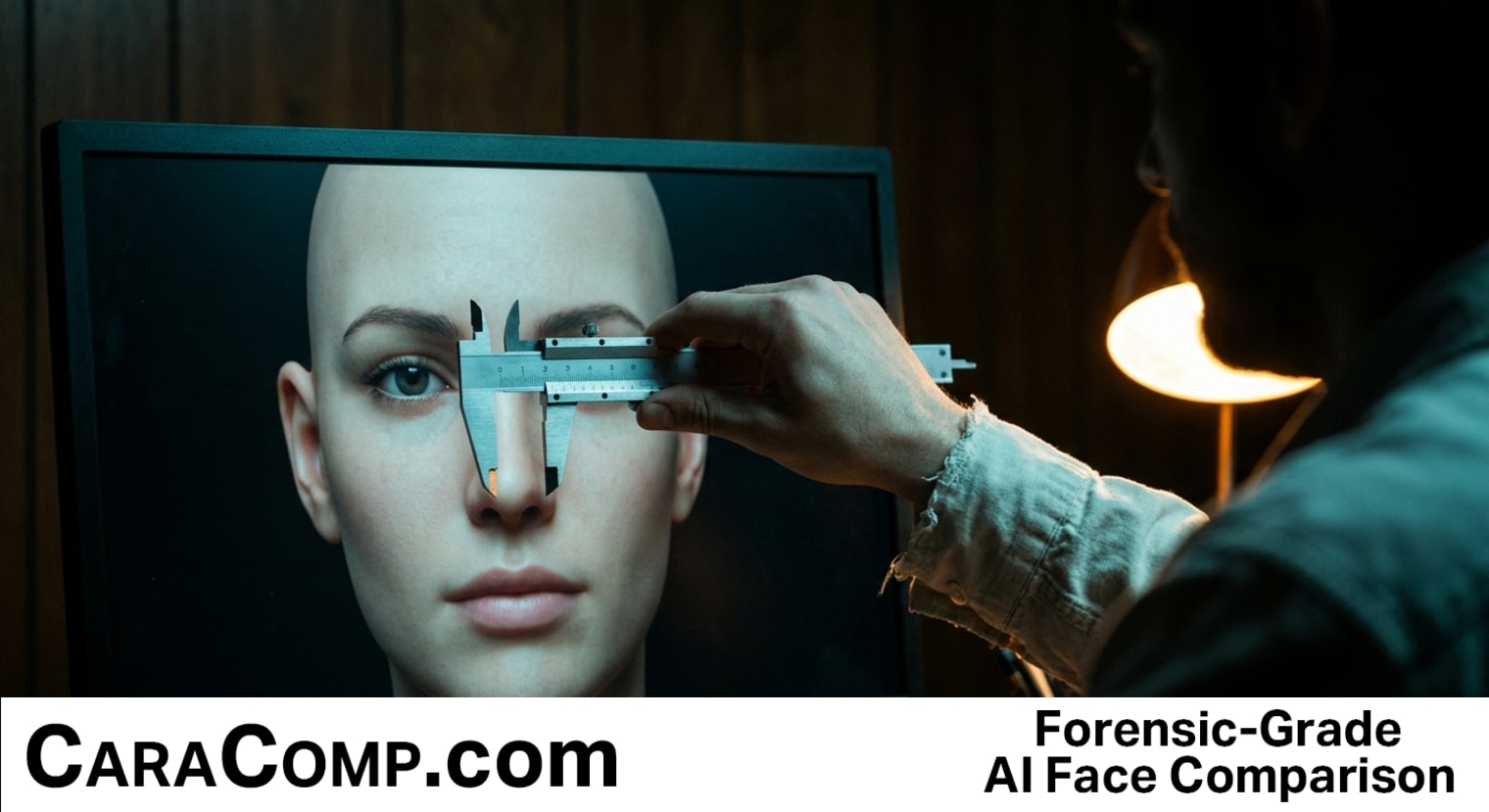
Stop looking for blurry hairlines or waxy skin. The visual "tells" we’ve relied on to spot deepfakes for the last three years are officially dead. Generative AI has moved past the surface-level glitches that once allowed private investigators to catch a fraud with a simple gut check. Today, if you’re relying on your eyes to verify a subject’s identity in a digital image, you aren't just behind the curve—you’re a liability to your clients.
The next frontier of investigative integrity isn’t about how a face looks; it’s about whether it makes geometric sense. While AI can simulate pores and perfect lighting, it struggle to maintain the rigid spatial relationships of human bone structure across different environments. This is where Euclidean distance analysis becomes the investigator’s best friend. It’s no longer about visual similarity; it’s about mathematical consistency.
For the solo PI or the small firm handling insurance fraud and OSINT cases, this shift changes everything. You can no longer afford to "eyeball" a comparison and stake your reputation on it. When a case goes to court, "it looked like him to me" is a losing strategy. You need the same caliber of geometric analysis used by federal agencies to prove that the facial landmarks in your evidence match your subject with mathematical precision.
- Manual visual inspection is a professional risk. As synthetic faces become visually perfect, human intuition becomes the weakest link in the chain of custody.
- Euclidean geometry is the ultimate truth-teller. AI can fake a smile, but it struggles to fake the exact spatial proportions of a zygomatic arch or the distance between ocular landmarks in 3D space.
- Enterprise-grade analysis is no longer a budget-breaker. The technology required to perform this level of comparison has shifted from $2,000-a-year government contracts to affordable, accessible tools for the modern solo investigator.
The era of the "gut feeling" in facial analysis is over. The future belongs to the investigators who trade their magnifying glasses for geometric data. At CaraComp, we believe that every investigator deserves access to this level of certainty without the enterprise price tag.
Read the full article on CaraComp: Deepfakes Fooled Your Eyes. They Can't Fool Geometry.


Comments
Post a Comment