Deepfakes Are Flooding Schools. Here's the Forensic Trick That Actually Catches Them.
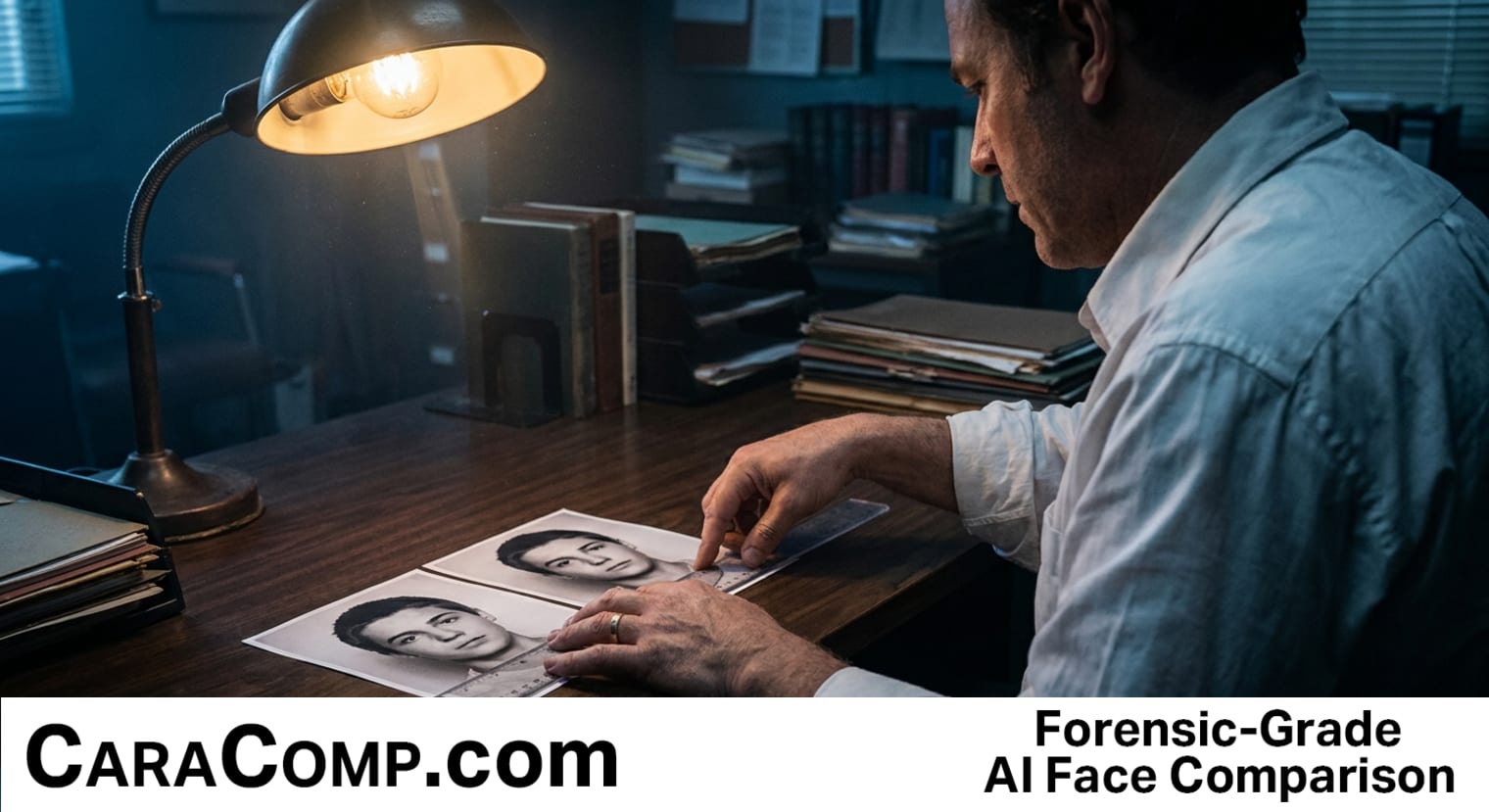
Reports of AI-generated abuse images submitted to the National Center for Missing and Exploited Children didn't just rise last year—they exploded from 4,700 to 440,000 in a six-month window. This isn’t a gradual shift in the digital landscape; it is a vertical wall of synthetic content hitting investigators, schools, and parents simultaneously. When a deepfake lands in an investigator’s lap, the "vibe check" is officially dead.
Human beings are statistically abysmal at spotting high-quality deepfakes, hitting the mark only about 62% of the time. In professional investigation, that’s not a success rate—it’s a liability. For solo private investigators and OSINT researchers, the challenge isn't just identifying a fake; it’s proving it with the kind of Euclidean distance analysis that holds up when a client’s reputation or a legal case is on the line. We can no longer ask "Does this look real?" We have to ask "Do the facial landmarks mathematically align?"
The forensic "trick" isn't magic—it’s geometry. Deepfakes often fail at the pixel level where synthesized skin meets the background or where iris reflections contradict the light source. While enterprise-grade tools have historically kept this tech behind a five-figure paywall, the democratization of facial comparison technology means that solo PIs now have the same analytical power as federal agencies. By measuring the precise distance between facial landmarks—canthal corners, nasal bridges, and jawline boundaries—investigators can move from "I think this is a fake" to "Here is the measurement report that proves it."
For the modern investigator, this surge in synthetic media is a call to upgrade. Relying on manual comparison or "gut feelings" is a fast track to a 2.4/5 Trustpilot rating and a blown case. The goal is no longer just seeing; it is measuring.
- Measurement over intuition: Facial landmark analysis provides a mathematical baseline that removes human bias and overcomes the 62% failure rate of visual inspection.
- Affordable forensics is the new standard: The gap between enterprise budgets and solo investigator tools has collapsed, making court-ready Euclidean analysis accessible for everyday case work.
- Professional documentation is the shield: In an era of synthetic replicas, a PDF report detailing facial inconsistencies is the only way to protect both the victim and the investigator's reputation.
Read the full article on CaraComp: Deepfakes Are Flooding Schools. Here's the Forensic Trick That Actually Catches Them.


Comments
Post a Comment