Deepfake Nearly Indicted an Innocent Person. Courts Have Zero Protocols to Stop the Next One.
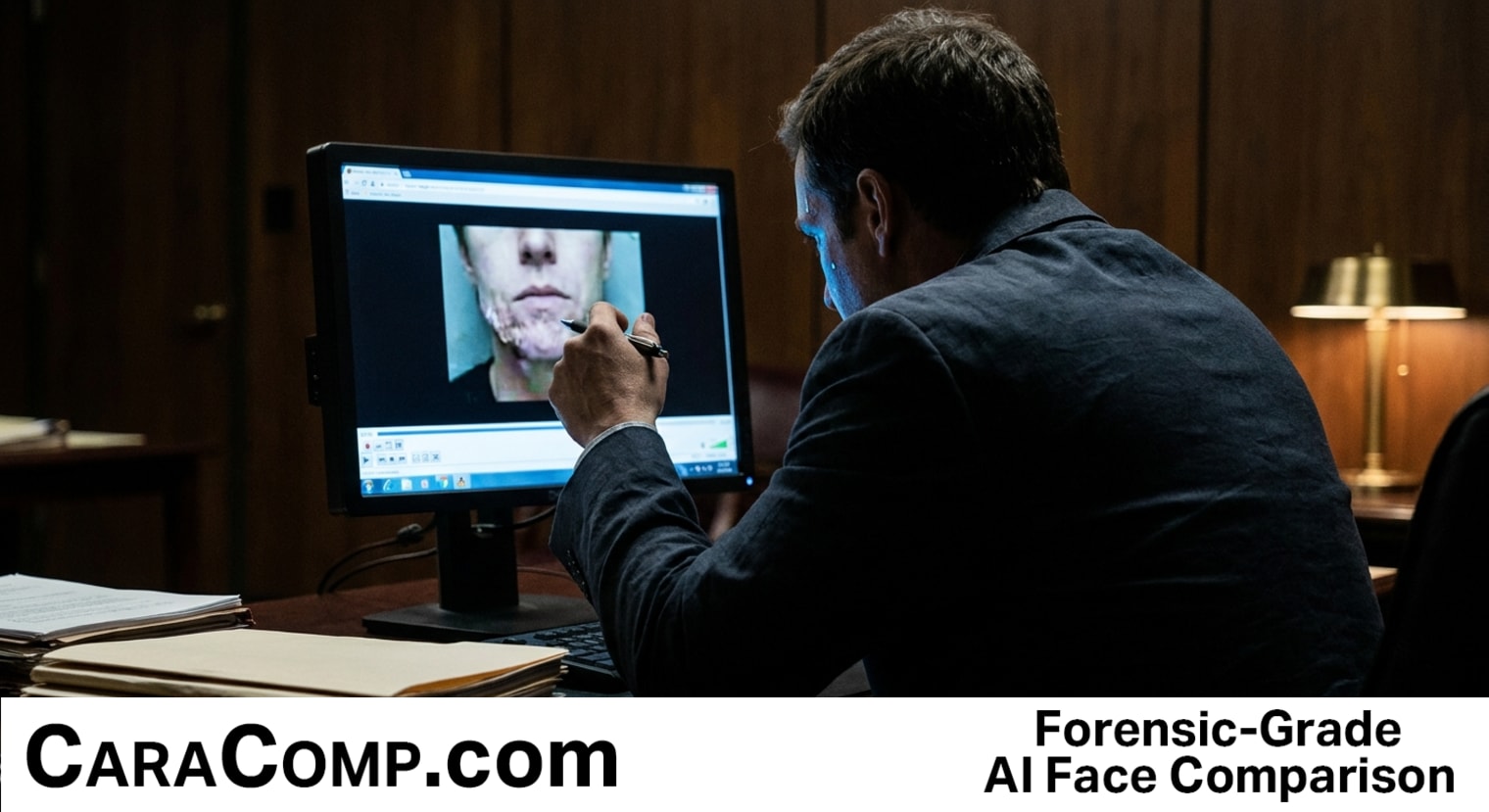
A California judge recently saved an innocent person from a potential indictment because he happened to notice a witness’s facial movements looked "off." This wasn't a triumph of forensic science or a win for standardized protocols; it was a lucky break. The witness video was a deepfake, and the only thing that stopped it from poisoning the case was a judge who "eyeballed" a subtle anomaly. In an industry where reputations are built on accuracy, relying on luck is a professional death wish.
For private investigators and OSINT researchers, this story is a loud warning. The era of "manual comparison"—where an investigator stares at two photos for three hours and hopes for the best—is officially over. When synthetic media can be generated with such precision that it fools prosecutors, the human eye is no longer a reliable gatekeeper. If you are still presenting evidence based on a "gut feeling" or a manual side-by-side, you are leaving your clients exposed to the "Liar's Dividend." This is the growing reality where authentic evidence is dismissed as fake simply because the technology to forge it is so prevalent.
The solution isn't to retreat from digital evidence, but to upgrade the methodology used to verify it. Modern investigation technology allows solo PIs to move beyond subjective observation and into Euclidean distance analysis. By measuring the mathematical relationship between facial features, investigators can provide a level of case analysis that stands up to the scrutiny of a skeptical court. We are seeing a shift where court-ready reporting and batch comparison are no longer "nice-to-haves" for federal agencies; they are essential survival tools for the solo practitioner.
Key implications for the investigative industry:
- The "eyeball test" is now a liability. If a judge can spot a fake that an investigator missed, that investigator’s professional credibility is effectively neutralized for the remainder of their career.
- Scientific verification must be democratized. Enterprise-grade facial comparison can no longer be gated behind five-figure contracts. To protect due process, solo investigators need access to the same Euclidean distance analysis tools used by large-scale agencies.
- Standardized reporting is the new shield. As synthetic media becomes more common, investigators must provide professional, data-backed reports that prove the integrity of their facial comparison work to protect against claims of bias or error.
The gap between enterprise-level tech and the solo PI is closing, and it couldn't happen a moment too soon. As synthetic threats mature, the only defense is a more sophisticated, math-based offense. Stop guessing and start analyzing.
Read the full article on CaraComp: Deepfake Nearly Indicted an Innocent Person. Courts Have Zero Protocols to Stop the Next One.


Comments
Post a Comment