Deepfake Laws Just Hit 30 States. Your Verification Process Won't Survive Court.
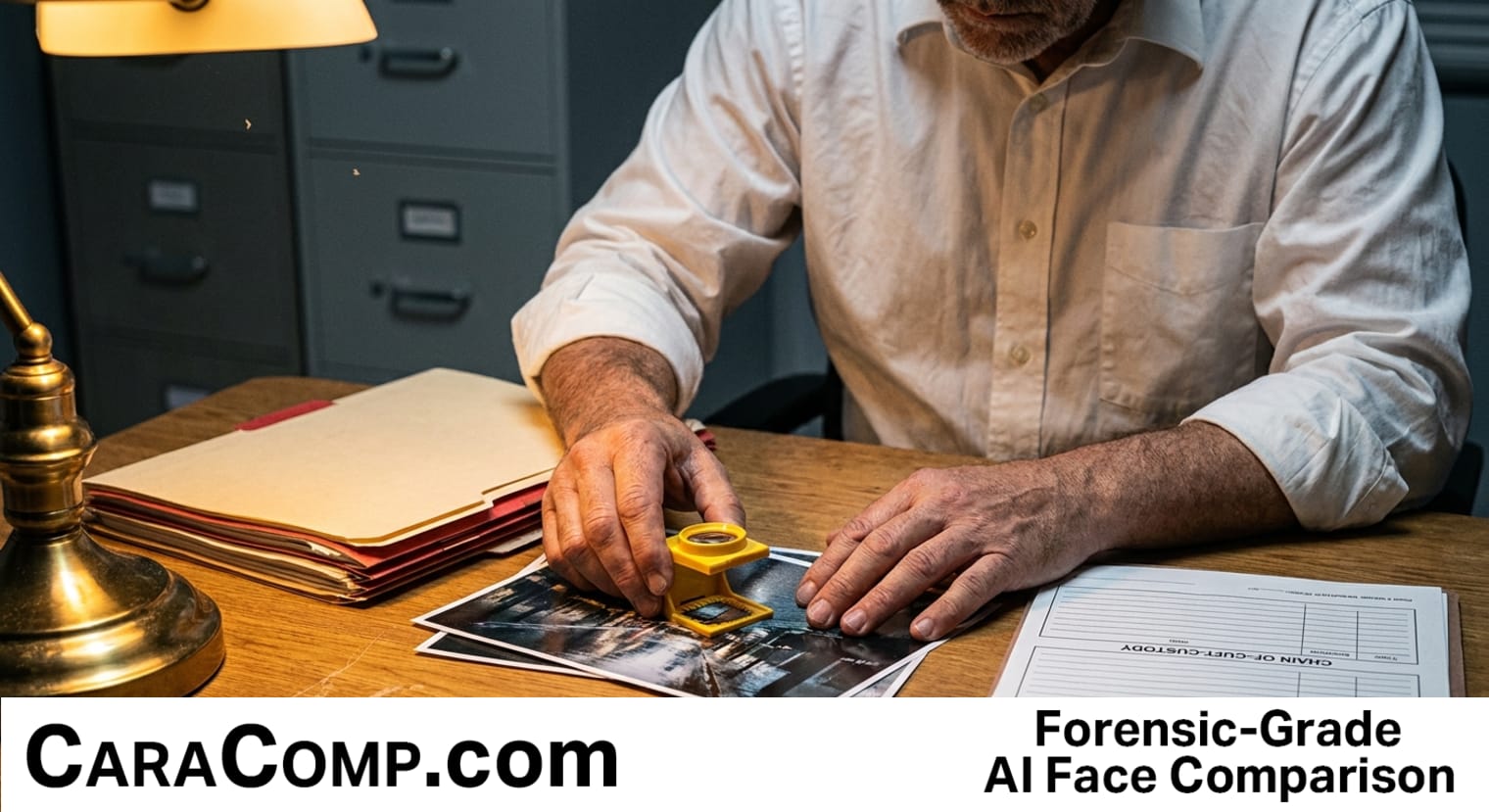
Thirty states just turned your manual photo verification process into a legal ticking time bomb. While the headlines focus on political deepfakes, the real crisis for the professional investigator is procedural: the law now demands a level of verification that "squinting at a screen" can’t provide. If you are still relying on manual comparison or unreliable consumer search tools to validate identity in your cases, you aren't just behind the curve—you are a liability.
The core of the problem isn't just the existence of synthetic media; it’s the lack of a defensible audit trail. When a piece of evidence is challenged under these new statutes, a judge won't care about your "years of experience" or a "gut feeling." They will demand a documented, reproducible methodology. For the solo private investigator or small firm, this creates a massive identity gap. You are expected to deliver the same evidentiary rigor as a federal agency, but without the six-figure budget for enterprise software.
This is where the industry is fracturing. On one side, you have investigators using cheap tools with high false-positive rates that lack professional reporting. On the other, you have enterprise-grade Euclidean distance analysis locked behind $2,000-a-year contracts. To survive this new regulatory environment, investigators must bridge that gap with technology that provides court-ready case analysis without the "big agency" price tag.
- Documentation is the new detection. It is no longer enough to spot a match; you must be able to present the mathematical Euclidean distance between facial features in a format that survives cross-examination.
- The "Consumer Tool" era is over. Relying on high-friction search tools with poor reliability scores is professional suicide when state laws mandate strict disclosure and authenticity standards.
- Affordable enterprise-grade analysis is a requirement, not a luxury. As deepfake laws tighten, the ability to batch-process photos and generate instant, professional reports is the only way to remain competitive and compliant.
The mandate is clear: show your work or lose the case. At CaraComp, we believe every investigator deserves access to the same Euclidean distance analysis used by the elite, but at a price point that makes sense for a solo practitioner. The laws have changed. It’s time your toolkit caught up.
Read the full article on CaraComp: Deepfake Laws Just Hit 30 States. Your Verification Process Won't Survive Court.


Comments
Post a Comment