Deepfake Jesus, $25M Heist: Why 2026 Just Broke Identity Trust
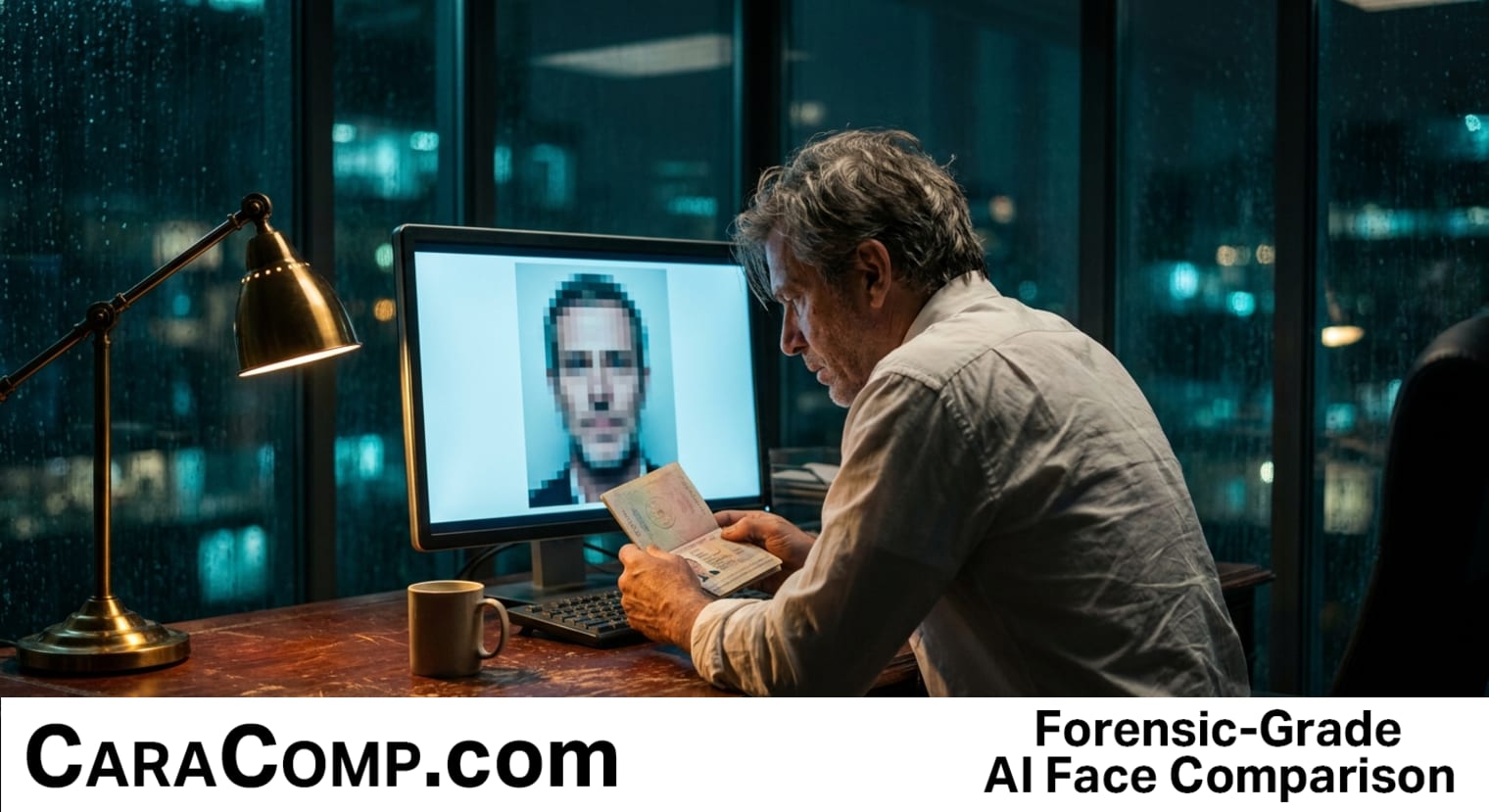
If a deepfake video call can trick a finance team into wiring $25 million to a fraudster, why are you still relying on your "gut feeling" to compare faces in a high-stakes investigation? The recent news that deepfake fraud has surged by 1,300% isn’t just a corporate headache—it is the official death notice for manual investigative methods. When synthetic media can fuse political figures with religious icons to manipulate entire populations, the human eye is no longer a reliable forensic tool.
For private investigators and OSINT professionals, this "truth decay" creates a massive professional liability. We are watching a split in the industry: on one side, airports and global banks are spending millions on enterprise biometric boarding; on the other, solo investigators are still squinting at grainy social media photos, trying to manually verify a subject. This gap is where cases are lost and reputations are destroyed. If you can’t back up your identification with cold, hard data like Euclidean distance analysis, your findings won’t survive a modern courtroom or a sophisticated client’s scrutiny.
The real takeaway from the 2026 identity crisis is that facial comparison is no longer a "luxury" add-on for federal agencies; it is a baseline requirement for anyone handling case analysis. The old excuse was that professional-grade tech cost $2,000 a year. That excuse is gone. Investigators must shift from "looking at photos" to "analyzing biometric data" if they want to stay relevant in a world where seeing is no longer believing.
- The Death of Manual Credibility: Relying on manual side-by-side comparison is a liability. As deepfakes become indistinguishable from reality, investigators need mathematical verification to prove a match is legitimate.
- The Defensibility Gap: Regulators and courts are moving toward a standard of care that requires documented, reproducible evidence. A "trust me, I'm an expert" approach is being replaced by the need for professional, data-backed reports.
- The Batch Processing Necessity: With fraud attempts accelerating, the ability to compare one face against hundreds of case photos in seconds is the only way to keep up with the current volume of synthetic threats.
The threat environment has evolved. It’s time for investigative technology to do the same. Professional investigators don't need to scan crowds or build surveillance states; they need affordable, reliable tools to compare the photos already in their case files with surgical precision.
Read the full article on CaraComp: Deepfake Jesus, $25M Heist: Why 2026 Just Broke Identity Trust


Comments
Post a Comment