Deepfake Fraud Just Broke Your Intake Process — Here's What Investigators Need to Fix Now
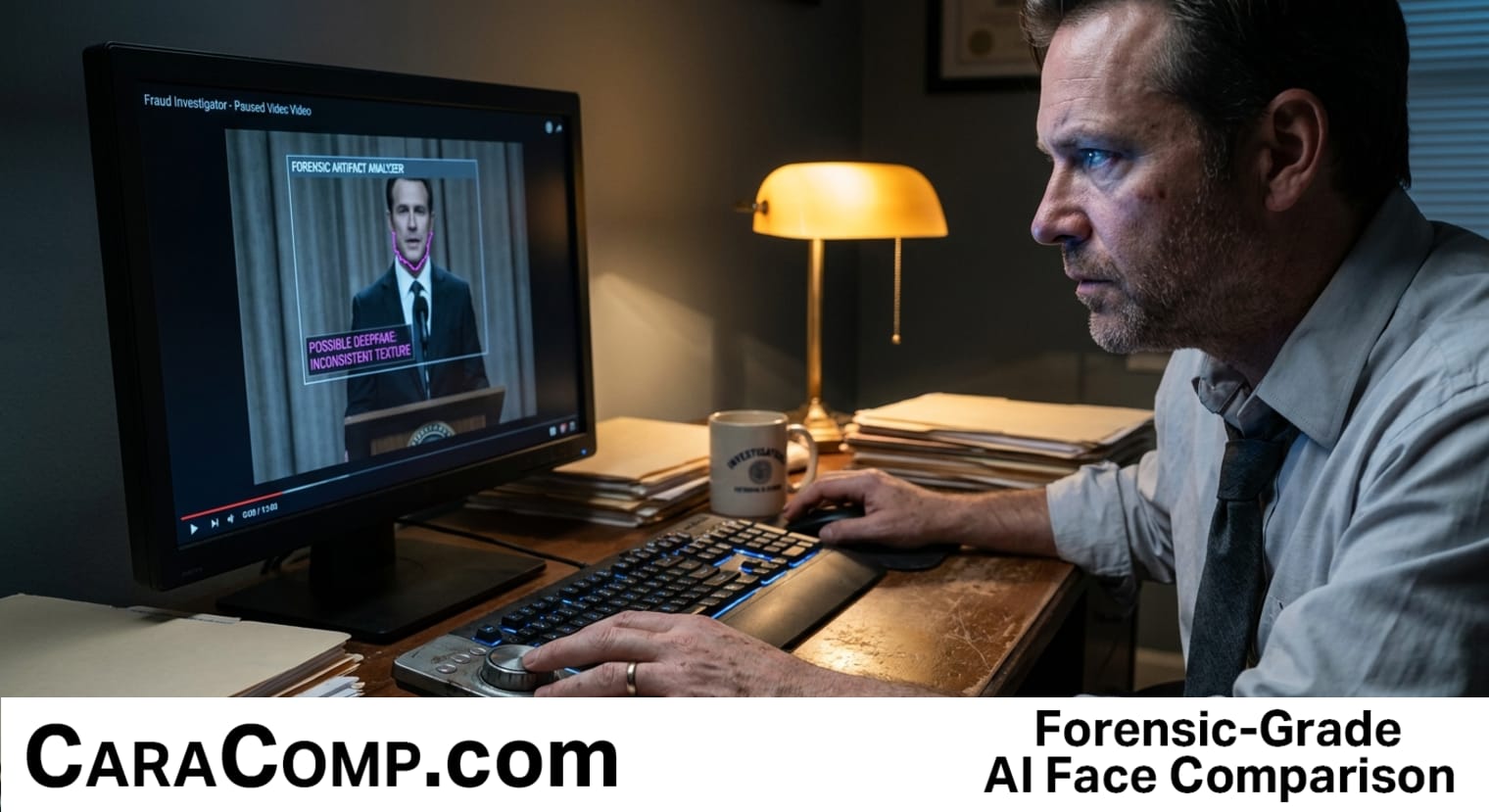
When a sitting Deputy Prime Minister has to watch a video of himself twice just to confirm it isn't him, the investigative industry’s standard intake process hasn’t just "aged"—it has completely shattered. Simon Harris’s recent moment of hesitation in Ireland isn't just a political anecdote; it’s a direct warning shot for every private investigator, OSINT researcher, and fraud analyst currently relying on their own eyes to verify a subject’s identity. If the actual subject in the video cannot instantly debunk a fake, your manual "eyeballing" methods are officially a professional liability.
The deepfake conversation has shifted from "creepy" celebrity hoaxes to operational identity crime. In Gujarat, cyber police recently dismantled a fraud ring that used AI to replicate natural facial movements—including blinks and expressions—to bypass government-grade biometric liveness checks. This wasn't a technical exploit; it was a psychological one. They weaponized authority bias. For the solo investigator or small PI firm, this creates a massive "Identity Gap." You know better tools exist, but enterprise-grade forensic analysis has traditionally been gated behind $2,400/year contracts that simply don't fit a lean operation's budget.
At CaraComp, we see this as an inflection point for investigative methodology. You cannot stake your reputation or the integrity of a case on a 2.4/5 rated consumer search tool or a "gut feeling." The answer isn't a federal-sized budget; it is enterprise-grade Euclidean distance analysis made accessible. This mathematical approach to facial comparison removes the human uncertainty that fraudsters are currently exploiting. Whether you are running insurance fraud analysis or tracking a subject across batch photos, the standard for evidence is shifting toward court-ready, professional-grade reporting that proves a match exists through data, not just visual intuition.
- The Death of Visual Intuition: Manual facial comparison is now a structural weakness. If deepfakes can defeat motion-based biometric liveness checks, an investigator relying on manual review is essentially guessing against an AI.
- The Verification Burden Shift: Authenticity verification must move from a "downstream concern" to a mandatory intake control. Every image or video entered into a case file now requires mathematical Euclidean distance analysis to resolve structural uncertainty.
- Professional Standards are Evolving: Clients and courts are beginning to demand more than just a printout. Professional-grade reporting and batch processing are the only ways to handle the rising volume of synthetic media without drowning in manual labor.
The signal is clear: the instinct that has served investigators for decades is now the exact attack surface fraudsters are targeting. It’s time to close the gap between enterprise tech and solo budgets. Drop a comment if you've ever spent hours manually comparing photos only to worry about a false match.
Read the full article on CaraComp: Deepfake Fraud Just Broke Your Intake Process — Here's What Investigators Need to Fix Now


Comments
Post a Comment