Deepfake Crackdown: Feds Make First Arrests as 48-Hour Takedown Clock Goes Live
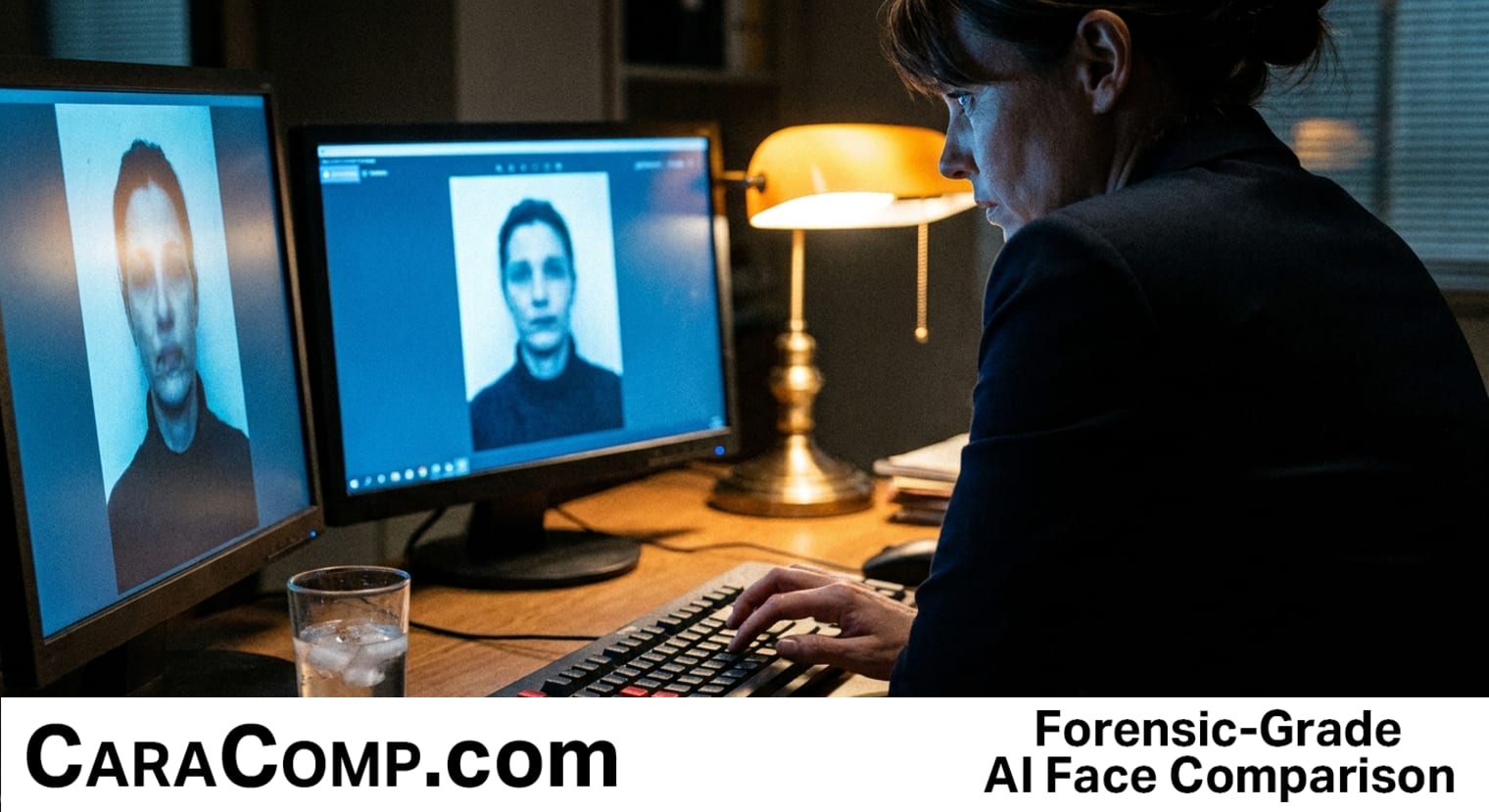
The federal government just put a 48-hour countdown on your investigative workflow, and most solo PIs are completely unprepared to meet the clock. With the first federal arrests under the TAKE IT DOWN Act and a mandatory two-day window for platforms to scrub deepfake content, the "wait and see" period for AI-generated harm is officially over. For the modern investigator, this isn't just a regulatory shift—it’s an operational crisis that manual photo comparison can no longer solve.
If you are still squinting at two screens trying to manually verify a client’s likeness against a deepfake, you’ve already lost the case. The legal standard for "verification" has moved past "it looks like them" to requiring objective, data-driven proof. When a platform has only 48 hours to act, they aren't going to take the word of an investigator using a free consumer search tool with a 2.4/5 reliability rating. They need professional analysis that holds up under scrutiny.
At CaraComp, we see this as the definitive end of the "hobbyist" era of OSINT. You can no longer stake your reputation on tools that require cryptocurrency payments or enterprise software that eats $2,400 of your annual budget. To compete in this new enforcement landscape, solo investigators need the same Euclidean distance analysis used by federal agencies, but at a price point that doesn't kill their margins. You need to be able to batch-process case photos and generate a court-ready report before the 48-hour clock strikes zero.
- Verification is the new investigative bottleneck: As federal takedown mandates tighten, the ability to provide instant, scientifically-backed facial comparison is the only thing standing between a successful takedown and a viral reputation hit for your client.
- The "Enterprise Gap" has closed: You no longer need a five-figure government contract to access high-level biometrics. Professional-grade Euclidean distance analysis is now accessible to the solo practitioner, making manual comparison a liability rather than a method.
- Documentation is the final word: In a world of synthetic media, a "hunch" isn't evidence. Investigators must provide structured, professional reports that prove identity matches with mathematical certainty to satisfy both platforms and prosecutors.
The feds are finally making arrests, and the clock is ticking. If you aren't using professional facial comparison technology to bridge the gap between "detecting" a deepfake and "proving" it, you’re behind the curve. It’s time to stop guessing and start analyzing.
Read the full article on CaraComp: Deepfake Crackdown: Feds Make First Arrests as 48-Hour Takedown Clock Goes Live


Comments
Post a Comment