Big Tech Stole Their Voices to Train AI — Now Illinois Law Could Cost Billions
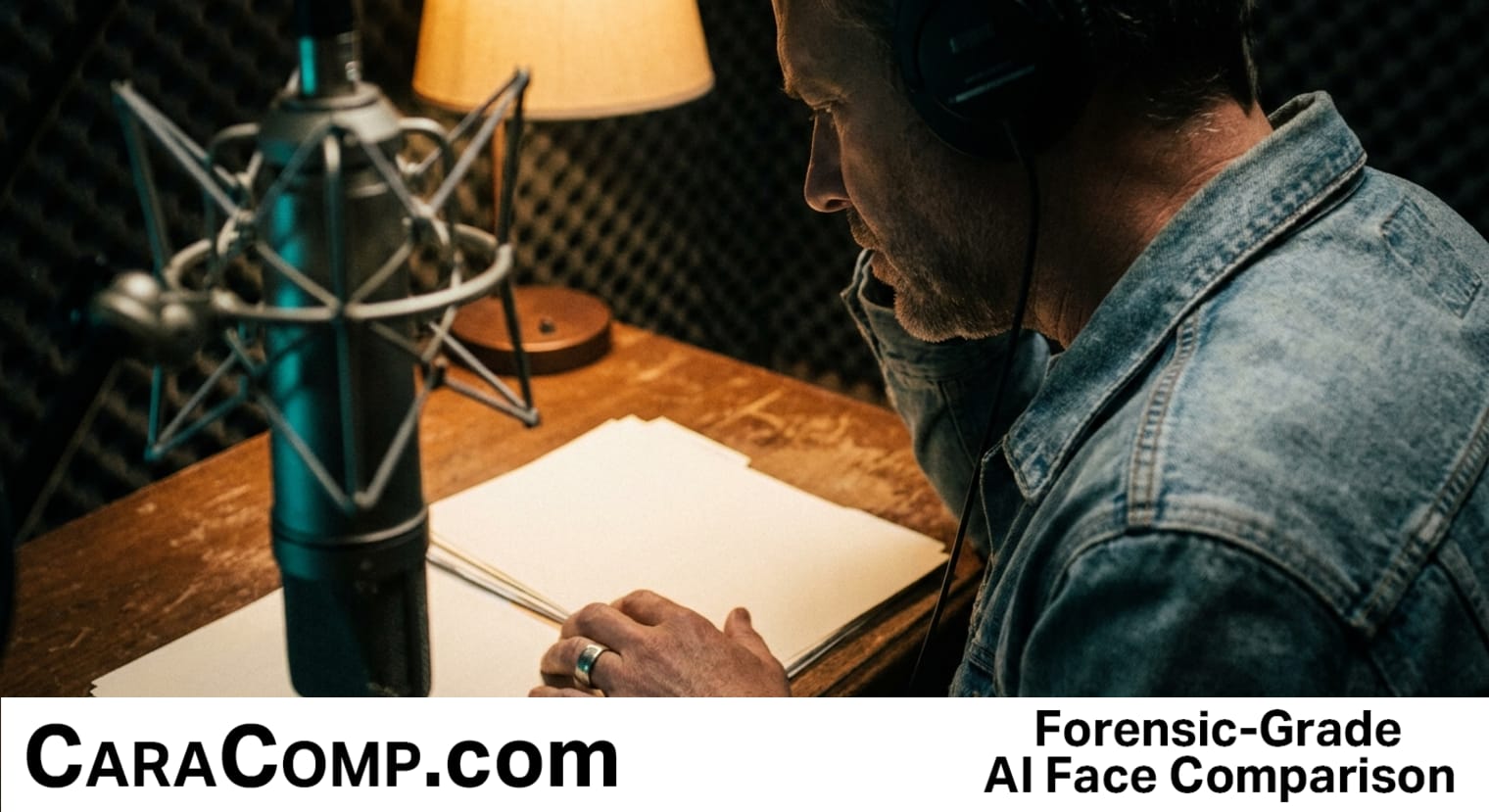
Your voice is a biometric fingerprint you can’t change, yet Big Tech treated it like free scrap metal to build their AI empires. Now, thanks to a massive legal offensive in Illinois, that "scrap metal" might cost them billions. Nine journalists and audiobook narrators are proving that in the eyes of the law, "moving fast and breaking things" is just a corporate euphemism for industrial-scale biometric theft. This isn't just about audiobooks; it’s a warning shot across the bow for anyone handling biometric data, including facial geometry.
At CaraComp, we’ve been watching this collision course for years. The same legal architecture that makes voiceprints protected under the Biometric Information Privacy Act (BIPA) applies directly to the facial comparison work we do every day. The difference is in the methodology. While tech giants are being sued for "harvesting" data to train generative models, the smart investigator knows that the future lies in precise, case-specific Euclidean distance analysis—not the mass-collection of unconsented data. If you aren't using tools that respect the boundary between investigative comparison and mass surveillance, you are walking into a legal minefield.
The $1.375 billion settlement Google recently faced in Texas over voice and face data wasn't an anomaly; it was a preview. For solo investigators and small PI firms, the stakes have never been higher. You cannot afford to stake your reputation on tools that play fast and loose with consent. Professional investigations require court-ready results built on solid, defensible tech, not "black box" algorithms that might be ruled illegal by next Tuesday.
- Biometric Parity is Now Standard: Courts no longer differentiate between a fingerprint, a faceprint, and a voiceprint. If the data is permanent and unique to the individual, it is a liability unless handled with surgical precision.
- Comparison Over Scanning: The legal "safe harbor" for investigators is shifting toward comparison methodology—analyzing photos you already own for a specific case—rather than relying on tools that scan the open web without a paper trail.
- The End of "Good Enough" Tech: Using unreliable, consumer-grade search tools is no longer just a professional risk; it’s a liability risk. Professionals need enterprise-grade Euclidean analysis that provides verifiable evidence.
The era of treating biometrics like public property is dead. The investigators who thrive in this new landscape will be those who adopt powerful, affordable, and legally-conscious comparison technology today.
Read the full article on CaraComp: Big Tech Stole Their Voices to Train AI — Now Illinois Law Could Cost Billions


Comments
Post a Comment