Age Verification's Dirty Secret: The Tech Works. The System Doesn't.
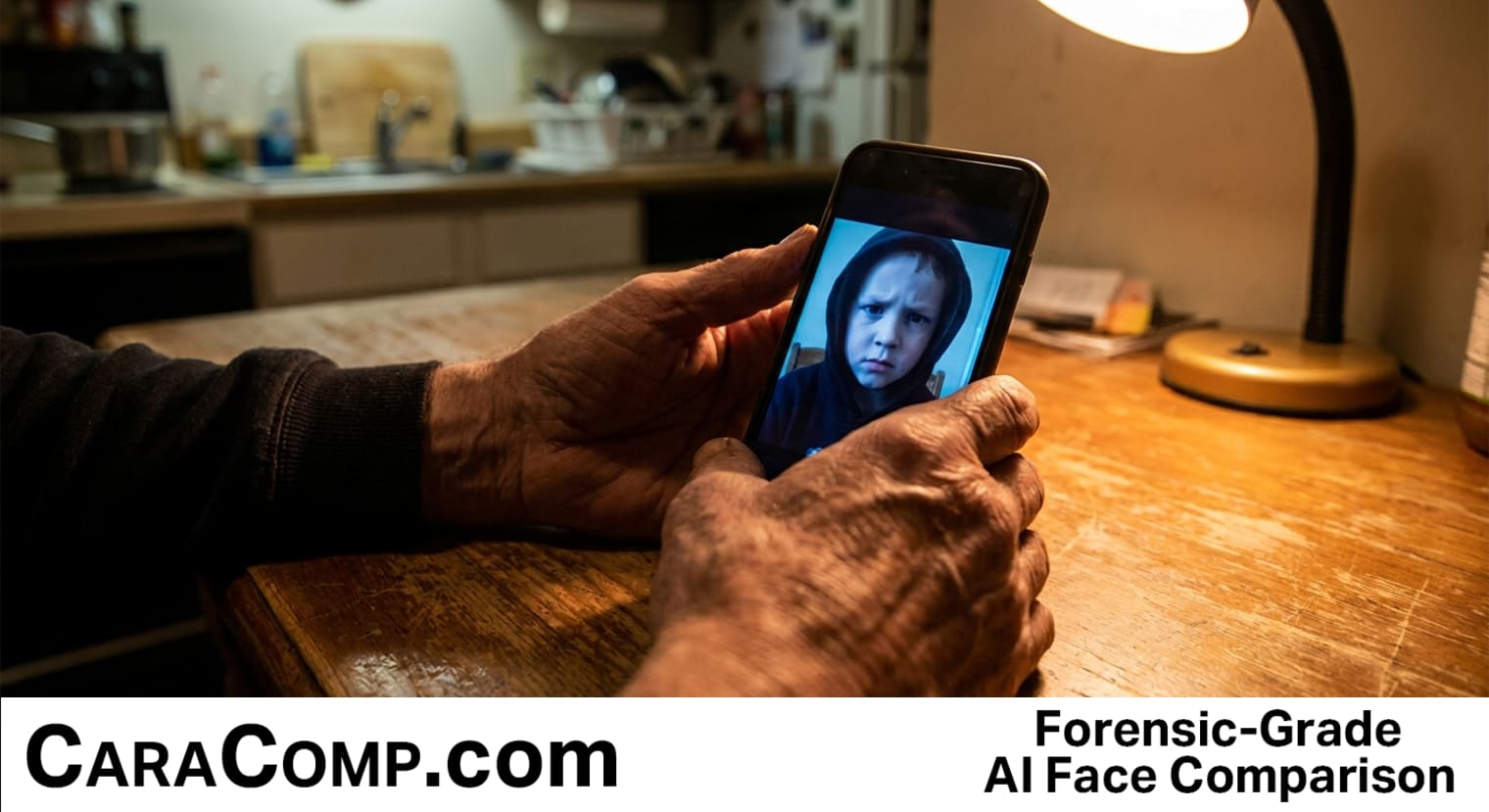
One in three children are laughing at digital age gates, and a quarter of their parents are actively holding the door open for them. Recent data from the UK confirms what most street-level investigators already know: the most sophisticated biometric algorithm is useless if the workflow surrounding it is broken. When 32% of kids can bypass verification effortlessly, we aren't looking at a technology failure—we are looking at a fundamental misunderstanding of identity persistence.
For the private investigator or OSINT researcher, this news is a glaring reminder of the difference between consumer-grade "estimation" and professional-grade facial comparison. While social media platforms use probabilistic guesses to estimate age—often failing because of poor lighting or shared devices—professional case analysis requires a much higher standard. We don't deal in "maybe"; we deal in Euclidean distance analysis that compares a known subject against case evidence to produce a definitive result.
The failure of age verification highlights three critical implications for the investigative industry:
- Biometric "estimation" is not "comparison": Age estimation is a guess based on skin texture and bone structure, which is easily spoofed. Professional investigators must rely on 1:1 facial comparison technology that analyzes fixed geometric landmarks, ensuring that the person in the "selfie" is the same person in the surveillance footage.
- The "Human Factor" is the ultimate exploit: If parents are willing to bypass security for their children, subjects of fraud investigations are even more motivated to mask their identities. Relying on a single automated gatekeeper is a recipe for a closed case being reopened. You need tools that allow for batch comparison and court-ready reporting to prove your findings.
- Affordability must meet reliability: The reason these platforms fail is often because they prioritize low-friction consumer tech over enterprise-grade accuracy. At CaraComp, we believe solo investigators should have access to the same high-caliber Euclidean analysis used by federal agencies, but without the five-figure price tag that makes it unreachable.
As investigators, we cannot stake our reputations on tools that can be bypassed by a teenager with a VPN or a helpful parent. We need a rigorous, side-by-side methodology that turns biometric data into admissible evidence. The age verification collapse isn't a warning against AI; it’s a warning against using the wrong tool for a high-stakes job.
Read the full article on CaraComp: Age Verification's Dirty Secret: The Tech Works. The System Doesn't.


Comments
Post a Comment