99% Accurate? Your Surveillance Photo Just Cost That Algorithm 40 Points
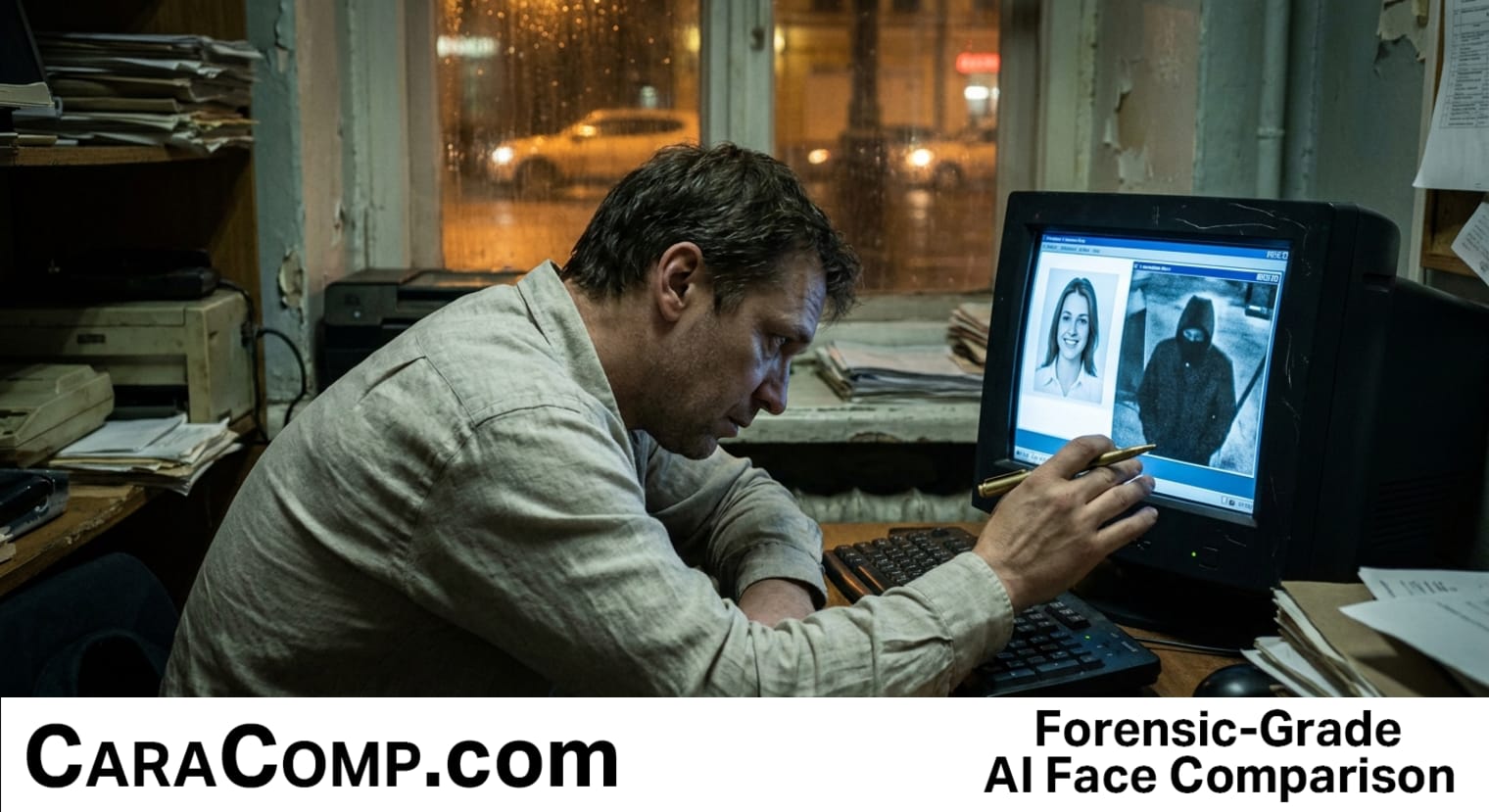
If you are still making investigative decisions based on a "99% accuracy" marketing blurb, you are essentially betting your professional reputation on a lab experiment that has nothing to do with your actual casework. The industry’s dirty secret is finally out: the elite algorithms topping the global benchmarks lose up to 40 percentage points the moment they leave the controlled lighting of a lab and face the grainy reality of a 2:00 AM parking garage surveillance feed.
For the solo investigator or the OSINT researcher, these benchmarks are worse than useless—they are misleading. A vendor bragging about lab performance is like a car manufacturer quoting fuel efficiency while the car is on a treadmill in a vacuum. It doesn’t account for motion blur, off-angle captures, or the heavy compression found in standard digital video recorders. In the field, "99% accurate" quickly dissolves into a coin toss, and for a professional whose evidence must stand up to scrutiny, that gap is a liability.
The implications for the investigation industry are immediate and unforgiving:
- The Benchmark Trap: Standardized tests use frontal, high-resolution photos that don't reflect the low-light, obscured, or compressed imagery investigators actually handle. Relying on these scores without understanding the "real-world drop" leads to missed matches and wasted hours.
- Scaling Failure: As seen in massive biometric deployments like those in India, even a 1% error rate creates millions of false positives. For a PI, one false positive in a case report can destroy a client’s trust and end a career.
- Comparison vs. Surveillance: Real investigative success isn't about scanning crowds; it’s about forensic-level facial comparison. Using tools that prioritize Euclidean distance analysis on YOUR specific case photos is the only way to bridge the gap between lab theory and court-ready evidence.
At CaraComp, we know that investigators don't need a tool built for a government budget or a lab environment. You need enterprise-grade Euclidean distance analysis that works on the messy, imperfect photos you actually have. The future of biometrics isn't in the "big brother" scanning of the masses, but in giving the solo professional the power to perform side-by-side analysis that is scientifically sound and affordable.
Read the full article on CaraComp: 99% Accurate? Your Surveillance Photo Just Cost That Algorithm 40 Points


Comments
Post a Comment