76% Hit, 40% Ready: The Deepfake Gap That Just Cost Arup $25 Million
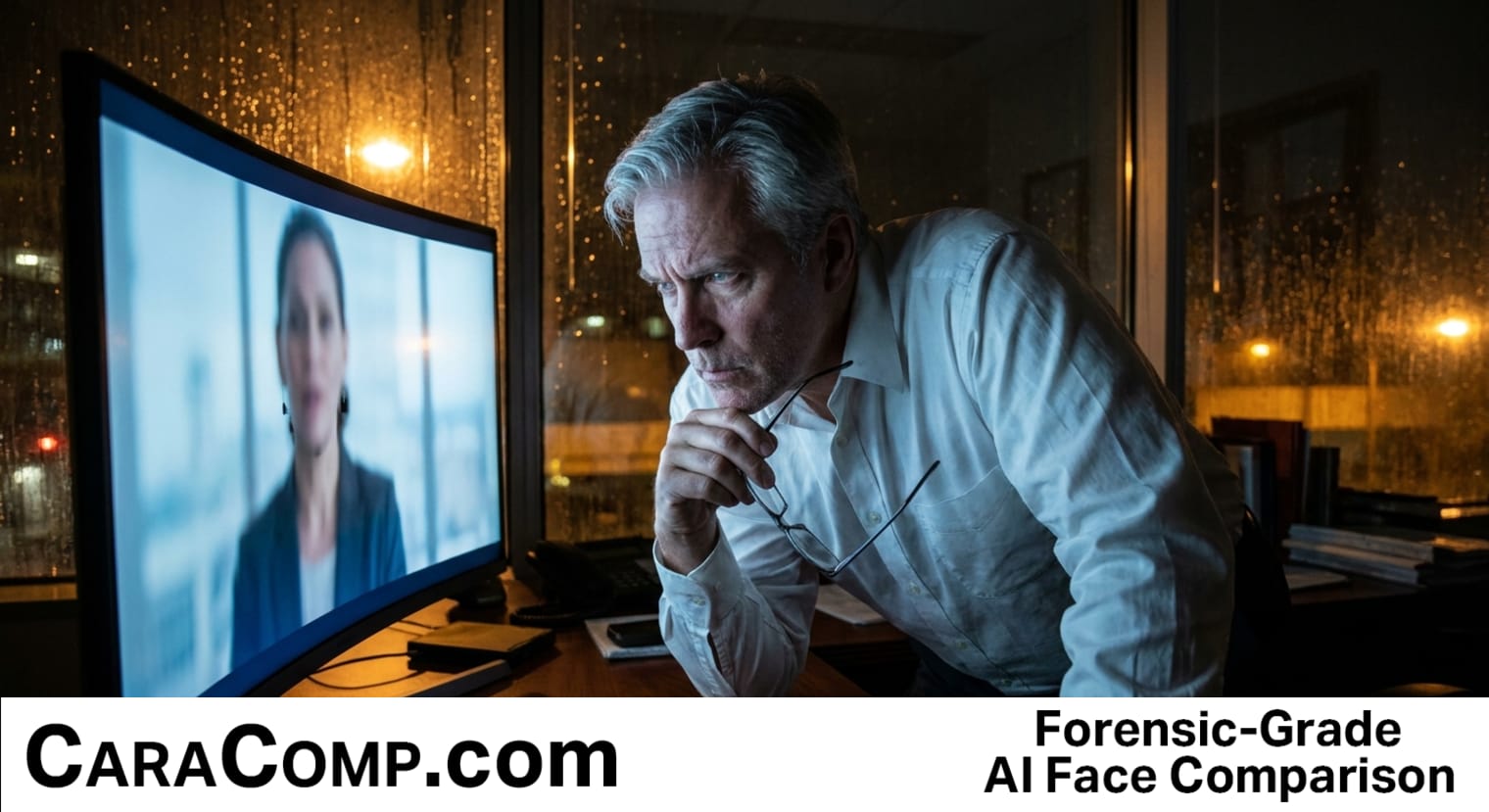
Human beings have a 0.1% success rate at spotting a high-quality deepfake, yet most private investigators still rely on the "eyeball test" to verify subjects in their cases. This technical illiteracy just cost Arup $25 million after an employee sat through a video call with a digital ghost. If you think your "seasoned instincts" are enough to protect your reputation in a world where 76% of organizations are already under siege, you aren’t just behind the curve—you’re a liability to your clients.
For the solo investigator or small firm, the Arup disaster is a flashing red light. We are moving into a period where manual facial comparison is no longer a standard investigative methodology; it is professional negligence. When courts begin issuing "terminating sanctions" for unverified media, as we’ve already seen in landmark civil cases, the "I thought it looked like him" defense will get you laughed out of the room. The industry is bifurcating into those who use Euclidean distance analysis to verify identity and those who are waiting to get sued.
The core implications for the investigative community are clear:
- The "Authentication Gap" is the new fraud frontier. As audio and video deepfakes become the primary attack vectors, investigators must treat every piece of digital evidence as suspect until mathematically verified.
- Affordable biometric tech is no longer optional. You cannot fight a 1,300% surge in AI-generated fraud with a magnifying glass. Small firms must adopt enterprise-grade facial comparison tools to maintain "reasonable diligence" standards now being set by federal rules.
We’ve seen this trajectory before with document authentication and digital forensics. What was once a specialist niche is becoming the baseline procedural step. CaraComp was built specifically for this moment—giving the solo PI the same Euclidean distance analysis used by federal agencies, but without the five-figure enterprise contract. You don't need a $2,400-a-year budget to stop guessing; you just need to stop relying on human eyes that were never evolved to spot a pixel-perfect lie.
The $25 million transfer at Arup didn't happen because the tech was invincible; it happened because the workflow was hollow. Don't let your next case be the one that proves the same point.
Read the full article on CaraComp: 76% Hit, 40% Ready: The Deepfake Gap That Just Cost Arup $25 Million


Comments
Post a Comment