34 of 156 Passengers Made the Flight. Europe's Biometric Border Just Exposed Itself.
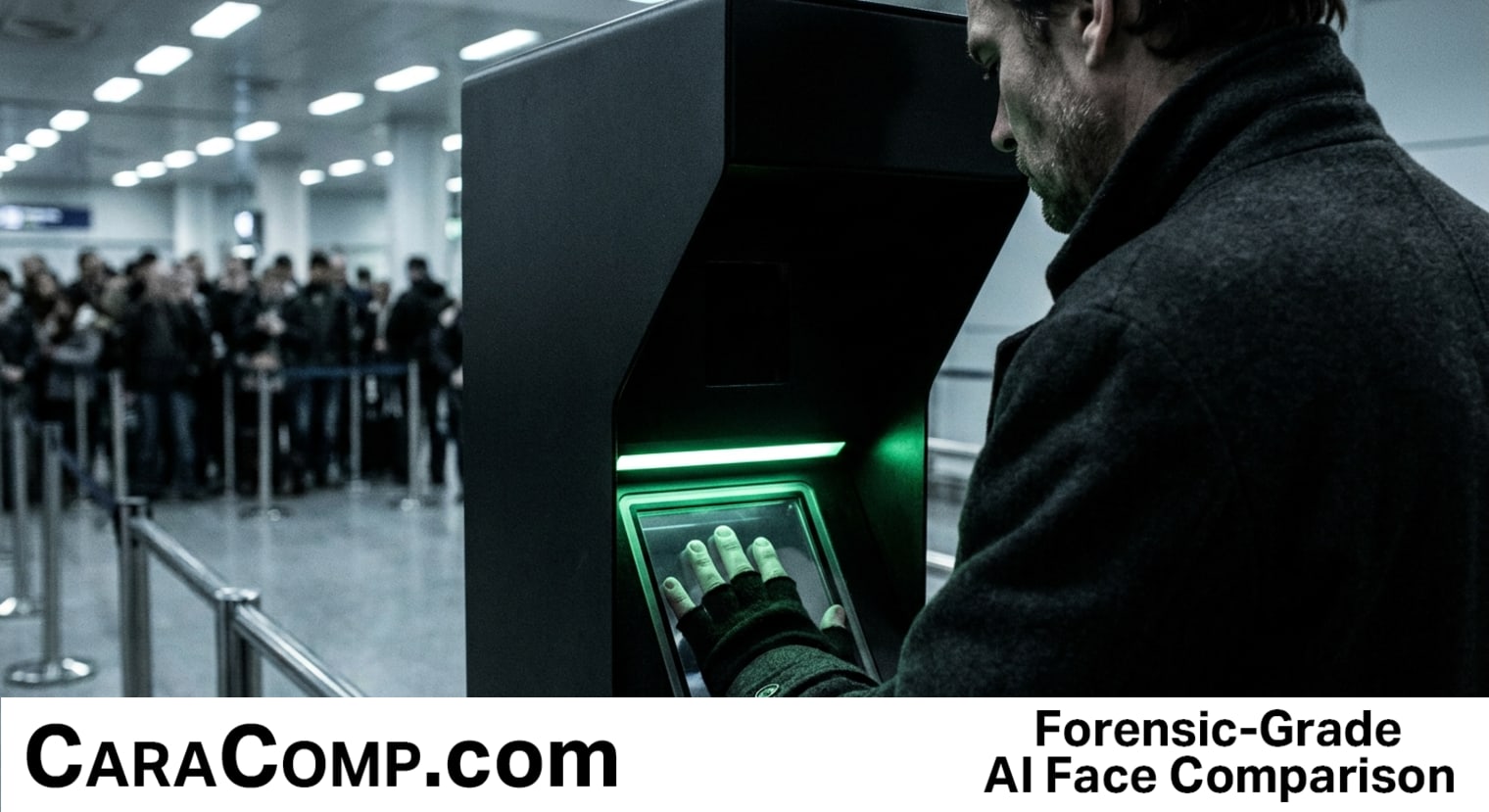
One hundred and twenty-two passengers stood stranded at the gate in Milan while their flight to Manchester took off without them. The culprit wasn’t a mechanical failure or a security threat—it was a biometric "success." Europe’s Entry-Exit System (EES) did exactly what it was programmed to do, yet its debut effectively paralyzed a major transit hub. For those of us in the investigation and facial comparison industry, this isn't a failure of the algorithm; it is a loud, clear warning about the massive gap between enterprise-grade technology and real-world operational utility.
The European Commission is touting 66 million successful border crossings as proof of concept. From a data perspective, they are right. The system flagged 32,000 entry refusals and identified 800 genuine security threats. But the investigator's lens reveals a different story. If a tool is so cumbersome that it creates a three-hour bottleneck for a thirty-second task, it fails the professional user. This is the same friction solo private investigators and OSINT researchers face when they try to use bloated, over-priced enterprise software or unreliable consumer-grade search engines. The technology might be powerful, but if the workflow is broken, the case goes cold.
At CaraComp, we see this "Milan Incident" as a diagnostic for the entire biometrics industry. We are moving out of the era of "does it work?" and into the era of "can you actually use it?" High-level Euclidean distance analysis—the same math used at these borders—is no longer a government secret. It is a standard investigative requirement. The real innovation isn't in the matching itself, but in making that analysis accessible, fast, and court-ready without the "enterprise" baggage that leaves 80% of your data (or in this case, your passengers) behind.
Key Implications for the Investigative Industry:
- Workflow is the New Metric: Accuracy is now a baseline, not a feature. The future of facial comparison belongs to tools that prioritize batch processing and professional reporting over complex, high-friction interfaces.
- The Comparison vs. Surveillance Divide: The EES chaos highlights why targeted facial comparison (matching a known subject against case photos) is vastly more efficient and legally sound for investigators than broad-spectrum scanning.
- Infrastructure for the Solo Professional: As biometric infrastructure becomes standard at national borders, solo investigators must adopt similar Euclidean distance analysis tools to maintain professional parity with law enforcement, without the $2,000/year price tag.
The tech works. Now, we just need tools that don't make us miss the flight.
Read the full article on CaraComp: 34 of 156 Passengers Made the Flight. Europe's Biometric Border Just Exposed Itself.


Comments
Post a Comment