3 Seconds of Audio Is All a Scammer Needs to Become You
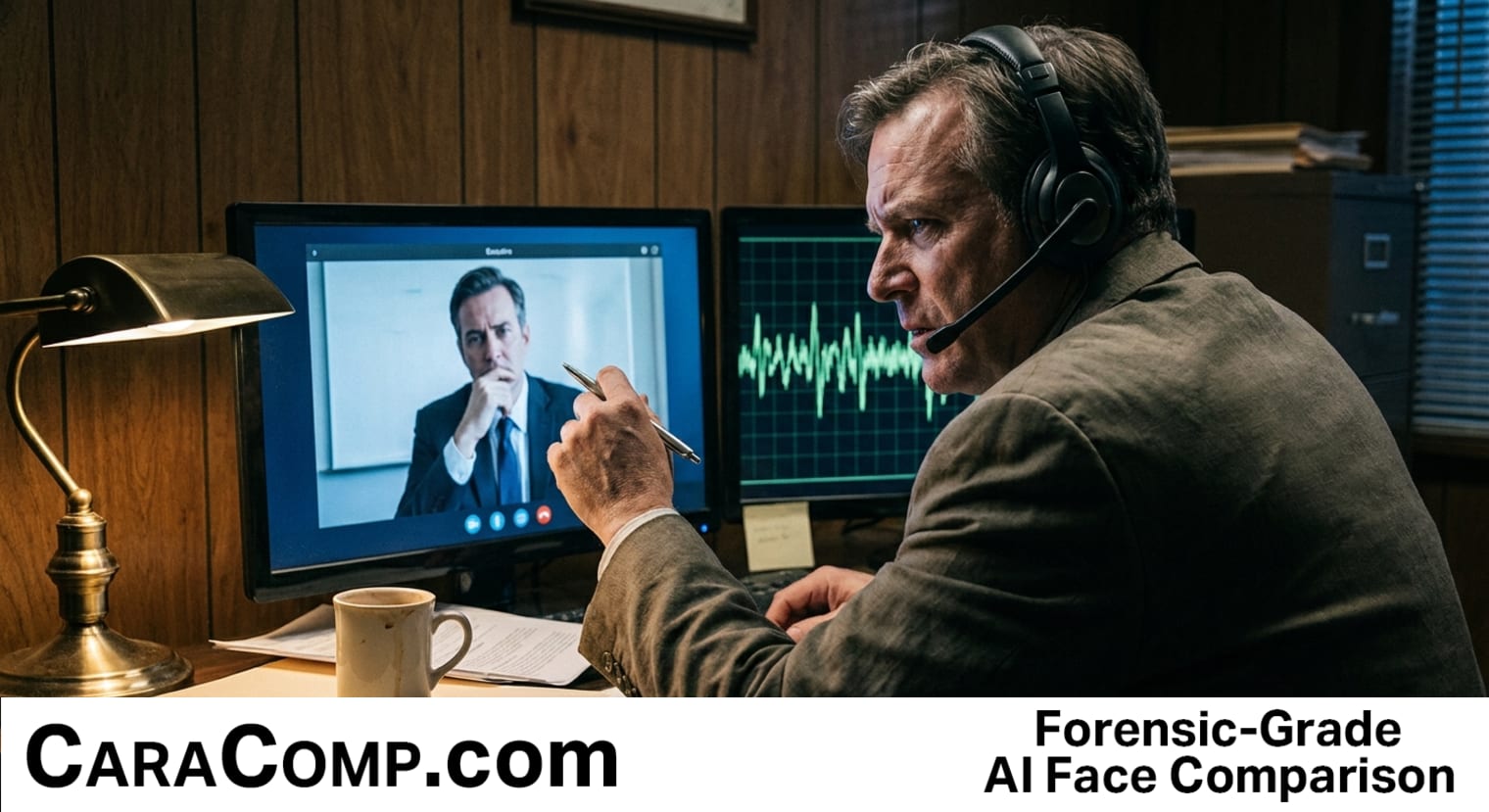
If you think three seconds is too short to lose a case or a client’s trust, you haven’t seen the latest data on AI voice cloning. That is the total time a scammer needs to synthesize a voice that sounds more like your witness, claimant, or CEO than the actual person does. In the field, we are watching the death of audio-based identity verification in real-time. For investigators, this means the "gut feeling" you get from a familiar voice on the phone is no longer a professional asset—it’s a liability.
The surge in multimodal impersonation attacks, like the $25 million loss recently reported by a global engineering firm, proves that scammers are layering these cloned voices over synthetic video to bypass traditional scrutiny. For the solo private investigator or the small firm, this creates a massive tech gap. While you’re manually trying to verify a subject’s identity, bad actors are using enterprise-grade AI to generate flawless fakes. If you aren't using high-precision facial comparison to anchor your findings, you are essentially guessing.
At CaraComp, we see this shift as a call to arms for the investigative community. Voice is now the weakest link in the biometric stack. To maintain your reputation and protect your cases, you must pivot to harder data points. Professional investigators are moving away from single-signal verification and toward Euclidean distance analysis—the same math used by federal agencies to prove identity through facial comparison. You don’t need a six-figure government budget to access this; you just need to stop relying on your ears and start relying on verifiable, court-ready analytics.
- Voice is now the least reliable biometric, meaning investigators must prioritize cross-modal verification by anchoring audio claims against high-precision facial comparison.
- Authority bias is being weaponized; synthetic audio is designed to suppress human skepticism, making objective, data-driven comparison tools a requirement for professional reports.
- The "Detection Arms Race" is being lost, so the only viable defense is a process-driven approach that ignores "plausible" audio in favor of side-by-side, professional facial analysis.
The time of trusting a voice note or a quick call to verify a subject is over. If you aren’t cross-referencing every visual and auditory signal with enterprise-grade comparison tech, you’re leaving your reputation up to a coin flip. The tools exist to stay ahead of this—there is no excuse for being caught off guard.
Read the full article on CaraComp: 3 Seconds of Audio Is All a Scammer Needs to Become You


Comments
Post a Comment