Your Face Just Cleared Customs. Who Owns It Now?
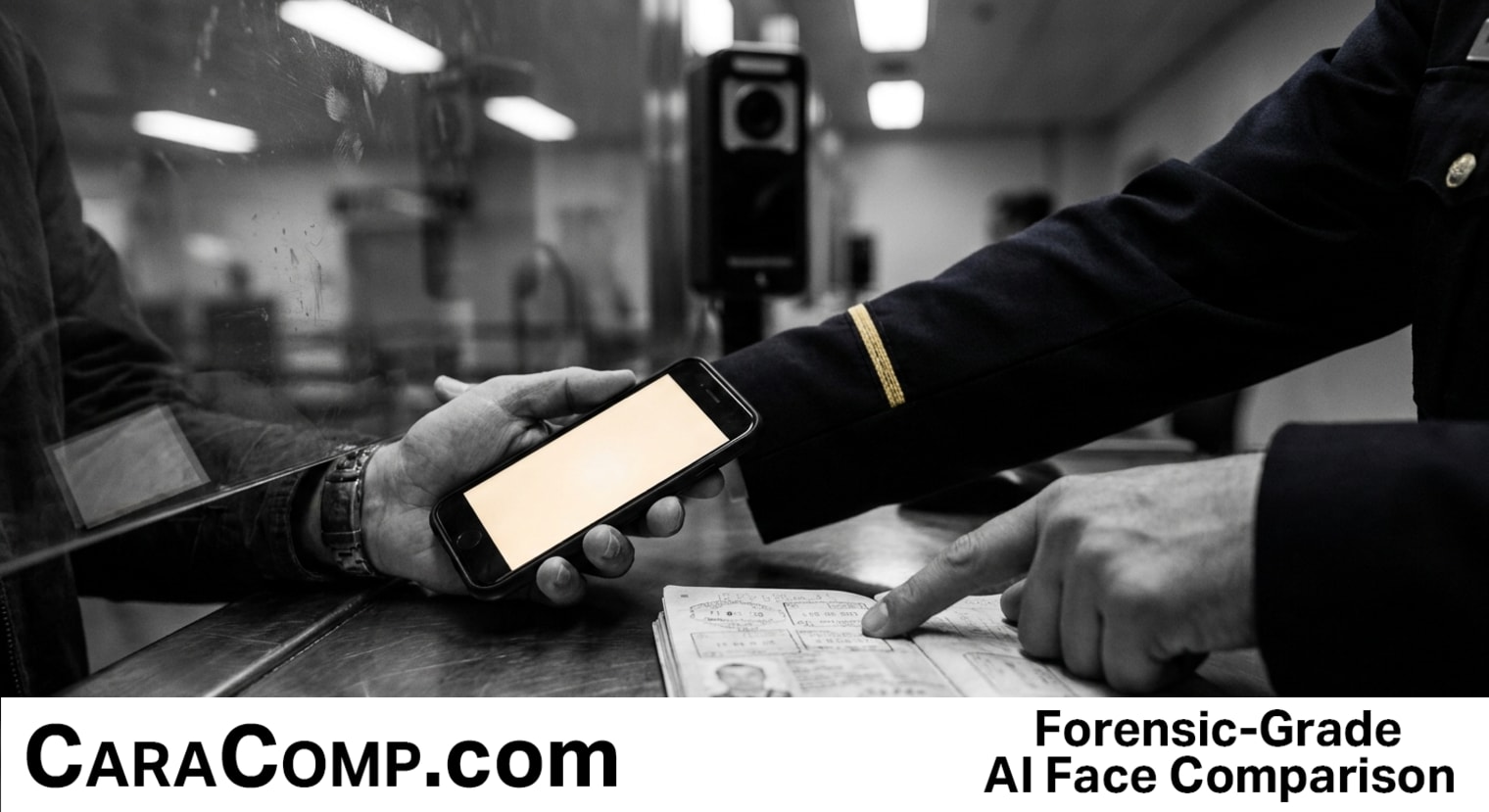
Your face is officially becoming your passport, but for the average private investigator, the biometric data revolution remains locked behind a six-figure government firewall. The IATA’s recent trials—proving a passenger can fly from Tokyo to London without a single physical document—is a technical masterclass that highlights a massive identity gap. While airports move toward a "document-free" future, solo investigators are still being left in the tech-starved dark ages.
The tech is clearly ready; the IATA proof-of-concept confirmed that cross-border, multi-carrier, fully contactless travel is no longer a concept—it’s a functional reality. However, as an industry insider, I see a different story unfolding. While federal agencies and billion-dollar airlines argue over data retention and who "owns" the rules of your digital identity, the independent investigator is still manually squinting at grainy photos for three hours. The real implication of this IATA trial isn’t just about faster boarding; it’s about the normalization of Euclidean distance analysis as the global standard for truth.
If a customs kiosk can verify an identity in seconds with enterprise-grade precision, your clients will soon expect that same rigor in your case files. At CaraComp, we know that 90% of these powerful tools are built for governments with bottomless budgets. But the math doesn't have to be exclusive. You shouldn't need a federal badge or an $1,800 annual subscription to access the same biometric caliber that clears a Boeing 777 for takeoff. We are seeing a shift where "manual comparison" is quickly becoming an evidentiary liability in the eyes of the court.
- The Scientific Evidentiary Standard: As biometric travel becomes the norm, manual facial matching will no longer hold up in professional settings. Investigators must adopt Euclidean distance analysis to provide the court-ready reports that clients now expect.
- Comparison vs. Surveillance: The IATA news highlights the tension around scanning crowds. Smart investigators will lean into facial comparison—using specific case photos to close files faster without crossing into the controversial territory of mass monitoring.
- The Accessibility Crisis: The gap between "government-grade" and "solo PI-grade" tech is widening. While IATA proves the tech is scalable, the cost remains a barrier that only democratized tools can break.
The hardware at Heathrow might be shiny, but the algorithms are what matter. It’s time for solo PIs and OSINT researchers to stop feeling behind the curve and start using the same tech caliber as federal agencies—at a fraction of the cost. The future of investigation isn't just about seeing a face; it's about proving the match with data.
Read the full article on CaraComp: Your Face Just Cleared Customs. Who Owns It Now?


Comments
Post a Comment