Why Must 1.4 Million Women Scan Their Faces to Hand Out Rice?
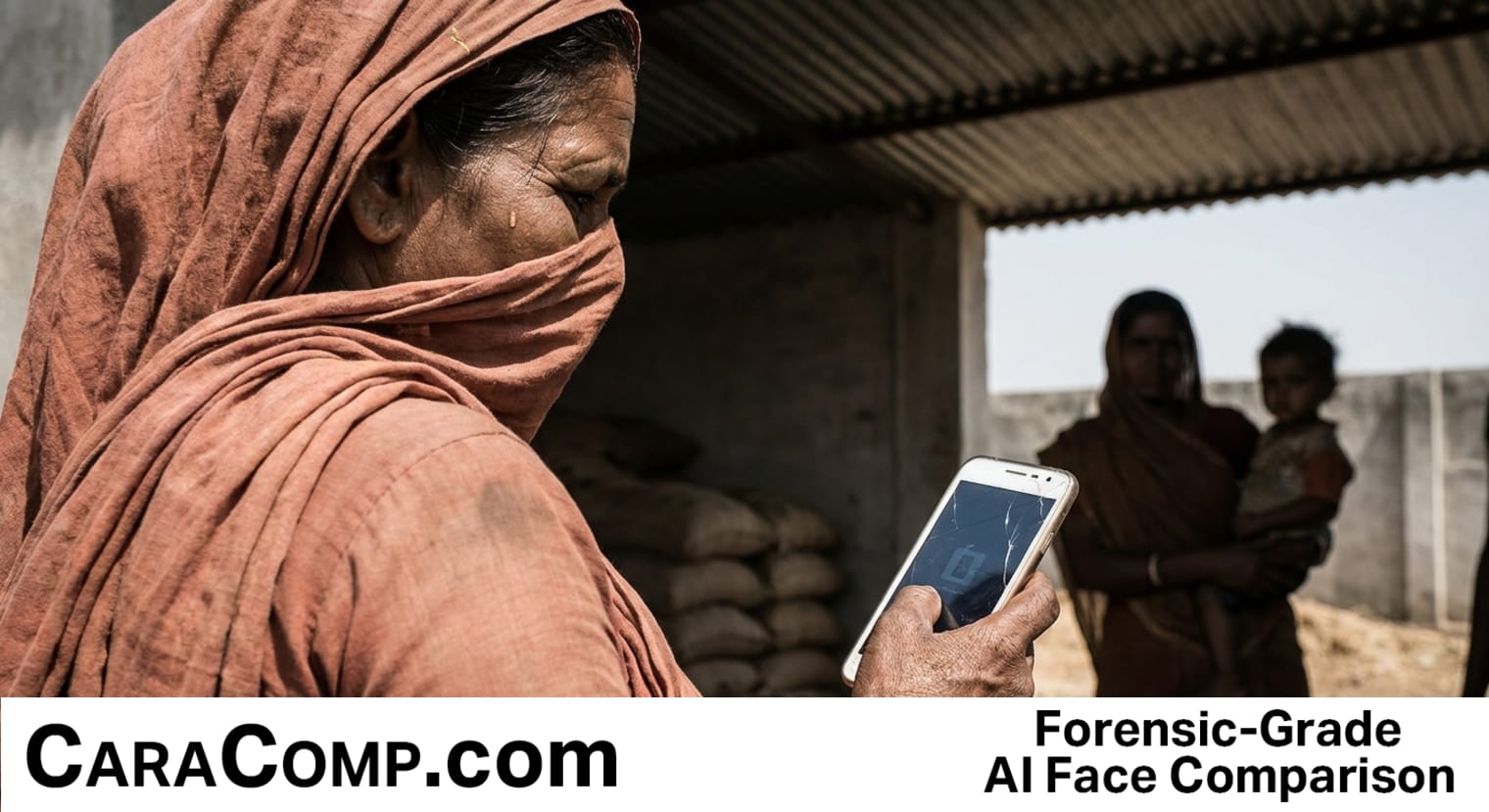
A woman distributing rice to pregnant mothers shouldn’t have her livelihood held hostage by a spotty 4G connection and a glitchy face scan. Yet, the Karnataka High Court is currently forcing the Indian government to answer a question that the biometrics industry has side-stepped for years: Why are we making facial scans mandatory for the most vulnerable populations when the infrastructure clearly isn't ready?
For those of us in the investigative and OSINT community, this case is a flashing red light. The POSHAN 2.0 nutrition scheme requires 1.4 million Anganwadi workers to use facial recognition to authenticate beneficiaries before handing over food. If the app crashes or the liveness detection fails in a rural village with no signal, the food isn't delivered, and the worker faces disciplinary action. This isn't just a technical failure; it's a fundamental misunderstanding of how facial comparison technology should be deployed.
At CaraComp, we differentiate between facial "recognition" as a mandatory gatekeeper and facial "comparison" as a professional investigative tool. The former, when forced without fallbacks, creates the exact type of public distrust that hinders legitimate investigative work. When a solo private investigator or a police detective uses Euclidean distance analysis to compare two photos, they are looking for evidence to close a case faster. They are using the tech to empower their workflow, not to create an administrative bottleneck. The Karnataka case proves that when you move from voluntary professional utility to mandatory state infrastructure, the "accuracy" of the algorithm becomes an existential threat to the user.
Key Implications for the Investigation Industry:
- The Reliability Trap: When state-mandated tools fail due to poor connectivity or "liveness" bugs, it tarnishes the reputation of biometric math. Professional investigators must distance themselves from "black box" government tools and stick to reliable, transparent comparison methods that provide court-ready reporting.
- The Mandatory Backlash: Coercive use of facial scans in welfare programs is fueling legislative pushback. Investigators need to be prepared for stricter "consent architecture" regulations that may result from these high-profile human rights challenges.
- Data Integrity vs. Gatekeeping: Using technology to prevent fraud (the government’s goal) is valid, but using it as the only gateway to food or wages without a manual override is a failure of system design that professional analysts must avoid in their own case workflows.
The industry needs to watch this court ruling closely. If the Karnataka High Court rules that these mandatory scans are disproportionate, it will redefine how we talk about biometric consent for the next decade. Technology should be the investigator's sharpest tool, not the worker's heaviest chain.
Read the full article on CaraComp: Why Must 1.4 Million Women Scan Their Faces to Hand Out Rice?


Comments
Post a Comment