The 3-Second Face Scan: 5 Hidden Steps Between You and Your Gate
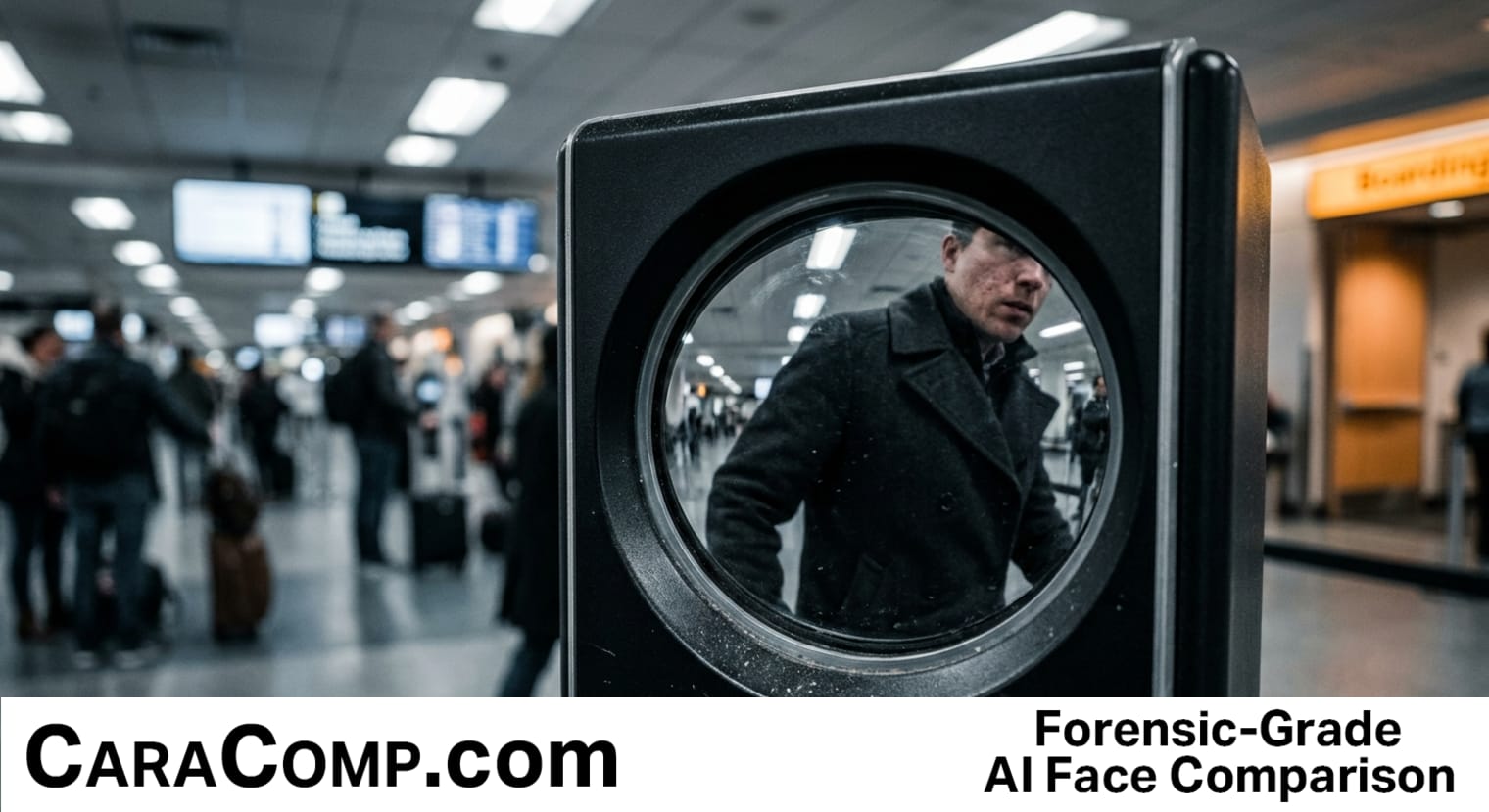
The U.S. Customs and Border Protection biometric program has screened 697 million travelers only to catch 2,225 fraudsters. That is a 0.0003% hit rate. To the untrained eye, that looks like an expensive failure; to a professional investigator, it is a masterclass in the power of threshold management and Euclidean distance analysis. This isn't just about airport security—it is a signal that the era of "eye-balling it" in investigations is officially over.
For the solo private investigator or OSINT researcher, the "3-second scan" at the gate represents the exact tech stack they’ve been told they can't afford. While enterprise-grade facial comparison tools have traditionally been locked behind $2,000-a-year contracts, the underlying science—converting a face into a mathematical vector to find a match—is becoming the industry standard for closing cases. If you are still spending three hours manually comparing grainy social media photos against a subject’s DL photo, you aren't just being thorough; you are being obsolete.
The real shift here is the move from facial recognition (mass surveillance) to facial comparison (targeted investigation). By using the same Euclidean distance methodology seen in federal biometrics, investigators can now process batches of thousands of photos to find a match in seconds. This isn't about scanning crowds; it’s about using your photos for your case to generate court-ready results that actually hold up under scrutiny.
- Euclidean distance analysis is the great equalizer, allowing solo PIs to leverage the same mathematical precision as federal agencies to prove a match without the five-figure government budget.
- The "Threshold Decision" is the investigator’s new edge, where setting the right probability score separates a professional case file from a folder full of false positives and wasted hours.
- Professional facial comparison is about methodology, not surveillance, providing a clear, technical path to admissible evidence that avoids the reliability pitfalls of cheap consumer search tools.
The bottleneck in modern investigations is no longer the data—it is the speed at which you can turn that data into a confirmed identity. The technology that clears a traveler in three seconds is the same technology that will allow you to close a fraud case before lunch. The only question is whether you’ll adopt it before your competition does.
Read the full article on CaraComp: The 3-Second Face Scan: 5 Hidden Steps Between You and Your Gate


Comments
Post a Comment